
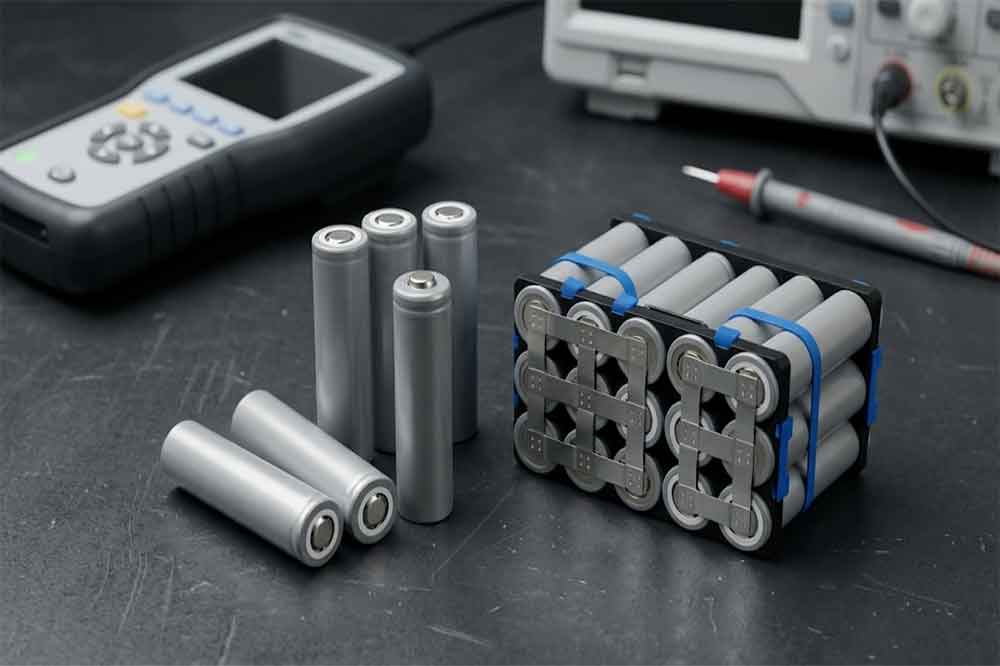
18650 battery may look like a standard cylindrical cell, but the version selected for a medical instrument or an industrial device can have a very different job from one used in a flashlight or a household gadget. It may need to support repeated operation, handle a defined current load, fit into a restricted battery compartment, and work reliably alongside the equipment’s existing control electronics.
This is where a protected 18650 battery becomes worth considering. The protection circuit adds an extra layer of electrical control, helping prevent certain abnormal battery conditions. However, the right choice depends on more than whether a cell has a protection board. Voltage, discharge current, temperature, physical dimensions, and the device’s own safety requirements all need to be considered.
For equipment manufacturers and OEM buyers, choosing an industrial protected 18650 battery should start with the actual operating conditions rather than a general battery specification.
Why Medical and Industrial Devices Need Protected 18650 Batteries
Medical and industrial equipment can have very different power requirements, but both may depend on predictable battery behavior.
A portable medical instrument might draw relatively little current for most of its operating time, with occasional higher loads when a motor, display, sensor, or communication module activates. An industrial inspection device may run for long periods, experience repeated power cycles, or operate in a workshop where temperature and vibration need to be considered.
A protected 18650 battery can help manage specific electrical faults, particularly overcharge, overdischarge, overcurrent, and short-circuit conditions, depending on the protection circuit design.
The protection circuit does not replace the equipment’s own safeguards. It is one part of a wider power system that can include a charger, battery holder, power-management circuit, temperature monitoring, and software controls.
There is also a practical purchasing reason to specify protection early. A battery with an added circuit board may be longer than a standard unprotected cell. Its current limit may also be lower than the equipment requires. Discovering these differences after a product enclosure has been designed can lead to unnecessary engineering changes.
For this reason, battery selection should involve both the electrical engineer and the person responsible for mechanical integration.
For devices with different portability and runtime requirements, our guide to [protected 18650 batteries for portable electronics] explains the main factors to consider when matching a protected cell to a compact electronic product.
How Protection Circuits Work in 18650 Batteries
A protected 18650 battery generally consists of a cylindrical lithium-ion cell and a small protection circuit, often fitted at the negative end or integrated into a custom assembly. The exact construction varies by supplier and design.
The circuit monitors electrical conditions and interrupts the current when a monitored parameter crosses its configured limit. Different protection boards use different components and thresholds, so the word “protected” alone does not tell a buyer exactly what the battery can handle.
Overcharge and Overdischarge Protection
Overcharge protection helps prevent the cell voltage from exceeding the circuit’s specified upper threshold. Overdischarge protection interrupts discharge when the voltage reaches its lower threshold.
These functions are important in equipment that may remain connected to a charger or continue running until its battery is nearly depleted.
However, a protection circuit is not a substitute for a compatible charging system. The charger must use the correct charging profile for the selected cell chemistry and series configuration. The equipment should also account for the possibility that a protection circuit disconnects the battery during operation.

Overcurrent and Short-Circuit Protection
Overcurrent protection can interrupt a circuit when current exceeds a defined limit. Short-circuit protection is intended to respond to certain low-resistance fault conditions.
Neither function should be treated as unlimited protection. The response depends on the circuit design, fault current, wiring resistance, component ratings, and operating conditions.
Industrial equipment can have substantial startup currents. A motor, pump, solenoid, or other inductive load may briefly draw much more current when activated than it uses during normal operation. If the protection board cannot tolerate that startup demand, the battery may disconnect even though the device is working as intended.
Before ordering, compare the equipment’s continuous current, peak current, startup duration, and expected operating cycle with the protection circuit’s documented limits.
Some industrial devices also require a battery to maintain essential functions when external power is interrupted. Learn more about protected 18650 batteries for backup power applications.
Choosing the Right Industrial Protected 18650 Battery
Voltage, Capacity, and Discharge Current
Voltage is the first compatibility check. A standard single-cell lithium-ion 18650 battery is commonly rated at 3.6V or 3.7V nominal, depending on the manufacturer’s specification. Its fully charged voltage is often 4.2V, but the exact charging limit must be confirmed for the selected cell.
If the equipment requires a higher voltage, multiple cells may be connected in series. For example, a 3S lithium-ion battery pack is commonly rated at 10.8V or 11.1V nominal, depending on the cell rating, with a typical maximum charging voltage of 12.6V when each cell has a 4.2V charging limit.
Capacity, measured in milliamp-hours (mAh) or amp-hours (Ah), indicates how much charge a battery can store. It does not directly determine whether the battery can supply the required power.
A device with a high current demand may need a cell designed for higher discharge rates rather than the largest capacity available. Adding a protection board does not increase the cell’s current capability. In some designs, the board becomes the limiting component.
OEM buyers should request the cell’s continuous discharge rating and the protection circuit’s continuous and peak current limits. These are separate specifications and should be checked together.
Operating Temperature and Service Life
Medical and industrial equipment may operate in environments that differ significantly from a controlled indoor office. A battery-powered inspection tool could be used in a warm factory, while portable monitoring equipment may need to operate during transport or in a temperature-controlled room.
The permitted charging and discharging temperatures must come from the specific cell and battery assembly specifications. Charging outside the permitted range can be particularly problematic for lithium-ion cells.
Temperature also affects usable capacity, voltage under load, and aging. A battery that performs adequately during a short room-temperature test may behave differently during extended operation or repeated high-current use.
For equipment expected to operate for years, buyers should consider cycle-life data, storage conditions, expected charge frequency, and the consequences of reduced capacity over time. If the application requires temperature monitoring, the battery pack may need a thermistor or another suitable sensing arrangement.
Battery Dimensions and Equipment Compatibility
The “18650” designation describes a nominal cell size of approximately 18 mm in diameter and 65 mm in length. A protected version may be longer because of the protection board and its construction.
Actual dimensions vary with the cell, circuit, terminal design, and outer wrapping. A raised positive terminal, additional insulation, or welded connection can also affect the space required.
Before finalizing the enclosure, check the complete battery dimensions rather than relying only on the 18650 designation. Confirm terminal polarity, contact pressure, wire exit direction, connector type, insulation clearance, and the method used to secure the battery.
A loose cell in a vibrating industrial device can create intermittent contact or mechanical damage. Conversely, a compartment that fits too tightly may place unwanted pressure on the battery. The battery should be secured according to the equipment design without crushing, puncturing, or deforming the cell.

Medical Device Applications and Design Considerations
Protected 18650 batteries may be considered for certain portable diagnostic instruments, monitoring equipment, handheld measurement devices, and other battery-powered medical products.
The suitability of a particular cell depends on the device’s power demand, intended use, charging arrangement, and applicable regulatory requirements. A battery that works in a consumer electronic device is not automatically suitable for medical equipment.
For a portable diagnostic instrument, for example, the engineering team may need to establish how long the device must operate between charges, whether the battery can be replaced by the user, and what happens when the protection circuit disconnects power. Unexpected shutdown may be acceptable in one application but unacceptable in another.
The battery system may also need to support battery-status reporting, low-voltage warnings, temperature sensing, or communication with the main controller. These features should be discussed before the circuit and connector are finalized.
Medical equipment manufacturers should assess the complete battery system as part of their product risk-management and compliance process. A protected cell by itself does not establish that the finished device meets medical electrical safety or regulatory requirements.
Industrial Equipment Applications
Industrial applications include portable test instruments, inspection equipment, handheld scanners, wireless monitoring devices, maintenance tools, and some compact control systems.
In these products, the battery must match not only the electrical load but also the way the equipment is used. A scanner that is charged every evening has different requirements from a remote monitoring unit expected to remain in service for weeks.
For a handheld inspection tool, weight and runtime may be the main considerations. For a wireless monitoring unit, low self-discharge, standby consumption, and service intervals may matter more. A motorized industrial device may place greater emphasis on discharge current and startup performance.
Vibration, dust, humidity, and temperature can also affect the overall battery assembly. A protection board alone does not make a battery waterproof, dustproof, or resistant to mechanical shock. Those characteristics depend on the complete enclosure, sealing, mounting, and system design.
Where the device is expected to run unattended, engineers should also consider how the system detects a depleted battery, what happens after power interruption, and whether the equipment can recover safely when a charged battery is installed.
What OEM Buyers Should Check Before Ordering
A battery supplier can provide a more relevant recommendation when the inquiry includes actual equipment requirements. Instead of requesting only an 18650 battery with a particular capacity, provide the following information:
- Electrical requirements: Nominal voltage, maximum charging voltage, required capacity, continuous current, peak current, and startup duration.
- Protection requirements: Overcharge, overdischarge, overcurrent, and short-circuit limits, plus any required temperature sensing.
- Mechanical details: Maximum battery dimensions, terminal type, connector model, wire length, and mounting arrangement.
- Operating conditions: Charging and discharging temperatures, expected runtime, duty cycle, storage conditions, and exposure to vibration.
- Compliance needs: Required transport documentation, customer-specific testing, and applicable product or industry standards.
Ask the supplier to identify the cell manufacturer and model, the protection circuit specifications, and the test conditions behind the quoted performance. Where required, request relevant test reports and transport documents, including UN 38.3 documentation for applicable lithium battery shipments.
For a custom battery assembly, sample evaluation should include fit checks, normal-load testing, startup behavior, charging verification, and appropriate fault-condition testing. Testing should follow the approved engineering plan and should not involve improvised short-circuit or overcharge experiments.
If the equipment has strict uptime requirements, evaluate the battery at the expected load and under representative operating conditions rather than relying on a capacity figure alone.
“For OEM projects requiring different capacities, protection configurations, or battery dimensions, explore our [18650 lithium battery solutions] to review available options for custom battery development.”

Common Selection Mistakes
One common mistake is assuming that every protected 18650 battery has the same protection functions and current limits. Protection boards vary, and the actual thresholds should be documented.
Another is selecting a cell based only on capacity. A high-capacity cell may not meet the required current demand, while a high-current design may offer less capacity in the same space.
Mechanical fit is another frequent issue. A protected cell may not fit a holder designed around the dimensions of an unprotected cell. Connector polarity and the available clearance around the terminals should be checked before production.
Finally, buyers sometimes expect a protection circuit to compensate for an unsuitable charger, poor wiring, inadequate thermal design, or an incorrectly configured battery pack. It cannot. The cell, protection circuit, charger, enclosure, and device electronics must be designed to work together.
For B2B projects, confirming these details before sampling can reduce redesign work and make production planning more predictable.
Conclusion
Industrial protected 18650 battery can be a practical power option for medical and industrial devices when its electrical characteristics, protection limits, physical dimensions, and operating conditions match the application.
The important question is not simply whether the battery has a protection board. It is whether the complete battery assembly has been specified for the actual equipment and verified under realistic conditions.
For OEM manufacturers, early communication with the battery supplier helps clarify these requirements before the project moves into prototype testing and mass production.
Frequently Asked Questions
1. What is an industrial protected 18650 battery?
An industrial protected 18650 battery combines a cylindrical lithium-ion cell with a protection circuit designed to interrupt certain abnormal electrical conditions, such as overcharge, overdischarge, or excessive current.
2. Can protected 18650 batteries be used in medical devices?
They may be suitable for some portable medical devices, depending on the voltage, current, runtime, charging system, and applicable safety requirements. The complete battery system must be evaluated for the intended application.
3. Does a protection circuit increase the battery’s discharge current?
No. The protection circuit does not increase the cell’s current capability. Its own current rating may limit the current available to the device.
4. Are protected 18650 batteries longer than standard 18650 cells?
They can be. The protection board and terminal construction may increase the overall length, so buyers should confirm the actual dimensions before selecting a battery holder or designing an enclosure.
5. Can an OEM manufacturer customize a protected 18650 battery?
Depending on the design, an OEM supplier may customize capacity, protection parameters, connectors, wiring, insulation, and battery-pack configuration. Custom designs should be evaluated and tested before mass production.
-

12V 4400 mah Lithium ion 3S2P 18650 Battery Pack
-

18650 2000mAh 3.7 volt Lithium-ion Battery
-

18650 20V 3.0Ah Cordless Drill battery
-

18650 22.2V 7.8Ah 2600Mah 6S3P Rechargeable Battery Pack
-

18650 2600mAh Rechargeable Lithium-Ion Battery 3.7V
-

18650 3.7V 10Ah Li-Ion Power Battery Pack
-

18650 3.7V 3300mah Rechargeable Lithium ion Battery
-

18650 7S7P 24V 14Ah Lithium ion Electric Scooter Battery Pack
-

18650 battery 3.7V 1500mAh Lithium-Ion Battery
-

18650 Battery 3500 mah Rechargeable Battery Cells
-

18650 Electric Scooter 48V 13000mAh Lithium Battery
-

2600mAh 3S1P 11.1V 18650 Battery Packs
-

3.7V Li ion Rechargeable 3000mah 18650 Battery Cell
-

36V 5200mAh 10S2P 18650 Battery Pack
-

48v 4400mah 13S2P 18650 Rechargeable Battery Pack
-

7S2P 24V 18650 Lithium Battery Pack
-

Electric Scooter 36V 4400mAH 10S2P 18650 Battery Pack
-

ICR 18650 Battery 2200mah 3.7V
Leave a Reply