
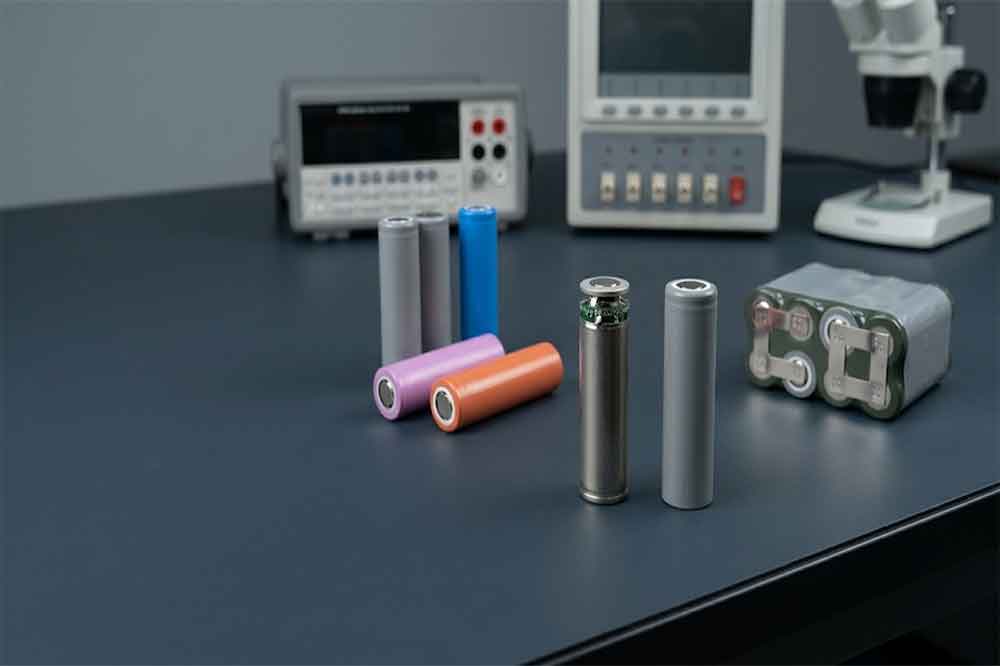
Protected 18650 cells can simplify battery safety design in some applications, but they are not automatically the right choice for every battery pack. For an equipment manufacturer, the decision depends on the electrical load, available space, pack configuration, existing protection circuitry, and how the battery will be assembled and maintained.
A protected cell may be useful in a compact, low-power device with limited system-level protection. In a multi-cell industrial battery pack, however, adding individual protection circuits to every cell can create additional design constraints without replacing the need for a properly engineered battery management system.
The important question is not simply whether a protected 18650 cell is safer. It is whether its protection functions, current limits, and physical dimensions match the requirements of the complete product.
What Makes a Protected 18650 Cell Different?
A protected 18650 cell is a cylindrical lithium-ion cell fitted with a small protection circuit, commonly installed near the negative terminal. Depending on the design, the circuit may interrupt current when it detects conditions such as excessive discharge, overcurrent, or an external short circuit. Some designs also provide overcharge protection, although the exact functions depend on the protection circuit and cell construction.
Individual protected cells and pack-level protection serve different design purposes. For a closer look at protection circuits, BMS selection, overcurrent protection and system integration, see our guide to protected 18650 battery pack protection design.
An unprotected 18650 cell does not include this additional cell-level protection board. It relies on the battery pack’s protection system and the equipment’s electrical design to provide the required safeguards.
This distinction matters during battery selection because the protection circuit becomes part of the electrical path. It can introduce additional resistance, affect voltage drop, and impose a current limit that may be lower than the underlying cell’s capability.
Protection Circuit and Cell-Level Safety
The protection circuit is intended to reduce specific electrical risks. It does not make the cell immune to overheating, physical damage, internal defects, improper charging, or operation outside its rated conditions.
A protected cell should therefore be evaluated against the manufacturer’s documented specifications rather than selected solely because the product description includes the word “protected.”
For OEM applications, buyers should confirm the actual protection thresholds, maximum continuous current, trip behavior, reset conditions, and compatibility with the intended charger and load. These details can differ substantially between suppliers and cell models.
Protected vs. Unprotected 18650 Cells
Protected cells can offer a convenient additional layer of electrical protection, especially where the battery architecture is relatively simple. Unprotected cells may be more suitable for professionally engineered battery packs with a dedicated BMS, particularly when the design requires higher current, tighter dimensional control, or more predictable electrical characteristics.
Neither option is universally superior. The correct choice depends on the complete system, including how charging, discharging, temperature monitoring, and fault handling are implemented.
Cell-level protection is only one part of a battery pack’s safety design. For a broader discussion of pack configuration and engineering considerations, see our guide to [using protected 18650 batteries in battery packs].

When Protected 18650 Cells Are a Practical Choice
Low-Power Equipment With Limited Protection
Protected 18650 cells may be appropriate for low-power instruments, portable monitoring equipment, small lighting systems, and other devices where the battery arrangement is simple and the load remains within the protection circuit’s rated limits.
They can be particularly useful when a product uses a single removable cell and the device does not have a comprehensive battery management system of its own. In this situation, cell-level protection may provide an additional safeguard against certain abnormal electrical conditions.
However, the device must still use a compatible charger and appropriate mechanical protection. A protected cell should not be treated as a substitute for all system-level safety measures.
Single-Cell and Small Parallel Battery Designs
Single-cell applications are often easier to evaluate because the battery does not require balancing between multiple series-connected cells.
Small parallel configurations may also use protected cells, but they require more careful engineering than a single-cell design. Cells connected in parallel can exchange current, and differences in internal resistance, state of charge, or protection thresholds can affect current distribution and fault behavior.
The protection circuit must be suitable for the intended parallel configuration. Using several protected cells does not automatically ensure that the complete battery assembly will disconnect safely under every fault condition.
For a commercial product, the manufacturer should validate the parallel arrangement, interconnections, charging method, and fault response before releasing the design for production.
Replacement Batteries and Distributed Equipment
Protected 18650 cells can also be considered for replacement batteries used in existing equipment, provided the original design supports their dimensions and electrical characteristics.
This is particularly relevant for maintenance teams and distributors supplying batteries for instruments, field equipment, and other devices with established battery compartments.
Before substituting a protected cell for an original cell, verify its total length, diameter, terminal configuration, polarity, and continuous discharge capability. Some protected 18650 cells are longer than standard cylindrical cells because of the added circuit and terminal structure.
A cell that fits the nominal 18650 format may therefore fail to fit the actual battery compartment.
“For a broader overview of protected 18650 cell specifications, protection features, and selection criteria, refer to our [protected 18650 battery selection and specifications] guide.”
When Cell-Level Protection May Not Be the Best Solution
High-Current and Space-Constrained Battery Packs
High-current applications require close attention to the protection circuit’s rated current and resistance. A cell may use a high-drain lithium-ion chemistry, yet its installed protection board may limit the usable current.
For example, a battery pack designed for a motor, actuator, or other load with substantial startup current may experience unwanted protection trips if the circuit cannot tolerate the load’s current profile. The same problem can occur when a load produces repeated transient peaks.
The engineering team should evaluate continuous current, peak current, peak duration, voltage drop, and thermal performance under realistic operating conditions.
Space is another consideration. A protection board and modified terminal arrangement can increase the cell’s overall dimensions. In a tightly packed battery enclosure, this may reduce the number of cells that can be installed or require changes to the holder, wiring, and enclosure.
For these applications, unprotected cells combined with a correctly designed pack-level BMS may offer a more suitable architecture. The decision should be based on measured performance and validated protection behavior, not on a general assumption that one design is always better.
Series-Connected Packs With a Dedicated BMS
Battery packs containing multiple cells in series require more than basic overcurrent protection. Depending on the chemistry and system design, the pack may need cell-voltage monitoring, overcharge and overdischarge protection, temperature monitoring, and cell balancing.
A dedicated BMS is designed to manage relevant conditions across the battery pack. Individual protected cells generally cannot replace these functions.
There can also be coordination issues when cell-level protection and pack-level protection operate independently. Different trip thresholds or response times may cause unexpected shutdowns, complicate fault diagnosis, or make recovery after a trip less predictable.
For example, in a multi-series pack, a cell-level circuit may disconnect one cell while the pack BMS continues to monitor the remaining series string. The resulting behavior depends on the electrical topology and circuit design.
This does not mean protected cells must never be used in series. It means that the combined architecture must be explicitly approved by the cell and BMS suppliers and validated by the battery pack manufacturer.

How to Evaluate Protected Cells Before Pack Production
Current, Voltage, Dimensions, and Compatibility
Before approving a protected 18650 cell for an OEM project, purchasing and engineering teams should review the following specifications:
- Nominal and charging voltage: Confirm that the cell chemistry, charging profile, and protection thresholds match the equipment.
- Continuous and peak discharge current: Check the protection circuit’s actual limits, including peak duration and recovery behavior.
- Overall dimensions: Measure the complete protected cell rather than relying only on the nominal 18 mm by 65 mm 18650 format.
- Internal resistance and voltage drop: Evaluate the complete cell assembly under the expected load.
- Operating temperature: Confirm the permitted charging and discharging ranges for the intended environment.
- Protection functions: Obtain documentation identifying the supported faults and protection thresholds.
- Charger compatibility: Verify that the charger and protection circuit work together under normal and abnormal conditions.
These requirements should be documented in the battery specification before sample approval. This reduces the risk of selecting a cell that meets the capacity target but fails during integration.
Protection Coordination and System Validation
Prototype testing should reproduce the conditions that matter in actual operation. This includes startup current, normal discharge, low-voltage behavior, charging, temperature variation, and relevant fault scenarios.
For a series-connected pack, the validation plan should also address cell imbalance, BMS thresholds, balancing behavior, and the response to individual-cell faults.
Testing should be performed using appropriate equipment and procedures by qualified personnel. Protection circuits must not be deliberately bypassed during ordinary operation to overcome nuisance trips. If a circuit trips repeatedly, investigate the load profile, wiring, cell condition, and protection coordination.
For regulated or safety-critical equipment, determine the applicable product and battery standards early in the project. Cell-level protection alone does not establish compliance for the finished battery pack.
“For projects requiring different cell configurations and battery supply options, explore our [18650 lithium battery cells and pack solutions] to identify a suitable starting point for your application.”
OEM Purchasing Considerations for Protected 18650 Cells
For device manufacturers, the purchasing decision should include more than unit price and advertised capacity. Different protected-cell suppliers may use different underlying cells, circuit boards, terminal designs, and protection thresholds even when their products share the same nominal format.
Request a specification sheet that identifies the cell model, chemistry, rated capacity, maximum continuous discharge current, protection functions, overall dimensions, and operating temperature range. Ask whether the supplier can maintain the same cell and protection-circuit configuration across production batches.
For volume procurement, sample approval should be followed by clear incoming inspection criteria and change-control requirements. Any substitution of the underlying cell, protection board, or terminal structure should be reviewed before it reaches production.
Battery distributors should also verify the consistency of labeling, traceability, transport documentation, and relevant test reports. OEM buyers developing a complete custom pack may benefit from discussing the alternative of unprotected cells with a dedicated BMS, especially when the project involves high current, series-connected cells, or a restricted enclosure.
The best sourcing partner is one that can explain the trade-offs and supply the documentation needed for engineering approval, rather than simply recommending a protected cell for every application.
Conclusion
Protected 18650 cells are worth considering when cell-level electrical protection fits the device architecture, the current requirements are within documented limits, and the physical dimensions are acceptable. They can simplify certain single-cell and low-power applications, but they do not eliminate the need for compatible charging, sound mechanical design, and system-level validation.
For high-current, multi-series, or tightly packaged battery systems, a professionally designed pack using suitable cells and a dedicated BMS may provide better control over current, monitoring, balancing, and fault response.
The final decision should follow the requirements of the complete device. Confirm the electrical limits, protection coordination, dimensions, and production documentation before approving a cell for volume manufacturing.
Frequently Asked Questions
1. Should every 18650 battery pack use protected cells?
No. Protected cells may suit simple, low-power designs, while engineered multi-cell packs often use unprotected cells with a dedicated BMS. The correct choice depends on current, configuration, and system-level safety requirements.
2. Can protected 18650 cells be connected in series?
Some protected cells may be suitable for series use, but compatibility must be confirmed with the cell supplier and BMS manufacturer. Independent protection circuits can interact in unexpected ways, so the complete configuration requires validation.
3. Do protected 18650 cells support high-current applications?
Not necessarily. The protection board may limit current even if the underlying cell supports a higher discharge rate. Check continuous current, transient limits, voltage drop, and thermal performance before selection.
4. Are protected 18650 cells the same size as standard 18650 cells?
Not always. The added circuit and terminal structure can increase overall length or alter the dimensions. Confirm the complete cell measurements against the battery holder and enclosure drawings.
5. What should OEM buyers request from a protected 18650 supplier?
Request a detailed specification sheet, protection thresholds, current ratings, dimensional drawings, temperature limits, traceability information, and applicable test documentation. Approve samples against the actual device requirements before placing a volume order.
Understanding the protection circuit is only one part of battery pack development. For OEM projects, cell selection, pack configuration, mechanical dimensions, and production testing also need to work together. Read our guide on [how to build a protected 18650 battery pack for OEM applications] for a complete development overview.
“Beyond protection circuit design, OEM buyers also need to define electrical, mechanical and charging requirements. Read our guide to custom protected 18650 battery pack specifications.”
Related Products
-

12V 4400 mah Lithium ion 3S2P 18650 Battery Pack
-

18650 2000mAh 3.7 volt Lithium-ion Battery
-

18650 20V 3.0Ah Cordless Drill battery
-

18650 22.2V 7.8Ah 2600Mah 6S3P Rechargeable Battery Pack
-

18650 2600mAh Rechargeable Lithium-Ion Battery 3.7V
-

18650 3.7V 10Ah Li-Ion Power Battery Pack
-

18650 3.7V 3300mah Rechargeable Lithium ion Battery
-

18650 7S7P 24V 14Ah Lithium ion Electric Scooter Battery Pack
-

18650 battery 3.7V 1500mAh Lithium-Ion Battery
-

18650 Battery 3500 mah Rechargeable Battery Cells
-

18650 Electric Scooter 48V 13000mAh Lithium Battery
-

2600mAh 3S1P 11.1V 18650 Battery Packs
-

3.7V Li ion Rechargeable 3000mah 18650 Battery Cell
-

36V 5200mAh 10S2P 18650 Battery Pack
-

48v 4400mah 13S2P 18650 Rechargeable Battery Pack
-

7S2P 24V 18650 Lithium Battery Pack
-

Electric Scooter 36V 4400mAH 10S2P 18650 Battery Pack
-

ICR 18650 Battery 2200mah 3.7V
Leave a Reply