
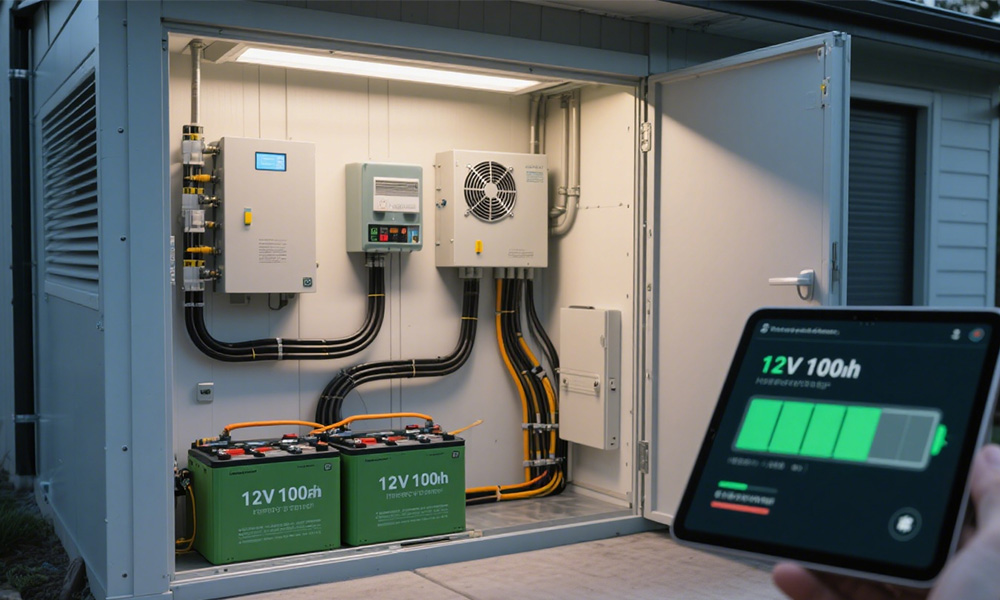
Why Choose 18650 12V 100Ah Battery Pack
When I first started working on home solar energy storage, I tried several types of batteries. Lead-acid batteries were truly a nightmare—heavy like bricks and painfully short-lived. Every time I used them, I had to constantly watch the voltage; one small mistake and the battery was ruined.
It wasn’t until I switched to a 12V 100Ah lithium battery pack built with 18650 cells that I finally felt relieved. Compact in size, high in energy density, long in cycle life—and most importantly, flexible enough to DIY and configure according to your own storage needs.
These battery packs are practical for home solar systems, RV mobile power, and even backup power during emergencies. But keep in mind: poor management can still burn your investment. I’ve seen cases where someone bought a “100Ah” pack, but due to poor BMS configuration and wiring, the capacity degraded significantly within months—what’s promised on paper and what you actually get can differ a lot.
Battery Specifications and Performance
Most 12V 100Ah packs use LiFePO₄ chemistry, which is safe and stable but tends to lose voltage quickly at low temperatures. With 100Ah capacity, the energy is about 1280Wh. Dimensions are roughly 330×175×220 mm, and weight is around 13 kg.
In practice, it can stably provide 100A continuous discharge, with short peaks up to 250A. From my own testing, if you do one deep discharge daily in summer, you’ll need to keep an eye on capacity degradation after about two years.
The built-in BMS does prevent overcharging and over-discharging, but it’s not a cure-all. If your DIY pack or refurbished system has poor wiring, safety risks remain—a point many beginners tend to overlook.

Home Solar Storage Experience
I visited a household where they installed rooftop solar panels with a 12V 100Ah battery pack. Previously, nighttime storage only lasted to about 50%, daytime charging was unstable, and sudden appliance shutdowns were frustrating.
After installing the pack, nighttime storage extended to about 85%, with real-time energy display on a tablet—much more reassuring. But during continuous rainy days, charging slowed, the system displayed “full,” yet discharge capacity dropped, requiring manual intervention. On paper LiFePO₄ batteries are stable, but real-world conditions always introduce variability. This proves that no storage system can fully rely on “ideal parameters”—field adjustments are crucial.
Use in Electric Vehicles
I’ve also used these packs in electric scooters and e-motorcycles. Their high peak discharge ensures smooth acceleration, but if the cells are mismatched or the BMS wiring is wrong, low-speed rides see fast voltage drops and the vehicle loses power.
Once, I wired two DIY packs in series for 24V system to extend range. But since I didn’t configure the BMS properly, one cell’s voltage plummeted too fast in low temperatures, triggering system shutdown. The lesson: DIY storage requires patience, attention to detail, and a solid grasp of electrical principles.
Emergency Backup Power
During typhoon season and power outages, one household used a 12V 100Ah pack to run a fridge, router, and lights for 6 hours. The energy drained quickly, but it was far better than losing power instantly. From experience, even high-performance batteries need at least 20% reserve capacity—otherwise the risk is too high.
DIY Battery Pack Assembly Experience
Building your own 18650 12V 100Ah pack looks cool, but it’s full of pitfalls. A friend of mine tried: from buying cells, assembling, welding, to BMS tuning—it took him three whole days before the system ran stably.
- Cell Matching: Never underestimate consistency. If you randomly combine cells with slight capacity differences, some will degrade faster, overcharge, or over-discharge, dragging down the whole pack. In my friend’s first test, two cells dropped voltage much faster than the rest, causing the BMS to trigger alarms all night.
- BMS Configuration: The BMS isn’t just protection—it’s the brain of the pack. Current limits, over/under-voltage thresholds, and temperature cutoffs all need proper tuning. Otherwise, the system may trip constantly or even damage the pack.
- Welding & Wiring: Spot welding must be stable, fast, and careful. Mistakes may cause shorts or even smoke/fire. I saw a colleague use low-temp soldering without proper cell fixation—solder dripped, shorted a connection, and everyone had to shut the system down in panic.
- Safety Precautions: Gloves, goggles, insulation mats are mandatory. Keep the workspace dry and clean. A small mistake can scrap the whole pack.
Cost-wise: Full DIY with good parts costs about $300–700, depending on BMS and cell quality. Beware of cheap packs labeled “100Ah”—real capacity may be 10–15% lower, hurting the actual experience.
Advantages and Challenges
Advantages:
- High energy density & lightweight: At 13 kg, a 12V 100Ah pack is less than half the weight of a lead-acid equivalent, easier to carry and install.
- Long cycle life: Theoretically 3000–5000 cycles. Even with daily deep discharge, it can last 8+ years. I’ve seen solar setups run 3 years with barely noticeable degradation.
- Real-time monitoring: BMS data on voltage, current, and temperature beats guessing by “feel.”
- High safety: LiFePO₄ is thermally stable with low fire risk. Built-in BMS prevents overcharge, over-discharge, short circuits, and overheating.
Challenges:
- High upfront cost: Quality cells and BMS cost 1.5–2x more than lead-acid.
- DIY barriers: Mismatched cells, poor BMS setup, and wiring mistakes can cause fast voltage drops or tripping. Even experienced users face such issues.
- Environmental impact: Heat, cold, or high humidity can reduce usable capacity by 10–15% compared to theoretical values.
- Maintenance needs: Long lifespan requires regular inspections; otherwise early failure is possible.

Usage and Maintenance
- Routine checks: Inspect BMS, wiring, welds, and cell surfaces. If voltage imbalance or temperature anomalies appear, stop immediately and troubleshoot.
- Environmental control: Avoid >55°C, <-10°C, or damp environments. For rooftop summer setups, add shading and ventilation.
- Compatibility: Ensure inverter, charger, and battery pack are properly matched, or else protections may trigger or performance may drop.
- Capacity reserve: Avoid full discharges or constant 100% charge. Keeping 20% reserve extends life significantly. From testing, daily use of >90% capacity accelerates degradation.
- Usage log: Especially for DIY packs, log charge/discharge cycles, voltage, temperature, and conditions to catch problems early.
Conclusion
Overall, the 12V 100Ah 18650 battery pack is like a sharp blade—its power depends on how you use it. If you understand, manage, and handle it well, you’ll enjoy efficient and stable energy storage. If not, even the best specs may backfire. My real-world experience shows that environment, wiring, BMS tuning, and maintenance are the real keys. Technology can’t replace human judgment. The 18650 battery pack is just a tool—it’s how you use it that truly matters.
Leave a Reply