
When people search for wholesale 18650 batteries, they usually compare prices first.
That makes sense.
But after speaking with purchasing managers over the past few years, I’ve noticed something interesting. The companies placing the biggest orders rarely begin the conversation with price.
Instead, they ask questions like:
“Are you the actual manufacturer?”
“Can your engineers modify the battery pack?”
“How do you control cell consistency?”
Those questions tell a different story.
Once annual purchasing volume grows large enough, buyers start thinking less about saving a few cents per cell and more about avoiding supply problems six months later.
That’s probably why more distributors, equipment manufacturers and battery brands are choosing to work directly with factories rather than through trading companies.
Price Is Only One Piece of the Picture
Buying directly from a factory usually reduces extra markups.
That part isn’t surprising.
Without multiple intermediaries, communication becomes shorter and pricing is often more transparent.
But in my opinion, the bigger advantage isn’t simply lower cost.
It’s visibility.
When you’re speaking directly with the production team, you know what’s actually happening inside the factory.
You don’t have to wonder whether your questions are passing through two or three different companies before reaching an engineer.
That saves time in ways buyers don’t always notice at first.

Custom Projects Become Much Easier
Imagine you’re developing a new cordless power tool.
The standard battery pack isn’t exactly what your engineers need.
You want:
- Different housing dimensions
- Higher discharge current
- Customized BMS
- Private label printing
- Special connector
- Waterproof design
If you’re working through a trading company, every technical adjustment usually requires another round of communication.
Question.
Reply.
Confirmation.
Revision.
Then another revision.
It’s manageable, but not always efficient.
Working directly with the factory often shortens that process because engineering, purchasing and production teams are already sitting in the same building.
Sometimes a design question that takes two days through multiple channels can be answered during one video meeting.
Production Schedules Are More Transparent
One thing I’ve heard repeatedly from overseas buyers is uncertainty.
Not knowing whether production has actually started creates unnecessary stress.
A factory-direct supplier can usually provide more accurate updates because they’re managing the production schedule themselves.
For example:
“We’re currently matching battery cells.”
“The battery packs entered aging tests yesterday.”
“Packaging starts tomorrow.”
Those updates sound simple, but they help purchasing managers coordinate shipping schedules, warehouse planning and customer deliveries.
Quality Problems Can Be Solved Faster
Let’s imagine a shipment arrives and one battery connector doesn’t fit perfectly.
Nobody wants that situation.
But if it happens, solving the problem quickly matters more than arguing about whose responsibility it is.
With a factory-direct supplier, technical engineers can review drawings, inspect production records and identify the issue much faster.
A trading company often needs to collect information first before forwarding everything back to the manufacturer.
That additional layer doesn’t always create problems, but when production schedules are tight, every extra day feels longer than it should.
Better Control Over Cell Selection
Not every 18650 battery cell performs the same.
Experienced buyers already know this.
Factories usually sort and match cells based on:
- Capacity
- Internal resistance
- Voltage consistency
- Batch numbers
- Cycle performance
These details rarely appear on a quotation sheet, yet they have a noticeable effect on battery performance.
For power tools with high discharge rates, proper cell matching can significantly improve stability and service life.
It’s one of those manufacturing processes customers never see, although the final product depends on it.

Long-Term Supply Becomes More Predictable
Here’s a situation many growing brands eventually face.
The first order goes smoothly.
The second order arrives on time.
By the third order, sales increase faster than expected.
Suddenly monthly demand doubles.
Now the supplier’s production capacity becomes much more important than the original quotation.
Factory-direct manufacturers usually have better visibility into raw material purchasing, production planning and future capacity.
That doesn’t mean shortages never happen.
The lithium battery industry still experiences fluctuations.
However, direct communication often allows buyers to reserve production slots earlier and reduce supply risks.
OEM Branding Is Simpler
Private label products have become increasingly common.
Many battery distributors no longer want generic packaging.
Instead, they request:
- Company logo
- Product labels
- User manuals
- Custom cartons
- Barcode stickers
- Retail packaging
Since these processes are handled inside the factory, adjustments are generally easier to coordinate.
Small design revisions that might seem complicated through several communication layers often become routine production tasks.
One Conversation I Still Remember
A customer from Europe once compared two quotations.
One supplier offered batteries at a slightly lower unit price.
Another was the factory itself.
At first glance, the cheaper quotation looked attractive.
Then the customer asked both companies several technical questions about BMS programming and cell grading.
The factory answered within a few hours.
The trading company needed several days because every answer had to come from somewhere else.
Eventually, the customer chose the factory—not because of price, but because technical communication gave them more confidence.
That conversation stayed with me because it reflected how experienced purchasing teams often make decisions.

Documentation Is Usually Easier to Manage
Bulk buyers frequently request documents such as:
- UN38.3
- IEC 62133
- CE
- MSDS
- RoHS
- Factory inspection reports
Since manufacturers prepare these documents during product development and testing, obtaining the latest versions is generally more straightforward.
If battery specifications change, engineers can also explain whether updated testing is required.
That level of technical support becomes valuable during international exports.
Factory Visits Build More Trust
Some customers eventually visit China before signing long-term supply agreements.
Walking through a production workshop tells a very different story from reading a company brochure.
You see:
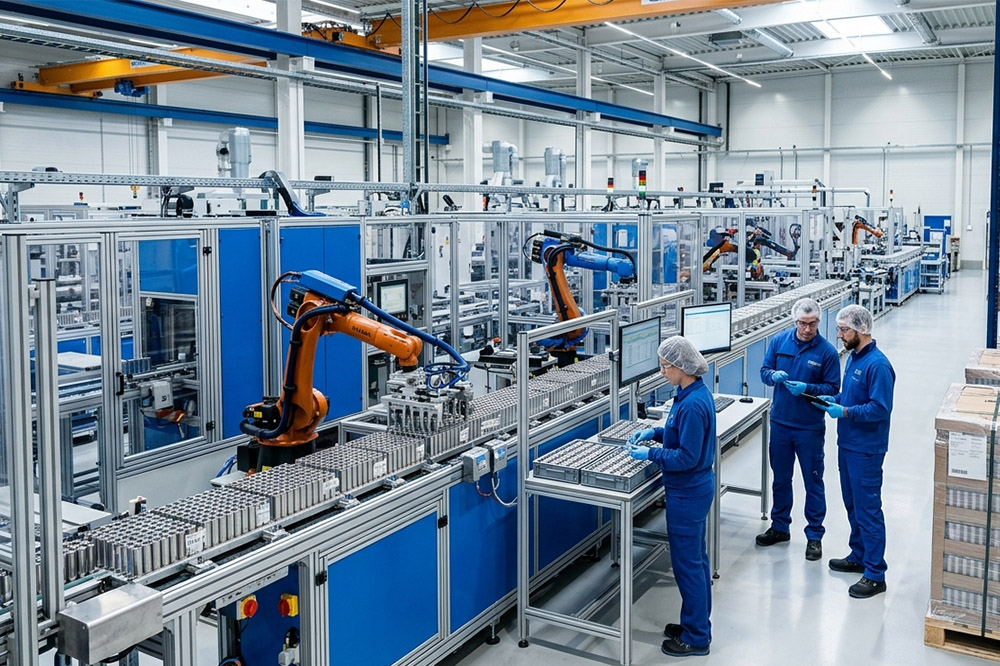
- Automated production lines
- Cell matching equipment
- Aging rooms
- Quality inspection stations
- Packaging areas
- Engineering laboratories
Even video factory tours can provide reassurance that the manufacturing capability actually matches the quotation.
I’ve noticed that buyers who visit production facilities often ask more detailed technical questions afterward. They begin to understand how batteries are built rather than simply how they’re sold.
Choosing the Right Factory Is About More Than Price
Direct factory purchasing isn’t always the cheapest option on every quotation.
Surprisingly, that’s not what experienced importers focus on.
They’re usually evaluating something much harder to measure:
Can this supplier support our business for the next three or five years?
Reliable production, stable cell quality, engineering support, certification management and responsive communication often become more valuable than a small difference in unit cost.
If you’re sourcing wholesale 18650 batteries for power tools, energy storage systems, medical equipment or other OEM projects, partnering with a factory-direct manufacturer can simplify the entire process—from product development and customization to mass production and global delivery. A supplier that understands both manufacturing and international export requirements often becomes more than just a vendor; they become part of your long-term supply chain strategy.
Leave a Reply