
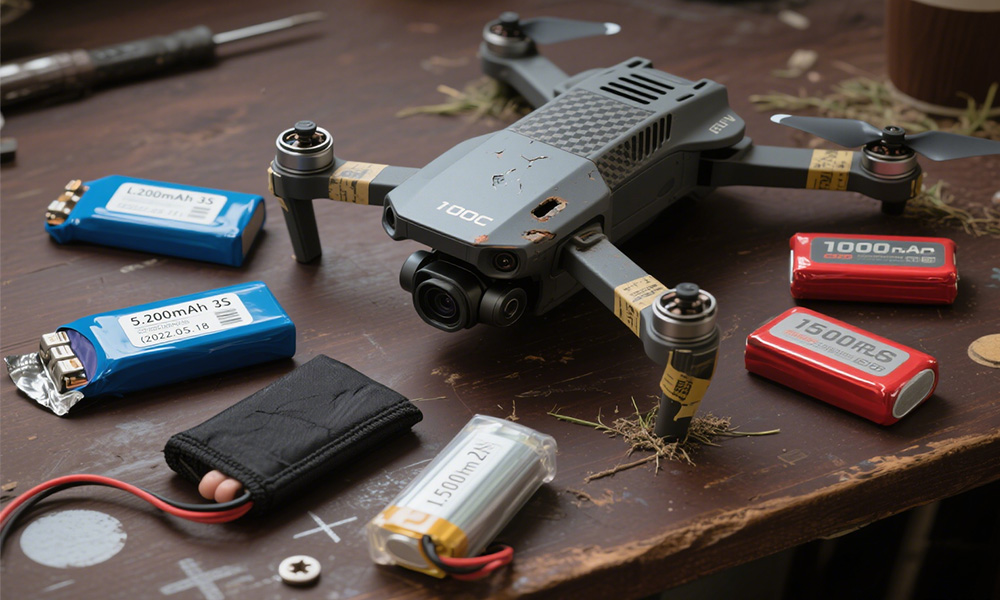
Honestly, when I first started flying drones, I had no idea how much the battery matters. You might think “as long as it flies, it’s fine,” but once you actually fly, especially FPV or racing drones, you’ll see that the battery controls how long you can stay in the air, how smooth the flight feels, and even safety. Finding the best LiPo battery for drone isn’t just about specs—it depends on your drone and how you fly.
When choosing a power source for your UAV, the drone LiPo battery remains the most popular option because of its high energy density and strong discharge performance. A reliable drone LiPo battery can significantly improve flight stability, provide consistent power during demanding maneuvers, and help extend the overall efficiency of the drone system.
LiPo Battery Basics and Safety
LiPo batteries are light and can deliver high current fast—that’s why almost every FPV drone uses them. High discharge rate means your motors respond instantly when you accelerate, flip, or brake.
But they’re a bit “delicate.” If you leave them fully charged for too long or over-discharge them, they can puff up or get damaged. Store them at about 3.8V per cell in a dry, ventilated spot. Charge with a balance charger, and putting them in a LiPo bag while charging is a good idea—it’s not paranoia, it really helps prevent fire.

Voltage and Capacity
Voltage and capacity are the first things to check. Voltage has to match your drone’s motors and ESCs, otherwise flight performance will feel off.
For a 7-inch FPV drone, 11.1V to 22.2V is common, with capacities around 1300mAh to 2200mAh. Bigger capacity gives you longer flight time but adds weight, which can reduce agility.
A friend of mine flew with a 1500mAh battery before, only got 3 minutes per flight. He switched to 1800mAh, and flights went over 4 minutes. It was a bit heavier, but handling didn’t feel worse, and efficiency went up.
Discharge Rate Matters
The C rating (discharge rate) is crucial. Racing drones or anything that needs quick moves do better with a high-discharge battery. Lower C batteries can last longer in theory, but during sudden acceleration, voltage drops too fast, and the motors lag.
Size and Weight
Battery size and weight also matter. High-capacity batteries last longer, but they might be too heavy for racing drones. Small FPV drones need lighter batteries to stay agile. Always check your drone’s battery compartment and connector type before buying.
LiPo vs Li-Ion
Some long-endurance drones use Li-Ion. They hold more energy and fly longer, but can’t deliver bursts of current quickly. So they’re great for aerial photography or mapping, not for racing or FPV stunts.
For example, I know someone doing farm mapping. With LiPo, flights were 15 minutes and swapping batteries constantly was annoying. Switching to high-capacity Li-Ion, flights stretched to 45 minutes—way more efficient. But try quick maneuvers? It just can’t keep up.

Real-World Tips
Here’s how I think about picking the best LiPo battery for drone:
- Racing drones: lightweight LiPo, high C rating.
- Aerial photography drones: bigger capacity LiPo for longer stable flights.
- Industrial or mapping drones: high-capacity LiPo or Li-Ion for long missions.
Safety first. Even the “perfect” battery can cause problems if you ignore charging and storage.
Bottom Line
There’s no single battery that’s best for every drone. Voltage, capacity, discharge rate, weight, size, and safe storage—all matter. Pick what fits your drone and your flying style, and that’s the real best LiPo battery for drone.
After a few flights, you’ll notice—it’s not about the most expensive or the highest numbers. The battery that fits your needs, feels right in flight, and keeps things safe? That’s the one worth using.


Leave a Reply