
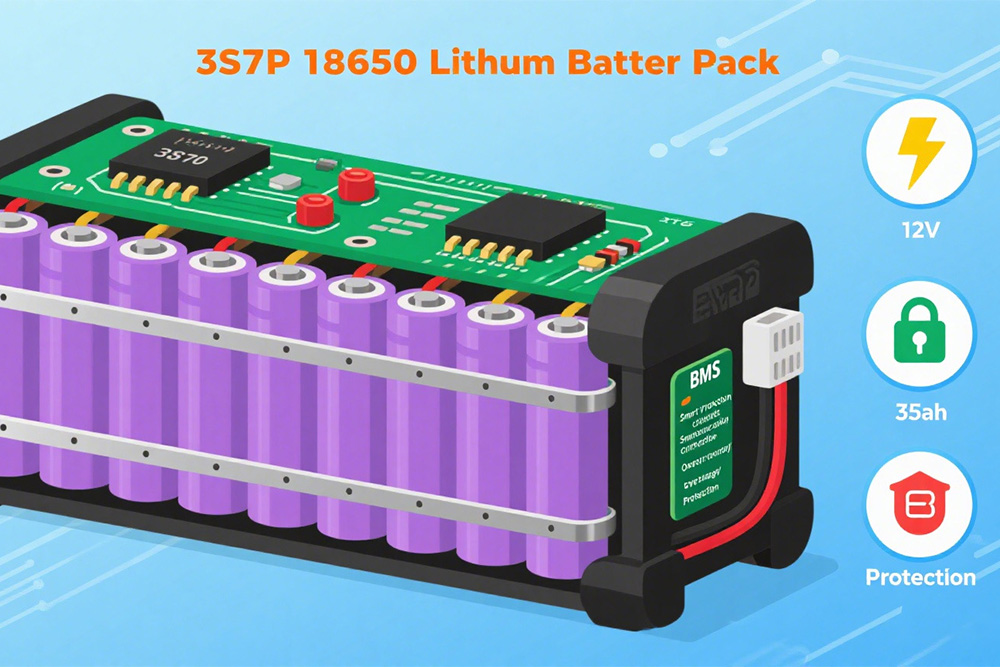
What is 3S7P Lithium Battery Pack?
3S7P battery pack uses configuration of 3 cells in series and 7 in parallel. This setup is common for devices requiring around 12V DC output.
- “3S” means three cells connected in series, where voltages add up. The total nominal voltage is 10.8V–11.1V, and it can reach 12.6V when fully charged.
- “7P” indicates seven cells connected in parallel per series group, which increases the total capacity depending on each cell’s mAh rating.
This structure delivers both stable voltage and expandable capacity, making it ideal for low to medium power devices that require continuous operation.
Common Cell Types and Capacity Options
The choice of 18650 cells directly impacts performance. Most common cells range between 3000mAh to 5000mAh. Below is an estimated capacity chart based on typical cell ratings:
| Single Cell Capacity | Total Capacity (3S7P) | Total Energy (Wh) |
|---|---|---|
| 3200mAh | 22.4Ah | ~247Wh |
| 3500mAh | 24.5Ah | ~267Wh |
| 5000mAh | 35.0Ah | ~378Wh |
- High-capacity cells suit long-duration power needs like camping lights and portable stations.
- Mid-rate cells are better for power tools or electric devices that demand high current in short bursts.
Application Scenarios and Use Cases

The 3S7P configuration offers a compact size with high capacity, making it a popular choice in:
- Outdoor camping power systems (LED lights, portable fans, mini fridges)
- Backup batteries for electric skateboards and hoverboards
- DIY solar power storage boxes and off-grid systems
- RC devices, handheld tools, electric toys
- Custom UPS (uninterruptible power supply) systems
These battery packs can work independently or combine with solar panels, DC boost modules, or inverters, building flexible and portable power solutions.
Battery Management System (BMS) Configuration Recommendations
To ensure safe operation, you must integrate a suitable Battery Management System (BMS):
- Overcharge/Over-discharge protection prevents cell damage and prolongs battery life
- Voltage balancing maintains consistent voltage across each series, extending cycle life
- Overcurrent protection avoids damage from excessive loads
- Temperature protection (optional) prevents thermal runaway in high-temperature environments
For typical use in outdoor or motorized devices, choose a BMS that supports 15A–30A discharge current.

Battery Pack Assembly and Connector Types
A standard 3S7P battery pack typically includes:
- Nickel strips spot-welded for stable current transmission
- ABS/plastic shell or heat shrink tubing for physical protection
- Common connectors: DC5521, XT60, XT90, JST balance plug
- Balance charging port to monitor voltage per string
Advanced designs may also feature battery indicators, switches, and waterproof housing modules for added functionality.
Purchasing Tips and Usage Notes
- Match the configuration to your needs: Use high-capacity cells for light loads; for heavy loads, balance between discharge rate and safety
- Buy from reputable sources: Avoid recycled or unprotected cells to ensure quality and safety
- Store at 40–60% charge to prevent deep discharge and prolong shelf life
- Install fuses or physical circuit breakers to enhance system safety
Leave a Reply