
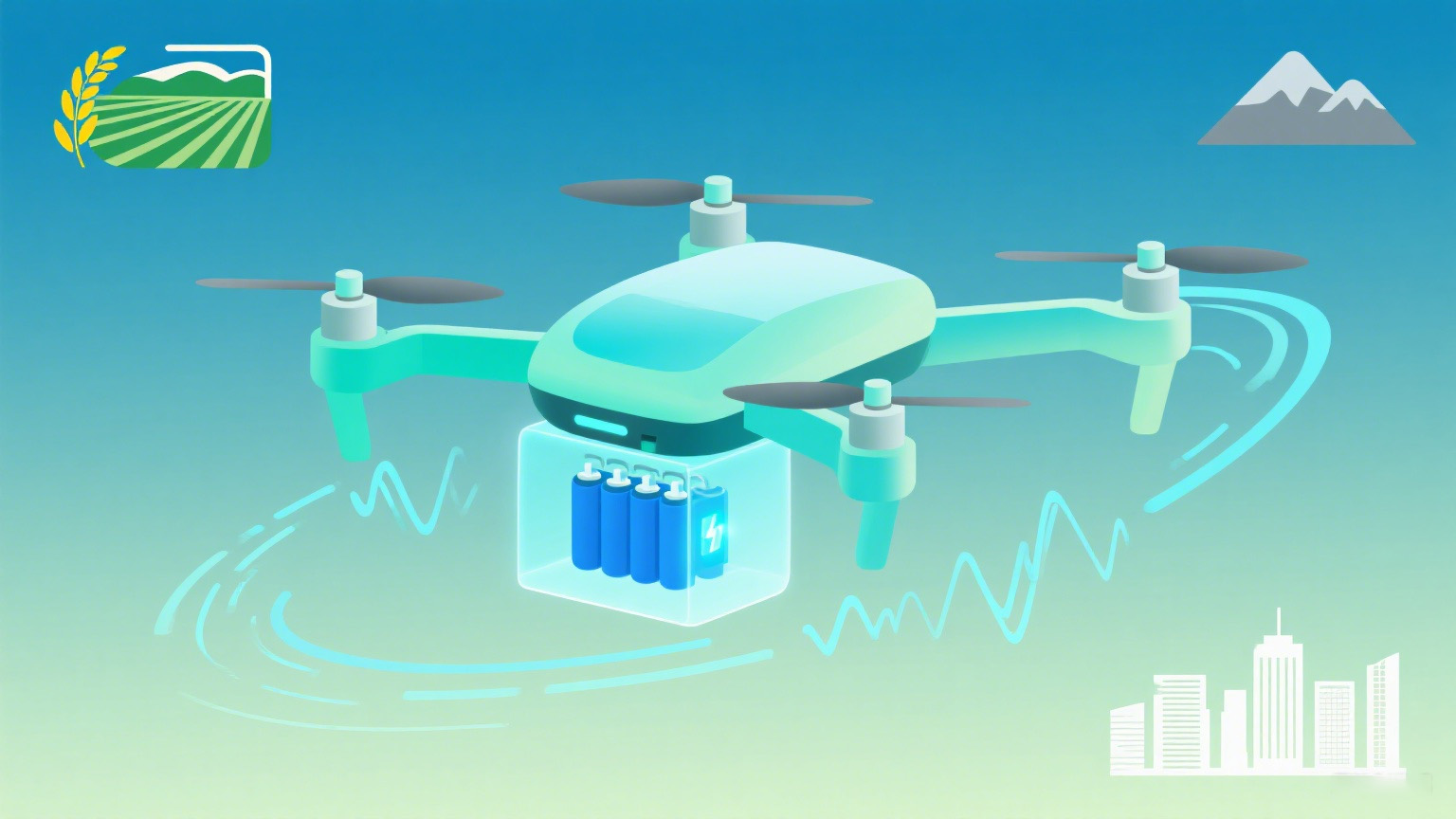
Why Are Batteries the “Heart” of a Drone?
For any type of drone, the battery not only determines flight time, payload capacity, and responsiveness but also impacts safety and mission stability. Especially in applications such as agricultural spraying, power line inspection, and surveying, battery performance directly affects operational efficiency and cost control.
As the core of a drone’s power system, choosing a high-performance battery is far more important than you might think.
Two Main Battery Types: LiPo vs. Lithium-ion Comparison
Currently, drone batteries are mainly divided into two categories:
| Battery Type | Advantages | Disadvantages | Typical Applications |
|---|---|---|---|
| LiPo (Lithium Polymer) | High discharge rate, lightweight, strong instantaneous power output | High safety requirements, strict charge/discharge management needed | FPV racing, aerial photography, agricultural spraying drones |
| Lithium-ion (Li-ion) | High energy density, longer endurance, longer lifespan | Lower discharge rate, relatively heavier | Long-duration drones, logistics delivery, endurance-type drones |
LiPo batteries are better suited for short bursts of high power, while Li-ion batteries excel in durability and are ideal for missions requiring long flight times such as mapping and forest monitoring.
Key Battery Performance Parameters Explained
When selecting a battery, pay close attention to the following performance indicators:
- Capacity (mAh): Determines maximum flight time. For agricultural drones, batteries with capacity ≥ 10,000mAh are recommended.
- Voltage (V): Must match the motor system, commonly 3S (11.1V), 4S (14.8V), or 6S (22.2V).
- Discharge Rate (C rating): Affects acceleration and climb capability. Racing or heavy-load drones typically require batteries with a discharge rate ≥ 30C.
- Cycle Life: Indicates the number of charge-discharge cycles. Li-ion batteries generally last over 500 cycles, while LiPo batteries have slightly fewer cycles.
Trends in Smart Charging Solutions
Smart charging systems for drone batteries have become standard for large-scale drone operations. Key advantages include:
- Support for parallel charging of multiple battery packs, reducing wait times.
- Compatibility with solar power or on-site generators, ideal for field operations.
- Real-time battery status and remaining capacity monitoring via apps or cloud platforms.
For large drones such as the DJI M300 or DJI T20, smart charging stations have become a key factor in improving operational efficiency.
Practical Tips for Battery Selection
Beyond specifications, keep these considerations in mind when choosing batteries for your projects:
- Battery size and weight must match the drone’s structural design.
- Choose safety models equipped with Battery Management Systems (BMS).
- Ensure compatibility with battery connectors and charger specifications.
- Consider multiple battery backups to improve mission fault tolerance.
Choose Apsenx: Custom High-Performance Lithium Batteries for Drones
Apsenx specializes in custom lithium battery solutions, offering:
- Voltage options from 3.7V to 25.2V
- Capacity customization from 2000mAh up to 30,000mAh
- Battery types: Li-ion, LiPo, Lithium Iron Phosphate (LiFePO4)
- Support for BMS protection, over-discharge protection, temperature sensors
- Various connector types including aviation plugs, XT60, XT90, etc.
Whether for surveying drones, power inspection drones, or high-altitude agricultural sprayers, Apsenx can create a reliable and tailored power supply system for you.
Choosing the Right Battery Means Choosing Efficient Flight
With continuous growth in the drone industry, battery technologies are constantly evolving. Only by deeply understanding battery types and performance differences, combined with specific operational needs, can you select a truly suitable power solution.
As a leading custom lithium battery manufacturer, Apsenx invites you to contact us for professional advice and tailored solutions. Let’s work together to achieve safe and efficient drone flights.
Leave a Reply