
Flight Is Not Excuse for Running Out of Battery
Many people like to talk about a drone’s camera, obstacle avoidance, or flashy flight controllers, but after flying for several years, I’ve come to realize that what truly determines how long and how far you can fly isn’t those cool features—it’s the battery.
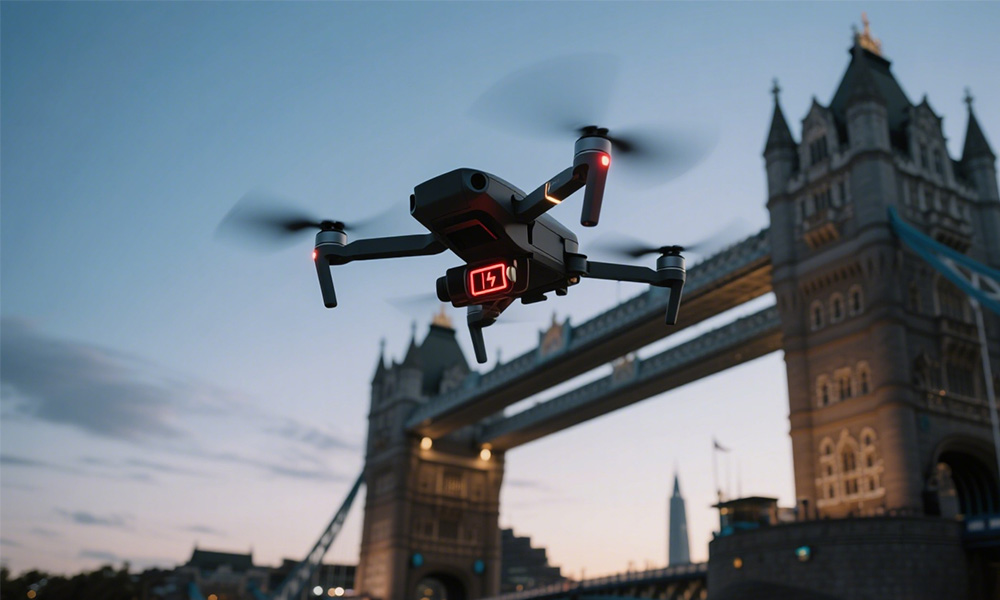
The first time battery “taught me lesson” was at London Tower Bridge. That evening, the light was just right, and my drone captured a golden reflection on the Thames that looked unreal. Just as I was about to pull another shot, the screen flashed red: 20% low battery. In that instant, my heart skipped a few beats even faster than the drone’s motors. On the way back, I watched the drone battery level tick down one bar at a time. More than losing the shot, I feared it wouldn’t last until landing.
In the end, the battery is always the invisible source of anxiety in every drone pilot’s heart.
Official Batteries: Reliable but Ridiculously Expensive
The biggest advantage of official batteries is reliability—you just plug them in, and they work. Temperature control, over-discharge protection, fast charging protocols—all covered. Some even display remaining power accurately in freezing winds.
But the downside is obvious: the cost is insane.
I once tried looking for original batteries for older models on the second-hand market and found prices could reach third of the drone itself—or even higher. Infuriating, right? Sometimes, even if you’ve saved up, you still have to spend extra to get another twenty minutes of flight.

Compatible Batteries: A Cheap Lottery
Compatible batteries are another path for drone enthusiasts. They’re cheaper, often claiming higher capacity than the originals. With the price of one official battery, you could buy two or three—sounds tempting.
I’ve tried a few myself. They’re fine in a pinch, especially when older models are discontinued, making compatible batteries the only lifeline. But there are many issues: a battery rated at 3000mAh might barely reach 2500mAh in reality; lifespan can be shockingly short. One of mine started swelling after fewer than 30 flights, making every charge nerve-wracking.
Buying compatible batteries is like opening a blind box—you never know if you’ll get lucky or end up with a disaster.
Drone Battery Use in Context
In extreme conditions, the number of batteries you bring can determine whether the mission succeeds.
DIY Batteries: Testing Your Courage and Skills
The most extreme choice is DIY. The idea is simple: buy 18650 or 21700 cells, remove the original battery’s protection board, and solder them into a new pack.
I once tried it in my garage. Using heat gun to open an old battery casing, I messed up a solder joint and the cell started smoking. I panicked and threw the whole pack into metal bucket, watching it from a distance for half an hour before daring to approach.
The advantages are obvious: full control over capacity and weight, and the cost is even lower than compatible batteries. But the risk is equally clear: one mistake, and your battery can turn into a “time bomb.”
Community Experience and Conflicts
I hang out on Reddit and several drone forums, where the discussions are far more honest than official manuals. Some users cut off old battery connectors and solder them onto new cells as adapters. It’s crude, but for discontinued models, it’s sometimes the only option.
Battery choice also depends on the scenario: racing drones need high-performance cells for instantaneous thrust, while aerial cinematography—like chasing the Northern Lights in Iceland—requires at least five large-capacity batteries for whole night.
As for debates, one camp argues “multiple cheap batteries are cost-effective,” while another insists “one flagship battery is worth three generic ones.” Arguments rage daily, and no one convinces anyone.
The Li-Po vs. Li-Ion discussion never ends: Li-Po batteries deliver explosive power and sharp turns, favored by FPV pilots; Li-Ion offers large capacity, suitable for long-duration cruising. I’ve flown Li-Ion—great endurance, but the flight feels “heavy,” like driving an SUV on winding mountain roads: stable, but not thrilling.

Li-Po vs. Li-Ion: The Eternal Debate
- Li-Po (Lithium Polymer): Explosive power, agile turns, a must for FPV pilots.
- Li-Ion (Lithium Ion): Large capacity, ideal for long cruises.
My personal experience: Li-Ion may have impressive specs, but the flight feels “sluggish,” like driving an SUV through mountain roads—stable but lacking excitement.
Usage and Maintenance Tips
There’s no universal formula for choosing battery, but these tips help avoid pitfalls:
- Safety first: Don’t buy unknown or untrustworthy batteries; exaggerated capacity ratings are usually a disaster waiting to happen.
- Match the scenario: Racing drones use high C-rate batteries; aerial photography uses large-capacity ones; industrial use may require low-temperature, waterproof specialty batteries.
- Maintenance habits: Let batteries cool before charging; store long-term at 40–60% capacity—I personally top up to 3.8V before putting them away.
Conclusion: The Battery Is the Heart
After flying drones for a while, you slowly realize: the flight controller is the brain, the propellers are the wings, and the battery—the heart that can “fail” at any moment.
True flying joy isn’t about how high you can go; it’s about capturing that perfect moment within the limits of your battery.
Leave a Reply