
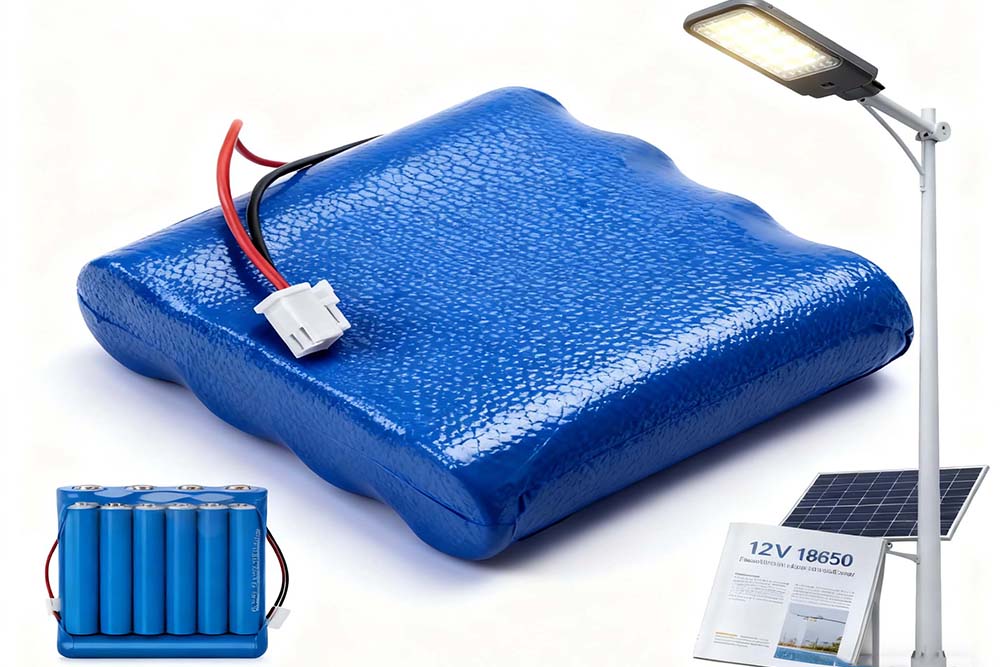
If you’ve ever tried picking a 12V lithium battery pack for solar setups, outdoor lighting, or low-voltage electronics, you know the market can be full of questionable options. Overrated capacity, no-name BMS boards, random cells welded together like someone was in a hurry — you get the idea.
When I first started reviewing 18650 battery packs, especially 12V packs for solar applications, my expectations were low. Really low.
But after testing multiple models, examining teardown photos, and tracking long-term performance in real-world outdoor projects, one series kept standing out: the Apsenx 18650. Not because it’s flashy — but because it’s the kind of pack that won’t make you call the installer two months later.
In this guide, I break down three Apsenx battery solutions that cover most 12V use cases. You’ll get honest pros and cons, real-world insights, and the exact projects each pack works best for.
The Reliable Workhorse: 4S1P 18650 Solar Battery Pack
🔗 https://www.anpsglobal.com/18650-battery-pack-4s1p-solar-battery-supply/

What Surprised Me About the 4S1P Solar Battery Pack
It’s unbelievably stable.
Not “high performance,” not “super capacity”—just stable, predictable, and balanced across charge cycles. And honestly? That’s exactly what a solar system needs.
Why the 4S1P Format Works
- Only one cell per parallel group — no mismatched cells fighting each other.
- Voltage is perfect for 15–18V solar charging systems.
- Lower internal resistance → better efficiency under sunlight fluctuations.
- Extremely compact footprint.
- Stays cool under daily charging, even in hot environments.
I’d call this the “no-drama solar battery.”
If you’re powering IoT nodes, telecom boxes, small pumps, data loggers, or compact solar lights — this pack keeps everything running smoothly, without surprises.
Ideal Use Cases
- Small off-grid solar kits
- Weather stations
- Security sensors
- Light outdoor IoT systems
- Gate controllers
- Compact UPS units
In real-world outdoor deployments, consistency beats raw capacity. That’s why this pack stands out.
The Classic 12.6V Solution: 3S1P 2600mAh 18650 Pack
🔗 https://www.anpsglobal.com/12v-18650-battery-pack-3s1p-2600ah-wholesale/

The Classic 12.6V Solution: 3S1P 2600mAh 18650 Pack
This one feels like the classic “everyone needs one eventually” pack.
It’s not huge and overkill.
It’s a straightforward 12V (12.6V max) lithium pack — compact, lightweight, and easy to integrate.
Why the 3S1P Pack Is So Popular
- Clean 12.6V → 10.8V discharge curve
- Ideal for electronics expecting a 12V lead-acid replacement
- Perfect size for handheld devices
- Very lightweight
- Extremely cost-effective for bulk OEM supply
Best Suited For
- Portable instruments
- Emergency lighting
- Handheld tools
- Security devices
- Compact solar lanterns
- Rechargeable consumer electronics
The “Secret” Advantage
Many factories build 3S1P packs using mixed cell batches. Apsenx, however, uses matched, same-cycle, same-grade 18650 cells. That’s why these packs last longer and avoid imbalance issues.
It’s small. Efficient. Honest.
If you need the simplest 12V lithium solution, start here.
The Heavy-Duty Option: Solar Street Light Battery Packs
🔗 https://www.anpsglobal.com/rechargeable-12v-solar-street-light-battery-packs/

Let’s be blunt:
Most solar street lights die because the battery dies.
Not the LED ,solar panel andcontroller.
Is The battery.Why? Because street lights are harsh environments:
- Daily deep discharge
- High daytime temperature
- Nighttime cooling cycles
- Weather fluctuations
- Humidity
- Rain
- Constant outdoor vibration
Cheap lithium packs simply don’t survive this.
What makes these packs different
- Purpose-built for street lights (not repurposed generic packs)
- High-grade cell matching
- Strong cycle life under deep discharge
- Solid BMS protection
- Designed for wiring simplicity
- Good thermal control
These packs are designed to survive years, not months.
Where they shine
- Municipal street lights
- Solar parking-lot lamps
- Garden or pathway lighting
- Rural or off-grid lighting projects
- Outdoor security lamps
If you want to prevent callbacks from clients, you use the battery designed for the environment.
Why Apsenx Battery Packs Perform Better
After comparing multiple brands side-by-side, a few differences consistently show up:
Apsenx battery cell matching is tighter
Most budget packs mix cells from different batches.
ANPS doesn’t — which directly improves cycle life.
BMS boards aren’t the cheap generic type
They use properly sized MOSFETs and reliable balancing circuits.
Thermal design is actually considered
Huge deal for solar street lights.
Especially in hot countries.
They design by application, not by copy-paste
Most factories use one pack and rename it 10 times.
Apsenx creates separate designs for:
- Solar systems
- Street lights
- Consumer devices
- OEM project packs
That matters more than people think.
Direct Comparison Table (Simple & Realistic)
| Feature | 4S1P Solar 18650 Pack | 3S1P 12V 18650 Pack | Solar Street Light Battery Pack |
|---|---|---|---|
| Voltage | 14.8V (16.8V max) | 12.6V (max) | 12V solar system compatible |
| Ideal Use | Solar mini-systems, IoT | Small electronics | Outdoor solar lighting |
| Parallel Groups | 1 | 1 | Multiple configs |
| Strength | Stable, efficient | Lightweight, cheap | Outdoor durability |
| Lifespan | >500 cycles | >500 cycles | High cycles under harsh conditions |
| Typical Applications | Sensors, UPS mini-kits | Tools, lanterns, devices | Street lamps, pathway lighting |
| Pros | No cell mismatch | Great for OEM | Survives heat & deep cycles |
| Cons | Lower capacity | Limited current | Slightly higher cost |
Leave a Reply