
If you’ve ever walked into a tool store or browsed online, you know there are so many battery options for cordless drills. Picking one can feel overwhelming. I’ve been on job sites where people grab the “highest voltage” pack thinking it’s the best—only to find it’s too heavy or drains too quickly.
So, let’s break it down from real-world experience.
1. Voltage Matters, But Don’t Obsess
Voltage tells you roughly how much power a drill can deliver. Most modern cordless tools stick to 20V lithium batteries, and for good reason.
I’ve used 12V drills for small jobs, and honestly, they’re fine for a few screws or light assembly. But once you start drilling into hardwood or running long screws, they struggle.
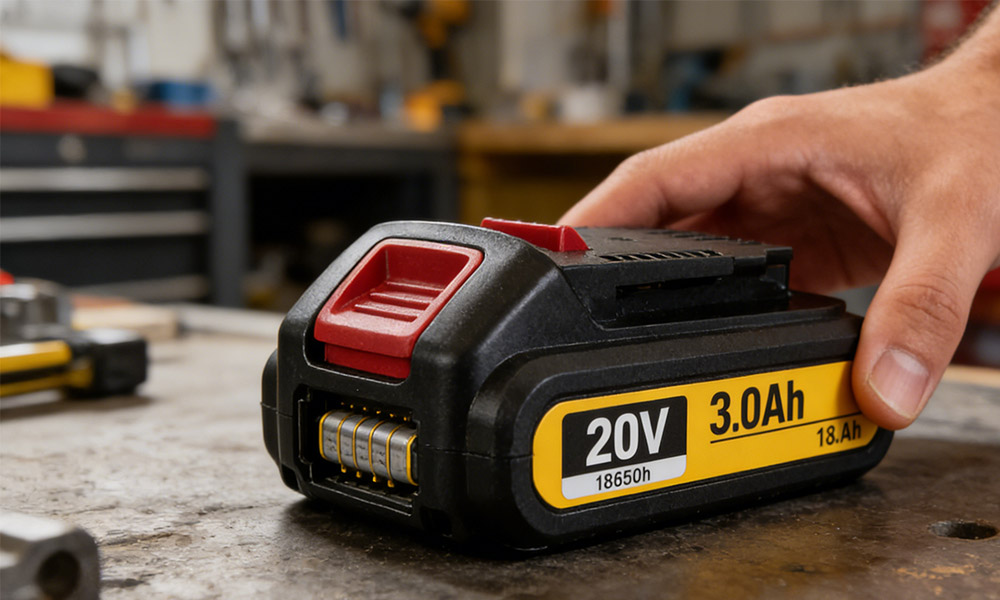
A 20V pack, like the 20V 3.0Ah cordless drill battery, keeps the torque steady and runs longer without feeling like it’s about to die mid-job. That’s why pros usually skip lower voltage options.
2. Amp-Hours: Runtime vs Weight
Battery capacity is measured in amp-hours (Ah). Bigger numbers mean longer runtime—but also more weight.
From my experience, 3.0Ah packs hit the sweet spot. They last long enough to finish a half-day job without recharge, but they’re still light enough to carry overhead. I’ve tried 5Ah packs—they’re great for runtime, sure, but after a few hours, your arms definitely notice the difference.
For distributors, this balance is key. Sell a battery that’s too heavy, and casual buyers get complaints. Too small, and the pros complain it dies too fast.
3. Compatibility Can Make or Break Your Day
Even if the voltage and capacity are right, the battery might not fit your tool. Connector type, pack shape, and BMS design all matter.
I’ve seen contractors try to swap batteries between different brands, only to find they don’t fit or can’t handle the current. That’s a recipe for frustration—or worse, damage.
That’s why sticking to packs designed for your tool platform, like the 20V 3.0Ah lithium pack with 18650 cells, is usually the safest choice.

4. Lithium vs Older Chemistries
Older batteries—NiCd or NiMH—still work in some tools, but lithium-ion dominates now.
Why? Lighter weight, no memory effect, longer lifespan, and better high-drain performance. I’ve had NiCd packs die after a few months on heavy jobs; lithium ones still hum along after years.
If you’re stocking or recommending batteries, lithium is the one people will ask for first.
5. Safety First
A battery might look good on paper, but without a proper BMS, it can overheat, overcharge, or short out. I’ve personally seen cheap packs fail mid-job—it’s not just annoying, it’s dangerous.
A quality lithium battery protects the tool and the user. That’s part of why 20V lithium packs are so trusted among professionals.

6. For Distributors and Resellers
If you’re selling batteries, think about who your customers are.
- DIY users often prefer light, easy-to-use packs.
- Professionals want durability, reliability, and cross-tool compatibility.
From experience, keeping a few standard 20V 3.0Ah packs and a few higher-capacity “premium” packs covers most of your customer base. You won’t go wrong that way.
Final Thoughts
Choosing the right cordless drill battery isn’t rocket science, but it’s also not just about picking the biggest number on the package.
Voltage, amp-hours, weight, safety, and compatibility all matter. And if you want a pack that works reliably across modern tools, performs consistently, and satisfies both DIYers and pros, a 20V 3.0Ah lithium pack with 18650 cells is a solid bet.
It’s what I keep on hand for myself, and what I recommend to clients who want reliable performance without surprises.
Leave a Reply