
Spend a little time opening small electronic devices and you start noticing a pattern. Many of them don’t use round batteries anymore. Instead, they rely on flat lithium pouch cells.
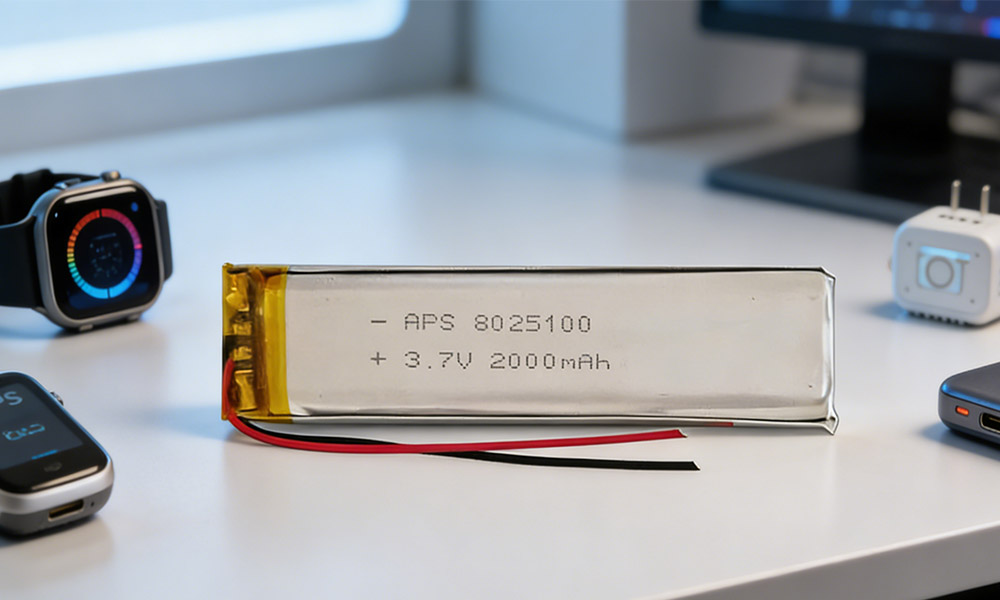
One size that appears quite often is the 3.7V 2000mAh pouch battery. It sits in a nice middle range—large enough to power real features, but still compact enough to fit into small housings. That balance is exactly why manufacturers keep coming back to it.
A typical example can be seen here
Below are several types of devices where this battery capacity tends to work especially well.
Smartwatches and Fitness Trackers
Wearables are one of the most obvious applications. When designers build a smartwatch, space is always the first problem. Screens are getting bigger, sensors are increasing, but the device still has to sit comfortably on someone’s wrist.
That’s where pouch batteries help.
Because the battery is flat, engineers can place it directly under the display or across the internal frame. A 2000mAh capacity also gives enough runtime for daily charging cycles, which is usually the expectation with wearables anyway.
From what many product designers mention, the shape flexibility is sometimes more valuable than the capacity itself.

GPS Tracking Devices
Another place these batteries show up a lot is tracking equipment.
Vehicle trackers, pet trackers, and logistics tracking units all share similar design challenges. The device needs to stay small so it can be hidden or attached easily, but GPS modules and cellular chips consume a fair amount of power.
A 3.7V 2000mAh battery often lands in the “good enough” range for these products. It doesn’t make the tracker bulky, but it can still support several hours—or even days—of operation depending on how often the device sends data.
Manufacturers often choose pouch cells here because the internal layout of trackers can be awkward. A flat battery simply fits better.

IoT Sensors
In the IoT world, battery choice is often more about efficiency and size than raw capacity.
Think about devices like:
- temperature sensors
- smart home modules
- asset monitoring tags
- wireless environmental sensors
These products don’t always need a huge battery. What they need is something compact that can fit into a sealed enclosure.
A pouch battery works well because it can be shaped to match the housing. That might sound like a small advantage, but in hardware design, saving a few millimeters often decides whether a product looks clean or bulky.

Portable Medical Devices
Medical electronics have also been moving toward smaller, portable formats. A few years ago, most monitoring equipment stayed in hospitals. Now you see more devices designed for home use.
Portable ECG monitors and wearable health trackers are good examples.
In these cases, battery reliability matters more than anything else. The device must deliver stable power, and it also needs to stay lightweight so patients can wear it for hours.
A mid-range pouch battery like 3.7V 2000mAh tends to fit that requirement fairly well.

Handheld Electronics
Small consumer electronics quietly use pouch batteries all the time. People just don’t notice because the battery is hidden inside.
Examples include:
- handheld scanners
- small Bluetooth devices
- portable audio products
- mini gaming gadgets
One reason manufacturers prefer pouch batteries in these devices is simple: design freedom. If the internal layout changes slightly, the battery size can often be adjusted without redesigning the entire product.
That kind of flexibility saves time during development.
Why Pouch Batteries Keep Showing Up
Round cells like 18650 batteries are still widely used, especially where high capacity is needed. But for compact electronics, pouch cells solve several design problems at once.
They are:
- thinner
- lighter
- easier to fit into tight spaces
- more adaptable in shape
When a device designer is trying to shave a few millimeters off a product, these details suddenly become very important.
A Small Component That Solves a Big Design Problem
The 3.7V 2000mAh pouch battery isn’t a flashy component. It’s just a power source. But in many small electronics, it quietly determines how compact the final product can be.
That’s probably why it shows up in so many different industries—from wearables and IoT devices to trackers and portable medical equipment.
For companies building compact electronics, this type of battery simply fits the job more often than people expect.
-

11.1V 3S 850mAh li-ion Polymer Pouch Cell Battery Pack
-

134365 4500mAh 3.7V Rechargeable Lithium Polymer Battery
-

3.7V 1200mAh Li-Polymer Pouch Cell Battery
-

3.7V 15Ah 148198 Pouch Lithium Ion Battery
-

3.7V 1S2P 3000mah lithium Polymer Battery
-

3.7V 2000mAh Pouch Cell Battery
-

3.7V 502248 500mAh Lithium Ion Polymer Battery
-

3.7V 700mAh Li-Polymer Pouch Cell Battery
-

3.7V 800mAh Rechargeable Pouch Li-Polymer Battery
Leave a Reply