
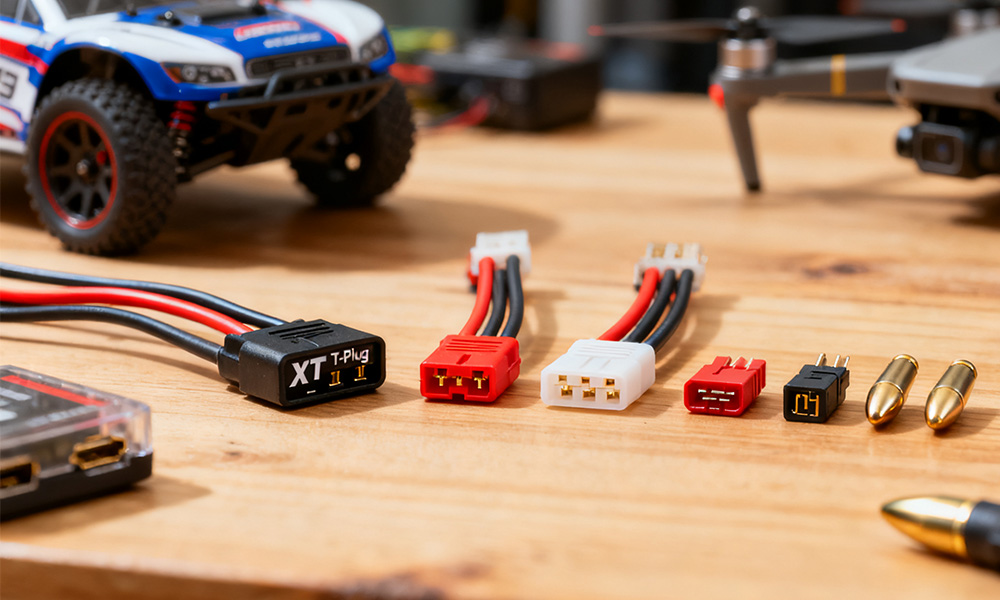
If you’ve ever gotten into RC cars, drones, or boats, you know batteries are basically the heart of the whole setup. But here’s the thing—one of the little things that trips people up more than they expect is the battery connector. It’s not just “plug it in and go.” Picking the right connector can save you from frustration, keep things running smoothly, and even prevent little disasters.
Why Connectors Matter
At first glance, a battery connector seems like just some plastic and metal, right? But don’t be fooled—it’s way more important than it looks. A solid connector keeps your electricity flowing where it needs to go, prevents unnecessary heat, and stops shorts from happening. Sloppy connections can make your RC gear underperform, frustrate you to no end, or worse, damage something expensive.
So let’s walk through the types of RC battery connectors you’ll run into and what they’re best for.
1. XT Series Connectors
The XT series is pretty easy to spot with its molded, heat-resistant housing and those gold-plated bullet terminals. They come in different sizes like XT-30, XT-60, and XT-90, and each one is good for a different amount of current.
- XT-30: Perfect for smaller RC cars or lightweight drones. Handles modest currents without breaking a sweat.
- XT-60: This is the bread-and-butter connector. It handles more current and shows up everywhere—from 1/10 scale RC cars to small planes.
- XT-90: For the big boys. Larger trucks, high-power drones—you name it. Handles serious current.

The best part? They stay put. You can hit bumps or land a little hard, and they’re not going to pop loose.
2. T-Plug / Deans Connectors
These little guys are compact and low-resistance. They fit nicely in RC cars and trucks and carry a decent current. The catch? They’re not indestructible. Plug and unplug them too many times, and they’ll wear down. A bit of care goes a long way.
3. JST Connectors
JST connectors are tiny, lightweight, and perfect for low-current stuff like receiver batteries or small electronics. Not built for big power, but when weight and size matter, they’re a lifesaver.
4. Tamiya Connectors
Ah, the classic. You’ll see these in older kits or beginner models. They’re still good, but don’t expect them to handle high current well. If you’re mixing old and new gear, you might need an adapter.

5. Bullet Connectors
Bullet connectors are simple and effective, usually in 4mm or 5mm sizes. They carry high currents well, so you see them a lot between batteries and speed controllers. Word of advice: when you’re not using them, don’t let them touch anything metal—short circuits happen fast.

Tips for Choosing the Right Connector
- Match Your Gear: Make sure your battery and ESC use the same connector. Mismatched plugs are a headache waiting to happen.
- Check Current Ratings: Don’t skimp—use connectors rated for your vehicle’s max current.
- Invest in Quality: Cheap connectors might save you a couple bucks, but they can cause heat problems or flaky connections.
- Adapters Are Your Friend: When your gear has different connectors, quality adapters can save the day.
Final Thoughts
Picking the right connector isn’t just about technical specs—it’s about enjoying your hobby without unnecessary headaches. A good connector keeps your machines running reliably and lets you focus on the fun stuff: racing, flying, or just tinkering around.
Next time you pop open a battery pack or hook up a new ESC, take a moment to look at that connector. Understanding the types of RC battery connectors will make your RC life smoother, safer, and, honestly, way more enjoyable.


Leave a Reply