
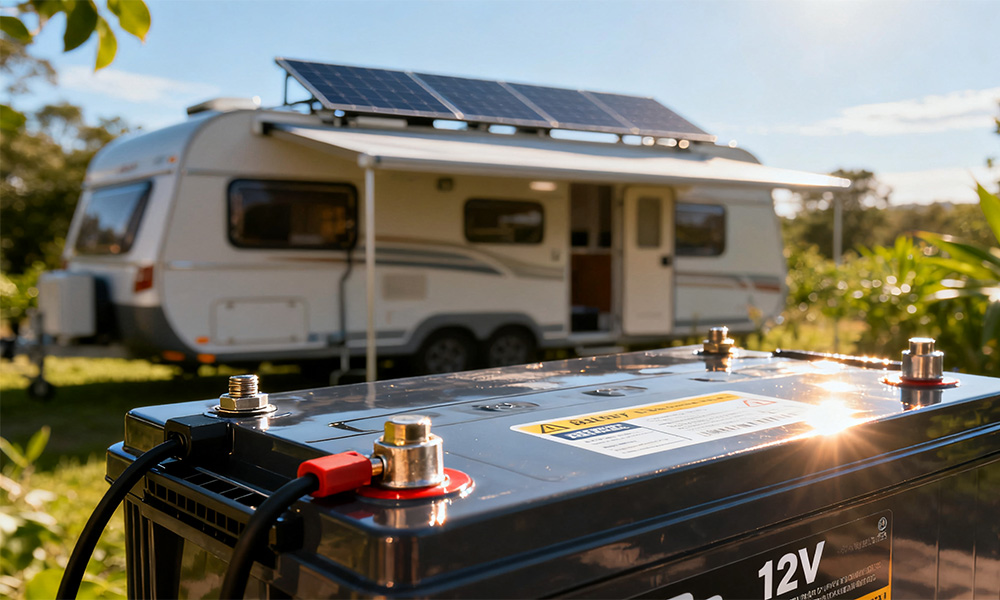
If you’ve ever tinkered with RVs, small boats, or solar setups, you’ve probably run into 12 volt LiFePO₄ batteries. Unlike the old-school lead-acid type, these lithium cells hold their voltage really well and last a lot longer. From personal experience, having a stable 12.8V output means fewer surprises—your lights don’t dim halfway through a trip, and small electronics keep running reliably.

Voltage and Charge Behavior in Practice
Here’s the thing about these batteries: their voltage hardly drops until they’re almost empty. In my setups, I usually see:
- Full charge: ~14.4–14.6V
- Floating: ~13.5V
- Nominal: ~12.8V
- Minimum: ~10V
You can push below 10V, but that tends to shorten battery life, so I try to avoid it. It’s better to size your battery a bit bigger than you think you need—trust me, it saves headaches later.

Capacity, Cycle Life, and BMS
These batteries come in many sizes, from small 50Ah units to 300Ah or more. What really stands out is the lifespan—most survive thousands of deep cycles. Another key feature is the Battery Management System (BMS). From my own testing, a good BMS is worth its weight: it stops overcharging, over-discharging, and protects against heat. I’ve seen cheaper systems fail in hot environments, so choose wisely.

Tips From the Field
- Charging: Use a compatible charger. I often go slow and steady—it’s easier on the cells.
- Temperature: Avoid charging when it’s freezing; the BMS may prevent it anyway, but a little warmth helps.
- Series & Parallel: If you wire multiple batteries, try to match capacity and age.
- Storage: If not using it for months, store at around 50–60% charge to keep it happy.

Where They Shine
From my experience, these batteries are versatile:
- RVs and campers: No sudden voltage drops, longer trips are easier.
- Boats: Great for small trolling motors.
- Off-grid systems: Cabins, sheds, tiny homes—you name it.
- Backup power: Perfect for emergencies or intermittent power.
Even though the initial price can be higher than lead-acid, the convenience and longevity usually make up for it.
Alt Text: Off-grid cabin powered by a 12 volt LiFePO₄ battery and solar panels

Conclusion
Switching to a 12 volt LiFePO₄ battery is often worth it. They’re reliable, stable, and surprisingly long-lasting. My advice: plan for a slightly bigger capacity, respect the BMS limits, and you’ll enjoy consistent power for years.
Leave a Reply