
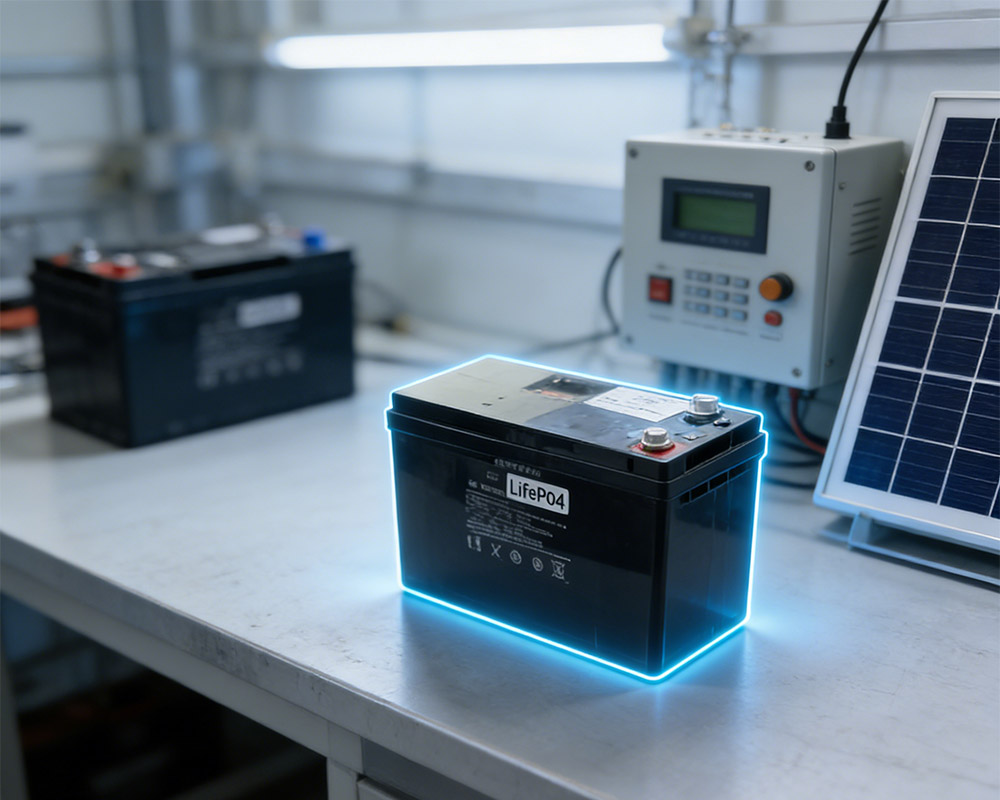
When a project only needs a compact power source, big size batteries often create more problems than they solve. What many devices actually need is a compact, stable, and long-lasting power source that can run daily without constant replacement.Just right 12V 8Ah LiFePO4 battery balances size, safety, and long service life.
8Ah capacity has become polular choice across solar lighting, backup devices, and portable equipment. It’s small enough to install easily, but reliable enough to handle regular cycling.
A practical upgrade from lead-acid
The change from sealed lead-acid to LiFePO4 has been steady over the past few years, especially in the 12V segment. A 12V 8Ah LiFePO4 battery typically delivers around 12.8V nominal voltage and roughly 102Wh of usable energy.
Compared with SLA batteries of similar capacity, the difference shows up quickly in real use. Voltage remains more stable during discharge, so connected equipment doesn’t slow down or dim as the battery drains. Charging is faster, and efficiency is higher, which matters for solar and portable setups.

Weight is another factor. Most 12V 8Ah LiFePO4 batteries are noticeably lighter than lead-acid equivalents, making them easier to install inside devices or enclosures where space is limited.it delivers steady output without the voltage drop commonly seen in lead-acid batteries.
Cycle life is usually the main reason buyers switch. While lead-acid might last a few hundred cycles, a qualityLiFePO4 battery can run thousands of cycles before capacity drops significantly. For equipment used daily, that alone changes replacement schedules and long-term cost.
Designed for steady daily operation
This battery size is rarely used for high-power discharge. Instead, it supports equipment that runs for long periods at moderate load.
You’ll find 12V 8Ah LiFePO4 batteries in:
Small solar and lighting systems
UPS and backup modules
Monitoring and security devices
Portable electronics and tools
Electric scooters and small mobility setups
Because the discharge curve stays relatively flat, devices receive consistent power until the battery is nearly empty. That makes operation more predictable, especially in systems where voltage fluctuations can cause shutdowns.

Structure and protection matter more than specs
Most modern LiFePO4 batteries in this range include an internal BMS handling over-charge, over-discharge, short circuit, and temperature protection. Without it, cycle life and safety would drop quickly.
The casing also plays a role. Sealed ABS housings are common, helping the battery handle vibration and everyday handling without damage. For outdoor or semi-outdoor installations, this type of enclosure keeps dust and moisture away from internal cells and circuitry.
Self-discharge is low compared with older battery types. Equipment stored for weeks or months will usually still power on without needing immediate recharge.
Wall-mounted format for fixed installations
Some projects don’t need a loose battery pack at all. A fixed installation is cleaner and easier to manage, especially inside cabinets or equipment boxes.
The 12.8V 8Ah LiFePO4 power wall battery design follows that idea. Instead of placing the battery on a shelf or floor, it mounts directly onto a wall or panel. This keeps wiring organized and prevents movement in vibration-heavy environments.
Wall-mounted 12V 8Ah LiFePO4 batteries are often used in:
Small solar storage boxes
Telecom or IoT backup systems
Control panels and smart devices
Equipment cabinets with limited space
Installation is more stable, and maintenance access is straightforward.

Why this capacity continues to sell
There’s nothing flashy about a12V 8Ah LiFePO4 battery. It doesn’t power large systems or vehicles. But for small and mid-size equipment, it does exactly what’s needed — steady voltage, long service life, and minimal maintenance.
For distributors and OEM buyers, that consistency matters more than peak performance numbers. Once installed, these batteries tend to run quietly in the background for years. That’s usually the goal.


Leave a Reply