
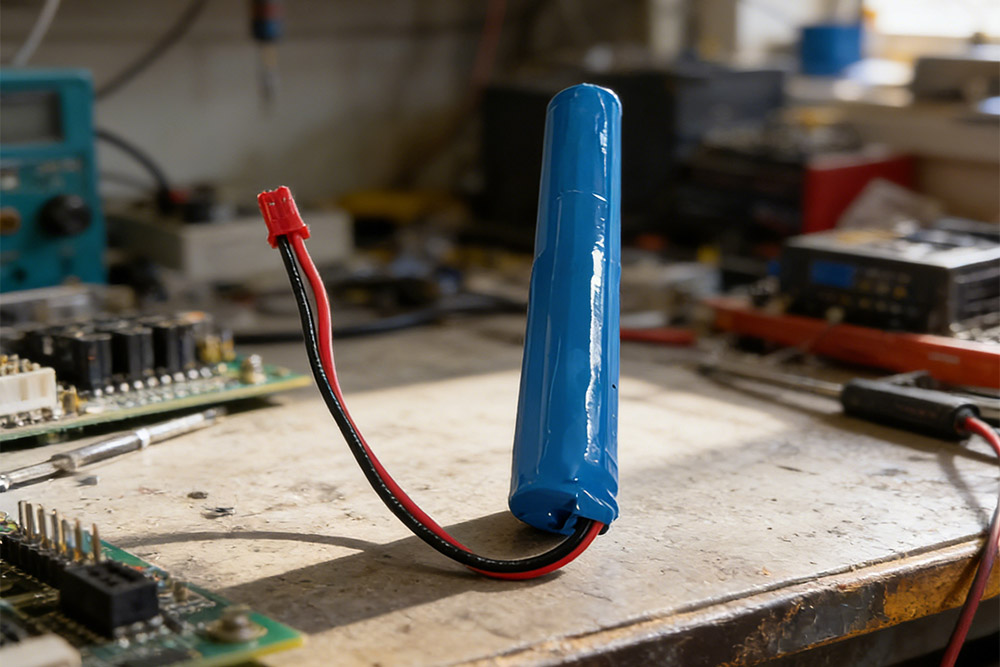
To be honest, the first time most people see a 14500 battery 3.7V Li-ion rechargeable, it’s a bit confusing.
It looks just like a regular AA battery—but it definitely doesn’t behave like one.
If you’re building products, sourcing batteries, or just trying to find a reliable power solution, this type of battery shows up more often than you’d expect—especially in compact devices where both size and performance matter.
So instead of giving you a textbook explanation, let’s just break it down in plain terms: what it is, what it’s good for, and whether it makes sense for your project.
So, what exactly is a 14500 battery?
It’s basically an AA-sized lithium battery running at 3.7V
A normal AA battery gives you 1.5V.
A 14500 jumps up to 3.7V.
That difference is a big deal:
- More power output
- Handles higher-drain devices
- Better fit for modern electronics
But here’s where people mess up:
Not every AA-powered device can use a 14500 battery. Always check first.

Why are more people switching to 14500?
It’s not hype—it’s just how devices have evolved.
Back in the day, 1.5V was enough.
Now?
- Devices are smaller
- Functions are heavier
- Power demand is higher
And the 14500 sits right in a sweet spot:
Compact size + higher voltage + rechargeable
If you’re working on hardware or sourcing components, you’ll run into it sooner or later.
When one cell isn’t enough: 1S2P setup
This comes up a lot in real projects.
A single 14500 cell usually gives you around 700–900mAh (give or take).
For many devices, that’s just not enough runtime.
So what do people do?
They connect two cells in parallel (1S2P)
You can check a typical example here:14500 battery 3.7V Li-ion Rechargeable
What that means:
- Voltage stays at 3.7V
- Capacity doubles → around 1600mAh
In practice, this setup gives you:
- Longer runtime
- More stable output
- Less voltage drop under load
You’ll see this kind of battery pack in portable electronics, smart devices, and even some industrial handheld gear.
Where are 14500 batteries actually used?
Nothing fancy—just real-world stuff:
1. Flashlights
A lot of high-lumen flashlights support 14500 for better brightness.
2. IoT devices
Small size matters, but so does stable power—this is where 14500 fits nicely.
3. Portable electronics
Test tools, handheld devices, compact gadgets—you name it.
4. Custom battery packs
Especially 1S2P setups made for specific products.

If you’re buying in bulk, watch out for these
This part matters more than people think.
Fake capacity claims
If you see 2000mAh+ on a 14500, just skip it. Not realistic.
Inconsistent batches
In bulk orders, consistency is way more important than peak performance.
No protection circuit
Without protection (PCM/BMS), you risk:
- Overcharging
- Over-discharging
- Short circuits
Not worth it.
Cell vs battery pack
Depends on your stage:
- Prototyping → go with single cells
- Mass production → battery packs save time
When NOT to use a 14500 battery
It’s not always the right choice.
- Your device only supports 1.5V
- You’re extremely cost-sensitive
- You actually have space for a bigger battery
In those cases, 14500 might not make sense.
Final thoughts
The 14500 battery 3.7V Li-ion rechargeable isn’t the most powerful option out there—but that’s not the point.
It’s a balanced option that just works.
Especially something like a 1S2P 1600mAh battery pack, it hits a nice middle ground:
- Compact
- Decent runtime
- Stable performance
A lot of projects end up choosing it not because it’s the best on paper—but because it’s the most practical in real use.
Related Products
-

18650 2200Mah 10S3P 36V 6.6Ah Electric Scooter Lithium Battery
-

18650 2600Mah 10S3P 36V 7.8ah Scooter Battery
-

18650 36V 5.2Ah Electric Bicyle Battery
-

1S2P 3.7V 1600mAh 14500 Lithium Battery
-

2000Mah 18650 Battery Cell 6Ah 36V Scooter Battery
-

21700 3.7V 4800mAh Rechargeable Lithium-Ion Battery
-

3.7V 21700 Rechargeable Lithium Battery Cells 5000mah
-

3.7V 5000mah 26650 Battery
-

32140 LiFePO4 Battery Cell 3.2V – 10000mAh / 15000mAh
-

32700 Lifepo4 3.2V 6000mah Lithium Battery
-

48V 15ah 720wh Ebike Battery
-

60V 21Ah 18650 16S7P E Bike Battery
-

Customized 48V-72V Triangle Ebike Lithium Battery Pack | 52V 30Ah
Leave a Reply