
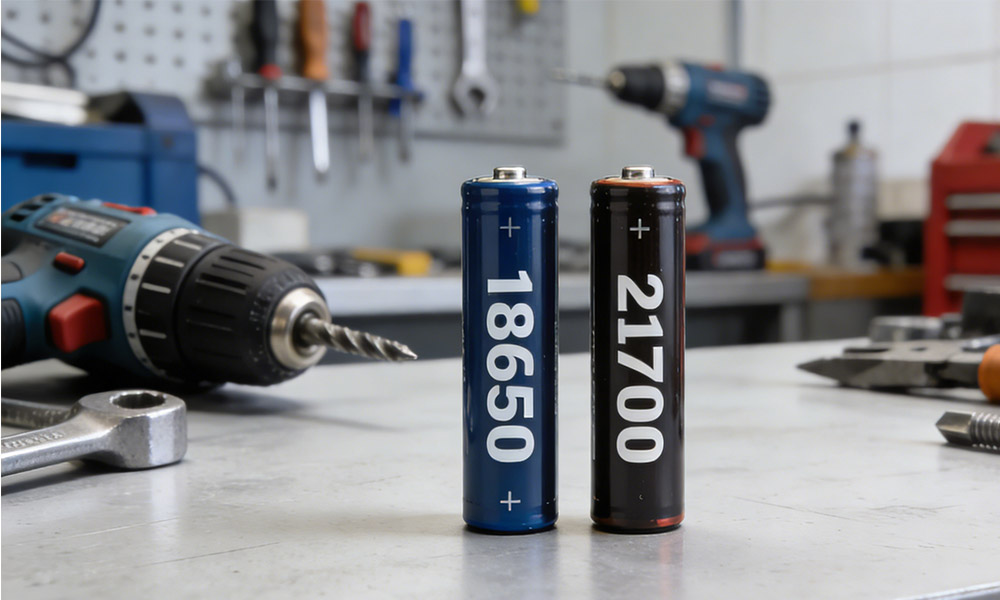
If you’ve been shopping for replacement batteries for cordless tools or stocking products for resale, you’ve probably noticed two battery cell types dominate modern packs: 18650 and 21700.
At first glance, the numbers seem technical and a little confusing. But for someone who actually works with power tools—or manages inventory for a tool store—understanding the difference can make a real impact on performance, durability, and customer satisfaction.
Let’s break it down.
1. What Do the Numbers Mean?
The names 18650 and 21700 refer to the physical size of the battery cell.
- 18650: 18mm diameter × 65mm length
- 21700: 21mm diameter × 70mm length
That extra size in the 21700 translates to more capacity and higher energy density, which often means longer runtime for tools and better current delivery.
From my experience on job sites, tools powered by 21700-based packs can handle heavy-duty work longer without slowing down. But that doesn’t automatically make them better for every situation.

2. Performance in Real-World Use
Performance isn’t just about the numbers on a datasheet. I’ve noticed several things when comparing tools with 18650 and 21700 packs:
- 18650 packs are lighter and more compact. They’re easier to carry around, especially when you’re drilling overhead all day.
- 21700 packs have higher capacity, so the runtime is longer. That’s useful for contractors who use high-torque drills or impact drivers for extended periods.
A practical takeaway: if your customer base needs lightweight, mid-range tools, 18650 packs often feel better. If they need long runtime and high-drain performance, 21700 is the way to go.

3. Compatibility and Replacement Considerations
One thing that often trips up buyers is tool compatibility.
Most cordless tools designed for 20V platforms are built around 18650 cells. Switching to 21700 isn’t just about size; the battery pack design, connections, and battery management system (BMS) all need to match the tool.
For distributors, this means you need to be careful when offering replacement batteries. A product like the 20V 3.0Ah cordless drill battery uses 18650 cells and is designed to fit specific tools. Offering mismatched packs can lead to returns, complaints, or worse—safety issues.
4. Cost and Supply Considerations
From a wholesale perspective, cost is always a factor.
- 18650 cells are extremely common and mass-produced. That makes replacement packs more affordable and easy to source reliably.
- 21700 cells are newer, slightly larger, and not yet as widely produced for power tools. Packs using 21700 cells can be more expensive.
Many distributors I’ve spoken to prefer sticking with 18650-based packs for most customers, simply because the price point and supply chain stability make life easier.
5. Safety and Battery Management
Regardless of whether you choose 18650 or 21700, safety is key. A good lithium battery pack should have a BMS (Battery Management System) to prevent overcharge, over-discharge, overheating, and short circuits.
Even the highest-capacity cells can fail quickly if the BMS isn’t designed well. For this reason, I often recommend sticking with reputable suppliers and tested replacement packs rather than experimenting with unknown brands.

6. Which Should You Stock?
For most distributors and repair shops, here’s a simple guideline:
- 18650 packs – lightweight, compatible with most existing tools, easier to sell to the general market, lower cost
- 21700 packs – higher capacity, better for professional contractors needing extended runtime, slightly more expensive
In my personal experience, keeping a mix in inventory is ideal. 18650 packs sell consistently, while 21700 packs can be positioned as “premium, long-lasting” options for high-demand clients.
Final Thoughts
At the end of the day, both 18650 and 21700 lithium cells have their place. Understanding the differences isn’t just a technical detail—it affects customer satisfaction, tool performance, and your bottom line if you’re distributing or selling batteries.
When in doubt, reliable, well-built 18650-based packs, like the 20V 3.0Ah cordless drill battery, are often the safest and most versatile choice for most users and B2B clients.
You May Also Like
-

18650 2200Mah 10S3P 36V 6.6Ah Electric Scooter Lithium Battery
-

18650 2600Mah 10S3P 36V 7.8ah Scooter Battery
-

18650 36V 5.2Ah Electric Bicyle Battery
-

1S2P 3.7V 1600mAh 14500 Lithium Battery
-

2000Mah 18650 Battery Cell 6Ah 36V Scooter Battery
-

21700 3.7V 4800mAh Rechargeable Lithium-Ion Battery
-

3.7V 21700 Rechargeable Lithium Battery Cells 5000mah
-

3.7V 5000mah 26650 Battery
-

32140 LiFePO4 Battery Cell 3.2V – 10000mAh / 15000mAh
-

32700 Lifepo4 3.2V 6000mah Lithium Battery
-

48V 15ah 720wh Ebike Battery
-

60V 21Ah 18650 16S7P E Bike Battery
-

Customized 48V-72V Triangle Ebike Lithium Battery Pack | 52V 30Ah
Leave a Reply