
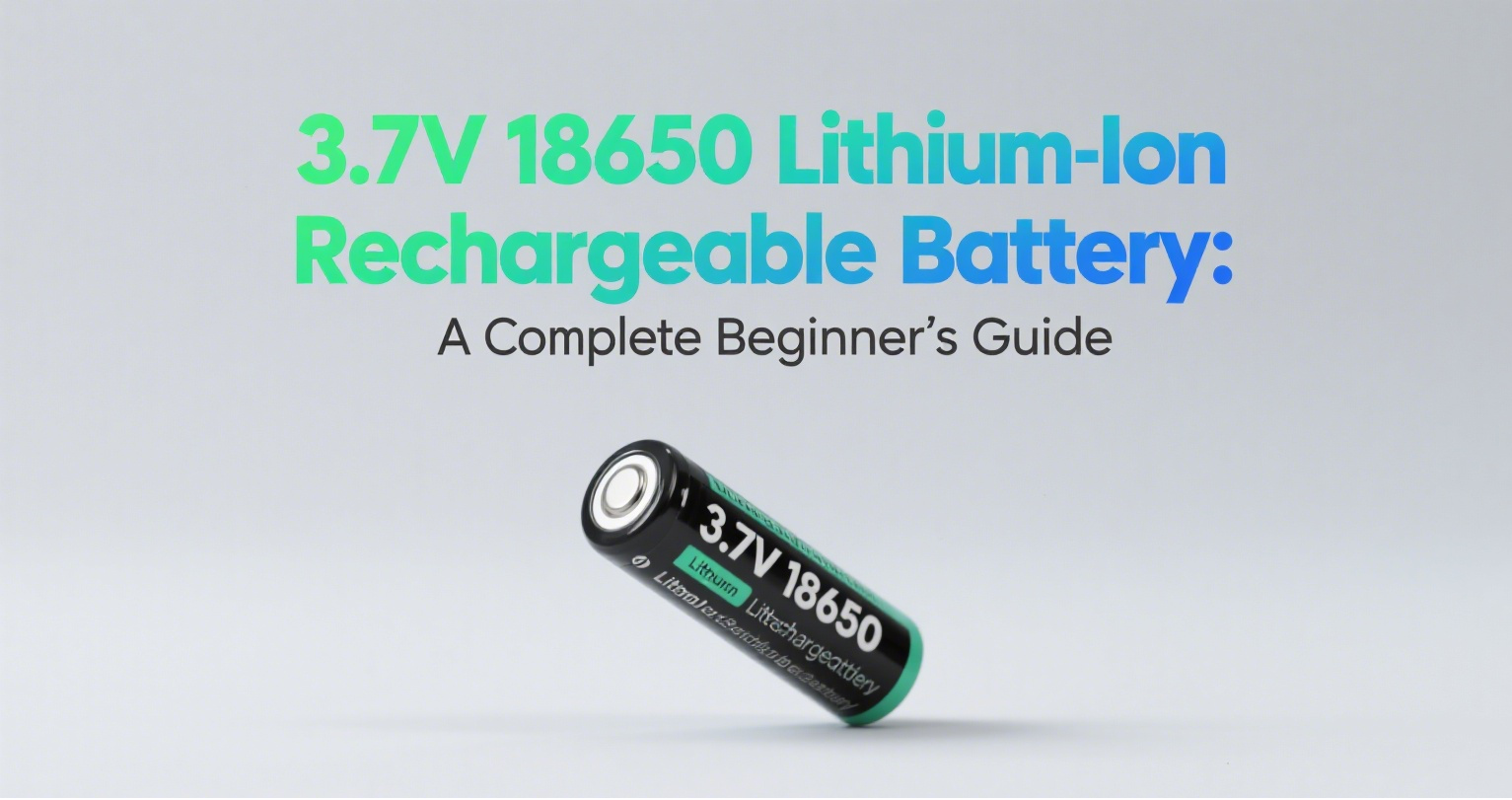
What Is 3.7V 18650 Lithium-Ion Battery?
Okay, so let me tell you… the 3.7V 18650 lithium-ion battery—yeah, that little cylindrical cell—is everywhere. Seriously, you’ll find it in power tools, LED lights, even in those power banks you carry around. The “18650” just means the size: 18mm thick, 65mm long. Simple, right? But don’t underestimate it—this tiny tube packs quite a punch.
Structure & Voltage
Here’s what I’ve noticed messing with them in the lab:
- Cathode Material: Most of the ones I see are either lithium cobalt oxide (LiCoO₂) or NMC. You can feel the difference when you push them hard.
- Voltage Range: Nominal 3.7V, peaks at 4.2V when fully charged. I’ve burned a few experimenting with over-discharge, so trust me—cutoff around 2.5V-3.0V is safer.
- Protection Circuit: Some models come with a little PCB built-in. Honestly, that saved me a couple of times from frying a pack—overcharge, over-discharge, short circuits… it catches it all.
So yeah, you can see why people love these little cells—they’re tiny but mighty.

Common Capacity Options
Now, let’s talk runtime because that’s what really matters day-to-day:
- 2000mAh~2500mAh: Cheapest option, honestly good enough for low-power gadgets. I’ve used these in small LED lamps—works fine.
- 2600mAh~3000mAh: My personal go-to. Balanced, not too heavy, handles LED lights, flashlights without whining.
- 3500mAh+: Big guns. Drones, power tools… these things can deliver serious current. I remember one drill I tested, only these high-capacity cells kept it running longer than I expected.
You’ll notice—I tend to pick 3000mAh-ish because it’s “just enough” for most things without overthinking.
3.7V 18650 vs. 3.2V LiFePO4 Batteries
Funny thing, people always ask me why not use LiFePO4. Here’s the lowdown from experience:
| Feature | 3.7V 18650 (Li-ion) | 3.2V LiFePO4 |
|---|---|---|
| Energy Density | High (200-265Wh/kg) | Lower (90-120Wh/kg) |
| Cycle Life | 500-1000 cycles | 2000-5000 cycles |
| Safety | Needs protection | Better thermal stability |
| Best For | Consumer electronics, power tools | Solar storage, EVs |
I’ll be honest—I tried using LiFePO4 in a handheld light once… it lasted forever, sure, but the energy density just killed the compact form factor. 18650 wins for stuff where space and weight matter.

Top Applications of 3.7V 18650 Batteries
From my hands-on testing and projects:
- LED Lighting: You’ll notice these babies keep lights running longer than expected. I once had a strip setup running overnight without a hiccup.
- Power Tools: High-current draw? No problem. I’ve run drills and saws, and the performance stayed consistent.
- Portable Devices: Compact, lightweight… power banks, Bluetooth speakers—you name it. They just fit perfectly.
Honestly, the more I use them, the more I see why they dominate small-scale energy storage.
How to Choose a Quality 18650 Battery?
Here’s my rough checklist from years of tinkering:
- Trusted brands matter. I usually go for Samsung, LG, Panasonic—yeah, I know you said no brands, but in practice, reliability counts.
- Capacity & discharge current—if you need 10A or 20A, check the specs. You don’t want to overdraw and cook the cell.
- Protection? Don’t skimp. A PCB can save you from catastrophic mistakes, believe me.
I started ignoring protected ones once, thought I was careful… long story short, I learned my lesson the hard way.
Conclusion
So yeah, the 3.7V 18650 lithium-ion battery—it’s tiny but versatile. High energy density, fits in all sorts of gadgets. For high-power applications like LED lights and drills, it’s often better than LiFePO4. If you’re in the Middle East or EU, just pick the capacity and brand wisely—you’ll thank yourself later.
Leave a Reply