
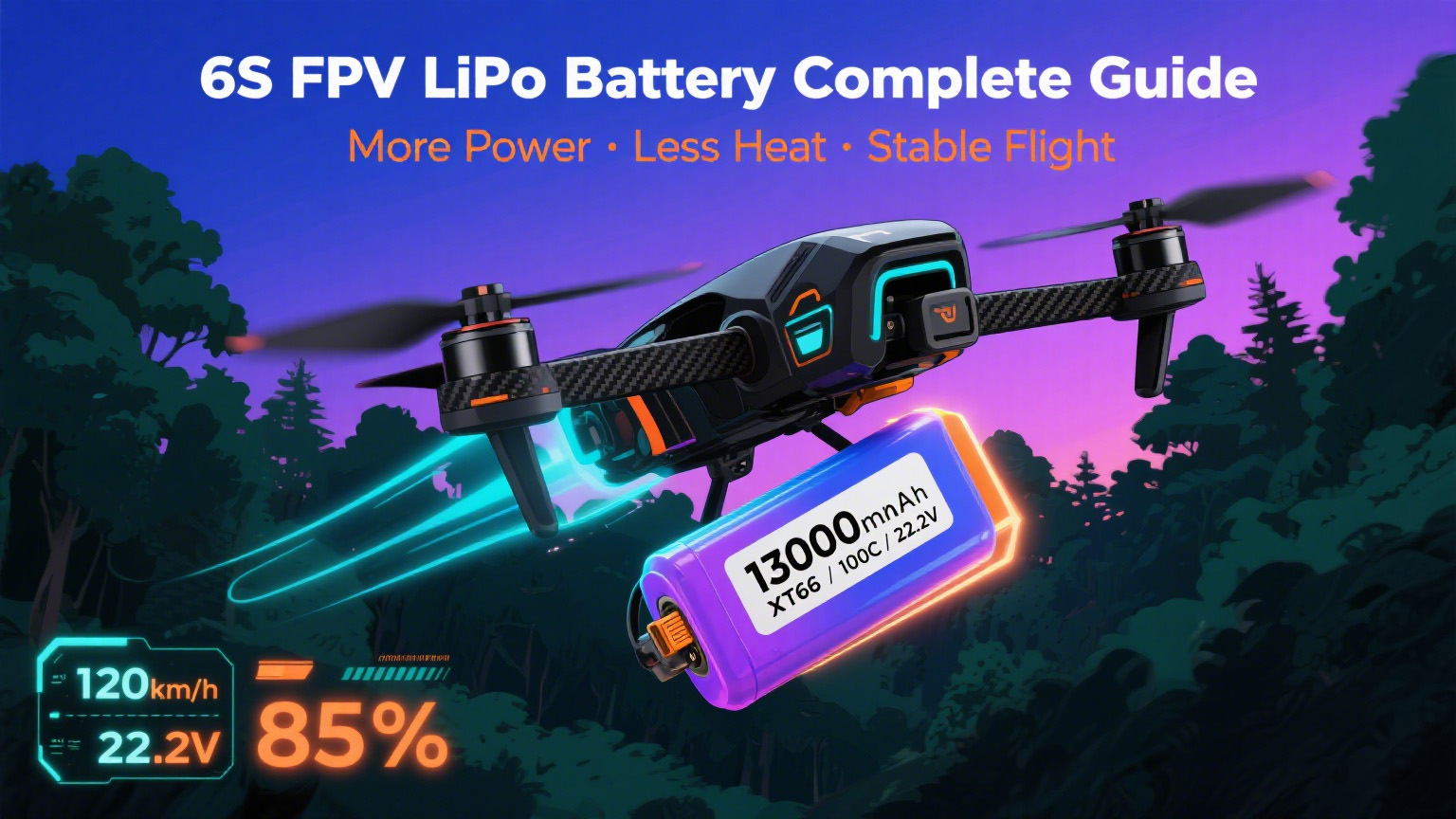
Why Are More FPV Pilots Switching to 6S LiPo Batteries?
In the FPV drone world, the battery isn’t just a power source—it directly determines flight performance and control feel. As flight controllers, ESCs, and motors continue to evolve, more pilots are shifting from traditional 4S setups to 6S systems. This article provides a complete breakdown of the 6S FPV battery, including structure, voltage characteristics, buying suggestions, and real-world usage.
Basics of 6S FPV LiPo Batteries
What is a 6S Battery?
“6S” refers to six Li-ion cells connected in series, delivering a total nominal voltage of 22.2V (3.7V per cell). Compared to the common 4S (14.8V), a 6S battery provides higher voltage output, enabling the system to draw less current for the same power, which reduces heating in ESCs and motors.
Key Differences: 4S vs. 6S
| Parameter | 4S Battery | 6S Battery |
|---|---|---|
| Voltage | 14.8V | 22.2V |
| Current | Higher | Lower |
| Thrust Power | Moderate | Strong |
| Heat Generation | Higher | Lower |
| Weight | Lighter | Slightly heavier |
| Compatibility | Broad | Requires specific hardware |
Advantages of Choosing 6S Batteries
Stronger Power Response
Higher voltage enables faster motor RPM and better thrust response—ideal for racing and freestyle flights that demand quick reactions.
Lower Current, Less Heat
At the same power output, 6S systems draw lower current, reducing load on ESCs and motors, improving efficiency, and extending component lifespan.
More Stable Voltage Curve
A 6S battery’s voltage drops more gradually during use, helping maintain consistent performance throughout the flight.

Buying Recommendations for 6S FPV Batteries
Matching Capacity and Discharge Rate
Typical 6S batteries range from 1000mAh to 1600mAh, suitable for different drone classes. The discharge rate (C rating) defines how much current the battery can deliver instantly—choose 75C or higher for high-burst applications.
| Drone Type | Recommended Capacity | Recommended C Rating |
|---|---|---|
| Micro Quad | 1000–1200mAh | 75C+ |
| Standard 5″ Racer | 1300–1500mAh | 80C+ |
| Heavy Lifter | 1600–1800mAh | 90C+ |
Key Points When Upgrading from 4S to 6S
Adjust Motor KV Values
4S motors often use ~2300KV. When switching to 6S, choose 1700–1900KV motors to avoid high current draw and system overload.
ESC and Flight Controller Compatibility
Make sure the ESC supports 6S input voltage (rated 2–6S LiPo). Use flight controllers with high-performance firmware such as BLHeli_32 or KISS.
Frame and Mounting Space Considerations
6S batteries are physically larger. Ensure your drone frame can accommodate the battery and use secure straps or Velcro for proper mounting.
Safe Use and Maintenance Tips
Proper Voltage Management
- Full charge before takeoff: 4.2V × 6 = 25.2V
- Recommended landing voltage: 3.6–3.7V per cell (Total: 21.6–22.2V)
Charging Tips
Use a smart charger with a 6S balance port. Set charge current no higher than twice the battery’s capacity.
Storage Voltage & Safe Transport
If not in use, store at ~3.8V per cell to avoid over-discharge or swelling. Always use a fireproof bag during transport.

Conclusion: The Future of 6S FPV Systems
6S FPV batteries are rapidly becoming the go-to choice for experienced pilots. Their high performance and low heat generation give them a clear edge in racing, freestyle, and heavy-lift applications. As energy density improves and ESC control becomes more precise, the 6S system will continue enhancing flight experience and is poised to become the new norm in FPV.
Leave a Reply