
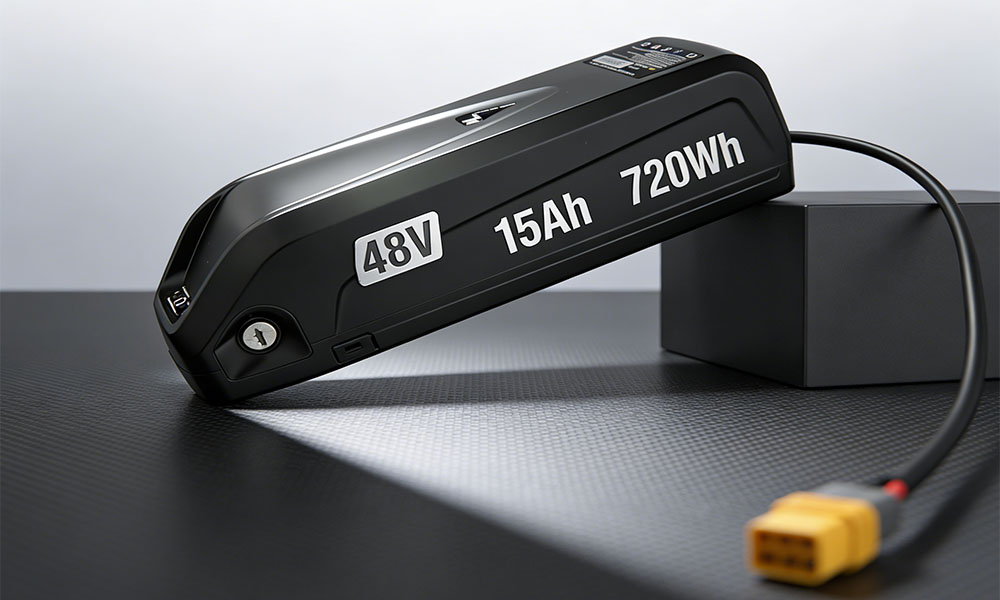
How to Use a 720Wh 48V 15Ah E-Bike Battery
(A Practical Guide for Riders — and for Wholesale Buyers)
A 720Wh, 48V 15Ah e-bike battery sits right in a very practical zone. It’s strong enough for daily commuting and longer rides, but also stable and standardized enough for bike brands, dealers, and fleet projects.
Batteries like the one from Apsenx are commonly used not only by individual riders, but also in OEM builds, city fleets, and wholesale distribution programs. How you use it — and how you handle it before it reaches the rider — makes a real difference.
1. What a 720Wh (48V 15Ah) Battery Really Means
Let’s keep this grounded in reality.
- 48V gives you better torque and less voltage sag than 36V systems, especially under load.
- 15Ah offers a usable balance between runtime and battery size.
- 720Wh is the number that actually translates to range.
In real-world riding:
- Flat terrain, moderate assist → 50–80 km
- Hills, heavier riders, cargo → closer to 40–50 km

From a wholesale perspective, this spec is popular because:
- It pairs cleanly with 500W–1000W motors
- It works across multiple bike models
- It’s easy to explain to customers without overpromising range
That combination keeps both riders and dealers happy.
2. First Use: Small Steps That Matter More in Bulk
For an individual rider, first use is simple.
For wholesalers and bike brands, this stage affects returns and support tickets.
Before riding:
- Check housing, terminals, and rail alignment
- Fully charge once using the original charger
- Make sure the battery locks firmly into the frame
A fully charged 48V lithium battery usually reads around 54–54.6V — that’s normal.

In wholesale shipments, many “battery problems” reported later come from loose mounts, mismatched chargers, or poor initial handling, not from the battery itself.
3. Riding Habits vs. Battery Life (And Why This Matters for Fleets)
Hard acceleration, throttle-only starts, and steep climbs pull high current. That’s just physics.
This is where a 48V 15Ah battery performs well:
- Better stability under repeated starts
- Less voltage drop under load
- Fewer sudden cutoffs compared to smaller packs
For rental fleets or employee bikes, this translates to:
- More consistent performance between riders
- Fewer complaints about “random power loss”
- Lower stress on the BMS over time
For wholesalers, that means fewer after-sales issues.
4. Charging: Rider Convenience vs. Long-Term Health
Typical charge time is 4–6 hours with a standard charger.
Best practices:
- Don’t leave the battery plugged in for days
- Let it cool down after riding before charging
- Charge in a dry, ventilated space
From a Wholesale angle:
- Always match chargers to battery voltage
- Avoid shipping or storing batteries at 100% for long periods
- Educate dealers to deliver bikes with batteries around 40–60% SOC

These habits quietly reduce warranty claims later.
5. Storage: Where Many Wholesale Batteries Get Damaged
Riders rarely think about storage — wholesalers must.
If the battery won’t be used for weeks or months:
- Store at 40–60% charge
- Keep it indoors, dry, and temperature-stable
- Check voltage every couple of months
This matters because poor storage leads to:
- Cell imbalance
- Early capacity loss
- “Dead on arrival” complaints that aren’t manufacturing defects
Good storage discipline protects both the product and the brand.
6. Safety and Real-World Issues
- Avoid drops and strong impacts
- Stop using the battery if the case cracks or swells
- Clean terminals if charging or power delivery becomes inconsistent
Cold weather, heavier loads, and aggressive riding will always reduce range. That’s normal — not a battery failure.
Final Thoughts
A 48V 15Ah (720Wh) e-bike battery works because it stays realistic.
For riders:
- Reliable power
- Predictable range
- Everyday usability
For wholesale buyers:
- Stable performance across models
- Easier system matching
- Lower return and support pressure
- A spec that sells without over-explaining
At the end of the day, success with this battery isn’t just about cells.
It’s about proper handling, correct pairing, and honest expectations.
Do that, and a 720Wh battery becomes exactly what it should be — a low-drama, dependable workhorse.
Leave a Reply