
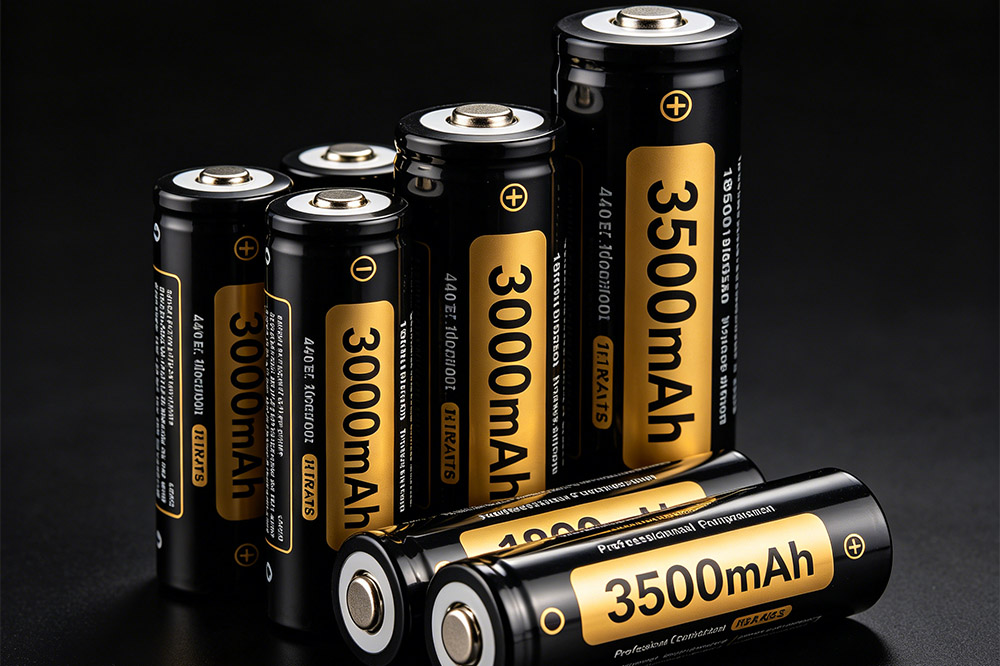
If you’ve ever searched for the best 18650 battery, you probably noticed something frustrating—everyone gives a slightly different answer.
That’s because there isn’t a single “best” battery for every situation. What works for a flashlight won’t necessarily work for a power tool or a battery pack project. After working with different clients and projects, I’ve realized the better question is:
What is the best 18650 battery for your specific application?
Let’s break it down in a practical way.
What Defines the “Best” 18650 Battery?
Before comparing brands or specs, you need to understand what actually makes a battery “good.”
A typical 18650 battery offers high energy density, long cycle life, and stable 3.7V output, which is why it’s widely used across electronics and industrial applications .
But when buyers evaluate quality, it usually comes down to a few key factors.
If you want a deeper technical breakdown, you can also check this detailed guide:what is the best 18650 rechargeable battery
Here’s the simplified version based on real-world use:
1. Capacity (mAh): Not Always “Higher is Better”
Most people start with capacity—and yes, it matters.
- Common range: 2500mAh – 3500mAh+
- Higher capacity = longer runtime
- But trade-off = lower discharge performance (in many cases)
From experience, buyers often make this mistake: Choosing the highest mAh without checking the application
For example:
- Energy storage / low-drain → go high capacity
- Power tools / high-drain → prioritize discharge rate instead

2. Discharge Rate: The Hidden Deal Breaker
This is where many bulk buyers get caught off guard.
The discharge rate determines how much current the battery can safely deliver. For high-power devices, this is critical .
Typical rule:
- Low drain devices → 5–10A is fine
- High drain devices → 15A–30A+ required
I’ve seen projects fail simply because the battery couldn’t handle peak current—even though the capacity looked “perfect” on paper.
3. Brand Matters More Than You Think
This is one area where cutting cost can backfire.
Top-tier manufacturers like Panasonic, Samsung, and LG consistently deliver stable performance and safety .
In contrast, low-cost generic cells often:
- Overstate capacity
- Have inconsistent internal resistance
- Degrade faster
For B2B buyers, consistency is actually more important than peak performance.
4. Safety Features Are Non-Negotiable
Let’s be honest—18650 batteries are powerful, but they’re not forgiving.
Key protections to look for:
- Overcharge protection
- Over-discharge protection
- Short circuit protection
Especially in battery pack assembly or wholesale distribution, skipping this can lead to serious risks.

5. Application Determines Everything
Here’s the part most “best battery” articles skip.
Different use cases = completely different “best” battery:
| Application | What Matters Most |
|---|---|
| Flashlights | High capacity |
| Power tools | High discharge rate |
| EV / energy storage | Cycle life + consistency |
| Battery packs (OEM) | Cell matching & stability |
If you’re sourcing in bulk, this becomes even more critical.
For a deeper breakdown tailored to wholesale buyers, this guide is worth checking:best 18650 battery wholesale buyers should know
6. Real Insight: “Best” Is Always a Balance
One thing I’ve learned working with different battery specs:
You can’t maximize everything at once.
- High capacity → usually lower discharge
- High discharge → usually lower capacity
- Lower price → often less consistency
Even industry discussions point out that a “best all-around battery” is always a compromise depending on usage .
How to Identify High Quality 18650 Battery
For many buyers, choosing 18650 battery high quality supplier is often more important than simply comparing capacity or price.finding high quality 18650 battery is not simply about choosing the cell with the largest capacity number. In real-world applications, battery consistency, safety performance, and long-term reliability often matter more than a single specification listed on a datasheet.
A reliable 18650 cell should have stable capacity, low internal resistance, consistent discharge performance, and good cycle life. These factors become even more important when multiple cells are connected together to build a battery pack. A weak cell can affect the balance of the entire pack and reduce overall performance.
When sourcing a high quality 18650 battery for OEM production or bulk orders, buyers should also pay attention to the manufacturer’s quality control process. Cell testing, production consistency, certifications, and batch tracking can help prevent unexpected problems after the batteries are integrated into the final product.
Experienced buyers usually evaluate the complete supply chain instead of comparing prices alone. A slightly lower-cost cell may create additional expenses later through shorter lifespan, higher failure rates, or more frequent replacements. Choosing stable and well-tested 18650 cells helps manufacturers build more reliable products and maintain customer satisfaction.
What Is Recommended 18650 Battery for Different Applications?
One question buyers ask surprisingly often is, “Which is the recommended 18650 battery?” The answer depends much more on the application than on the brand name.
For low-power devices such as LED lighting or portable electronics, a higher-capacity cell with stable discharge is usually the recommended 18650 battery because it provides longer runtime. For cordless power tools, electric bicycles, or other high-current equipment, buyers normally prioritize continuous discharge capability, low internal resistance, and consistent batch quality instead of simply chasing the highest mAh rating.
If you’re purchasing for OEM production or battery pack assembly, the recommended 18650 battery is often one that offers reliable performance across every shipment rather than the cell with the highest advertised specifications. Consistency, safety certifications, and quality control will have a much bigger impact on the final product than a small difference in capacity. Experienced bulk buyers usually evaluate cycle life, production stability, and supplier support before making a purchasing decision, because these factors reduce warranty claims and improve long-term product reliability.
Final Thoughts
If you’re looking for the best 18650 battery, don’t just chase specs or brand names.
Instead, ask yourself:
- What device or system am I using this for?
- Do I need runtime or power output?
- Am I buying for personal use or bulk/OEM integration?
Once you answer those, the “best” option becomes much clearer.
-

12V 4400 mah Lithium ion 3S2P 18650 Battery Pack
-

18650 2000mAh 3.7 volt Lithium-ion Battery
-

18650 20V 3.0Ah Cordless Drill battery
-

18650 22.2V 7.8Ah 2600Mah 6S3P Rechargeable Battery Pack
-

18650 2600mAh Rechargeable Lithium-Ion Battery 3.7V
-

18650 3.7V 10Ah Li-Ion Power Battery Pack
-

18650 3.7V 3300mah Rechargeable Lithium ion Battery
-

18650 7S7P 24V 14Ah Lithium ion Electric Scooter Battery Pack
-

18650 battery 3.7V 1500mAh Lithium-Ion Battery
-

18650 Battery 3500 mah Rechargeable Battery Cells
-

18650 Electric Scooter 48V 13000mAh Lithium Battery
-

2600mAh 3S1P 11.1V 18650 Battery Packs
-

3.7V Li ion Rechargeable 3000mah 18650 Battery Cell
-

36V 5200mAh 10S2P 18650 Battery Pack
-

48v 4400mah 13S2P 18650 Rechargeable Battery Pack
-

7S2P 24V 18650 Lithium Battery Pack
-

Electric Scooter 36V 4400mAH 10S2P 18650 Battery Pack
-

ICR 18650 Battery 2200mah 3.7V
Leave a Reply