
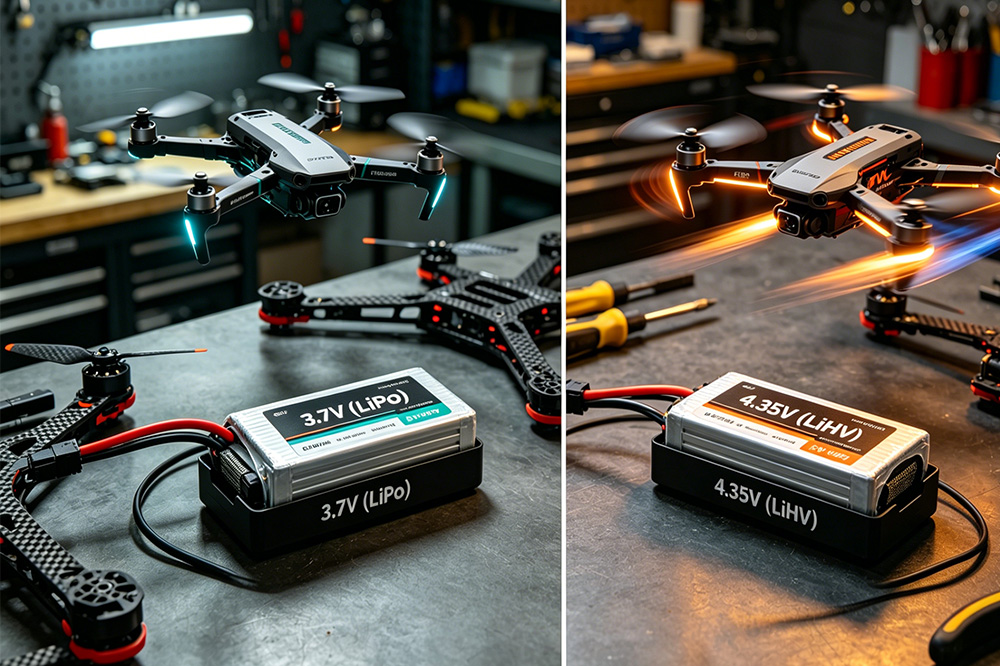
LiPo batteries have powered drones for years, but newer battery types have started appearing in FPV and commercial UAV builds. One of the most talked-about options is LiHV.
At first glance, LiHV batteries look almost identical to regular LiPo packs. Same shape, similar wiring, similar connectors.
But internally, there’s one important difference:
They charge to a higher voltage.
That small change affects flight performance more than many people expect.
Some pilots swear by LiHV packs for the extra punch they provide. Others avoid them because of concerns about battery lifespan.
So is LiHV actually better than standard LiPo?
The answer depends on how the drone is being used.
Manufacturers developing advanced UAV battery technology now offer both LiPo and LiHV configurations depending on the aircraft’s performance requirements.UAV Battery
What Is LiHV Battery?
LiHV stands for Lithium High Voltage.
A traditional LiPo battery charges to:
4.20V per cell
A LiHV battery charges slightly higher:
4.35V per cell
That extra voltage may not sound like much, but once multiple cells are combined into a drone battery pack, the difference becomes noticeable.
For example:
A fully charged 6S LiPo battery reaches:
6×4.20V=25.2V
A fully charged 6S LiHV battery reaches:
6×4.35V=26.1V
That additional voltage gives the motors more power at the beginning of the flight.

Why Some FPV Pilots Prefer LiHV
The biggest reason people switch to LiHV is performance feel.
Fresh off the charger, LiHV packs usually feel:
- More responsive
- More aggressive on throttle
- Slightly faster during acceleration
- Stronger during punch-outs
FPV pilots notice this immediately because high-performance drones react strongly to voltage changes.
For racing and freestyle flying, that extra voltage can make the quad feel sharper in the air.
It’s not a night-and-day difference, but experienced pilots can usually tell.
That’s especially true during the first minute or two of the flight when battery voltage is highest.
Flight Time Gains Are Usually Small
One common misconception is that LiHV batteries dramatically increase flight time.
In reality, the improvement is usually modest.
The extra voltage does provide slightly more usable energy, but most pilots notice the performance boost more than endurance gains.
In many cases, flight time differences are only:
- A few extra seconds
- Or around 5% depending on flying style
Aggressive flying still drains batteries quickly no matter what chemistry is used.
LiHV is mostly about performance feel rather than turning a 4-minute flight into an 8-minute one.
LiHV Batteries Need Proper Charging Settings
This part is important.
A LiHV battery should only be charged using a charger that supports LiHV mode.
Charging a regular LiPo to LiHV voltage levels can damage the pack and create safety risks.
Likewise, charging a LiHV battery only to standard LiPo voltage means you won’t actually use its full capacity.
Most modern smart chargers already support both modes, but it’s still something pilots should pay attention to.

Battery Lifespan Can Be Shorter
Higher voltage creates more stress on the cells.
That’s one reason some pilots feel LiHV batteries wear out faster than traditional LiPo packs, especially if they are:
- Fully charged for long periods
- Frequently pushed hard
- Stored improperly
- Used in high-temperature environments
Battery lifespan depends heavily on usage habits, but in general:
Higher performance usually comes with slightly more stress on the pack.
For casual drone pilots, that may not matter much.
For commercial UAV fleets running daily operations, battery cycle life becomes more important.
Industrial UAVs Don’t Always Benefit From LiHV
LiHV technology is more common in FPV and performance-focused drone builds.
Industrial UAVs often prioritize:
- Stability
- Reliability
- Predictable battery behavior
- Long cycle life
rather than aggressive throttle response.
For mapping drones, inspection UAVs, and endurance-focused aircraft, standard Li-ion or LiPo systems are often more practical.
That’s why LiHV batteries are still relatively uncommon in long-endurance industrial UAV operations.
The extra voltage simply isn’t as useful in steady cruising flights.
Temperature and Voltage Stability Matter
Like all lithium batteries, LiHV packs are affected by temperature.
Hot weather increases battery stress, especially when combined with:
- High current draw
- Fast charging
- Aggressive flying
Cold weather creates different issues. Voltage drops faster under load, and the battery may feel weaker during the first part of the flight.
Because LiHV batteries already operate at slightly higher voltage levels, good temperature management becomes even more important.
Experienced pilots usually avoid:
- Leaving fully charged packs inside hot vehicles
- Charging warm batteries immediately after flight
- Storing batteries fully charged for days
Those habits help extend battery lifespan regardless of battery type.
So, Is LiHV Better Than LiPo?
For some pilots, yes.
For others, not really.
If the goal is:
- Stronger throttle feel
- Slightly better punch power
- More aggressive FPV performance
LiHV batteries can absolutely feel better than standard LiPo packs.
But if reliability, cost efficiency, and long-term durability matter more, traditional LiPo batteries are still extremely hard to beat.
The performance gap between them is noticeable, but it’s not revolutionary.
Most experienced pilots see LiHV as a performance-focused variation of LiPo rather than a complete replacement.

Final Thoughts
LiHV batteries offer a simple idea:
More voltage, more immediate power.
For FPV racing and freestyle drones, that extra performance can make the aircraft feel more responsive and alive in the air.
But higher voltage also brings more battery stress, which means charging habits and temperature management become even more important.
For industrial UAV applications, the benefits are often smaller because endurance and reliability usually matter more than aggressive acceleration.
In the end, LiHV batteries are best viewed as a specialized option for pilots who want maximum performance rather than a universal upgrade for every drone.


Leave a Reply