
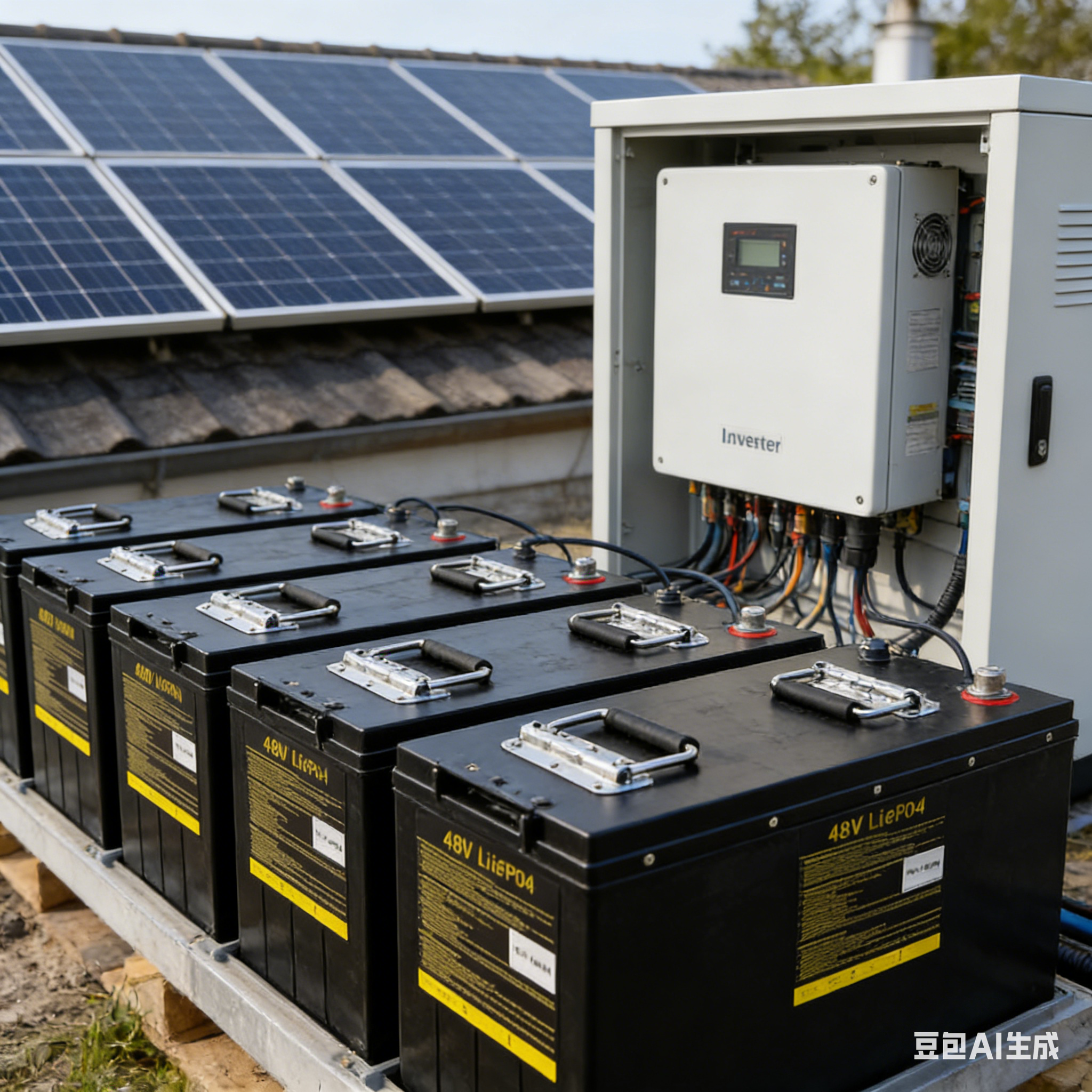
When I first started talking to solar installers, the most common question wasn’t about panels—it was batteries. People would ask me, “I’ve got a 48V 100Ah battery… how many do I actually need?”
At first, I thought it was straightforward. But after seeing a few dozen real installations, I realized: it’s never that simple. Every site, every energy habit, and every load profile changes the calculation.
Let’s break it down in a way that actually makes sense for real projects, not just spec sheets.
What a 48V 100Ah Battery Really Gives You
On paper, the math is easy: 48V × 100Ah = 4.8 kWh.
But here’s the catch—usable energy is less than the nominal capacity. Most LiFePO4 batteries allow around 80–90% usable energy, which translates to roughly 4–4.5 kWh in the real world.
I’ve seen people assume they can get the full 4.8 kWh out and then complain the system runs out of juice too fast. It’s not the battery’s fault—it’s expectations. Knowing the usable energy upfront avoids those headaches.

Small Systems: One Battery Can Be Enough
For a tiny cabin or a compact home solar system, you’re often looking at around 5 kWh of storage.
One 48V 100Ah battery often does the job. Lights, fridge, internet, maybe a few small appliances for several hours.
In my experience, products like the
IP67 48V 100Ah Solid State LiFePO4 Battery
fit this scenario perfectly. They’re compact, easy to install, and you can always expand later.
The key is not overcomplicating the setup. For small systems, less is often more.
Medium Systems: Two Batteries Usually Work
For a typical residential system aiming at 10 kWh, you’ll likely need two batteries.
That gives roughly 9–9.5 kWh of usable energy. Enough for evening loads in most homes.
I’ve sized a few installations like this, and the first thing I notice is how much simpler wiring is with two modular batteries versus a bigger, monolithic system. Less fuss, easier maintenance, and if something goes wrong, swapping one battery is straightforward.

Larger Systems: Parallel Is Your Friend
When we’re talking 20 kWh or more, it’s almost always a multi-battery setup:
- 4 batteries → ~20 kWh
- 6 batteries → ~30 kWh
Lithium batteries are nice here because they play well in parallel. You can start small and scale as your energy needs grow.
I’ve worked on projects where clients added more modules a year after installation because their energy usage increased. Parallel wiring made it painless.
Why 48V Is the Default Choice
Over time, I noticed almost every installer I talk to prefers 48V systems.
Why? Three main reasons:
- Higher voltage → lower current → smaller cables → less energy lost as heat
- Most off-the-shelf inverters are designed for 48V input
- It’s modular. Easy to add batteries or expand without redesigning the system
Honestly, once you start using 48V batteries, it feels natural. Going back to 24V just feels clunky.
Outdoor Installations Are a Game-Changer
One thing that surprises many new installers: batteries aren’t always in a climate-controlled room.
They end up in garages, outdoor boxes, or telecom cabinets. Dust, humidity, temperature swings—it all matters.
That’s where sealed, rugged designs shine. Products like the
IP67 48V 100Ah Solid State LiFePO4 Battery
handle outdoor conditions reliably. I’ve seen a few off-grid cabins where other batteries failed within months due to weather exposure. These IP67 packs ran flawlessly.

Daily Usage Patterns Affect Battery Count
Here’s something I tell most clients: the number of batteries depends more on how you use the system than the total installed capacity.
A home running heavy evening loads—air conditioning, cooking, EV charging—might need 50–100% more storage than a small weekend cabin.
I’ve sized systems where two batteries technically meet the kWh target but under heavy evening loads, they fall short. Understanding real consumption patterns is crucial.
A Simple Rule of Thumb
From my experience, here’s a quick way to estimate:
- ~5 kWh → 1 battery
- ~10 kWh → 2 batteries
- ~20 kWh → 4 batteries
It’s not perfect, but it’s a good starting point. Then adjust based on daily usage and expansion plans.
Wrapping Up
The 48V 100Ah LiFePO4 battery is popular for a reason. It’s compact, modular, and works in almost any residential or small commercial solar system.
Start small, expand as needed, and always factor in usable energy and real-world usage. The right battery count isn’t just math—it’s about flexibility, reliability, and your actual energy habits.
And if you’re planning an outdoor installation, choosing IP67-rated packs can save a lot of headaches down the line.


Leave a Reply