
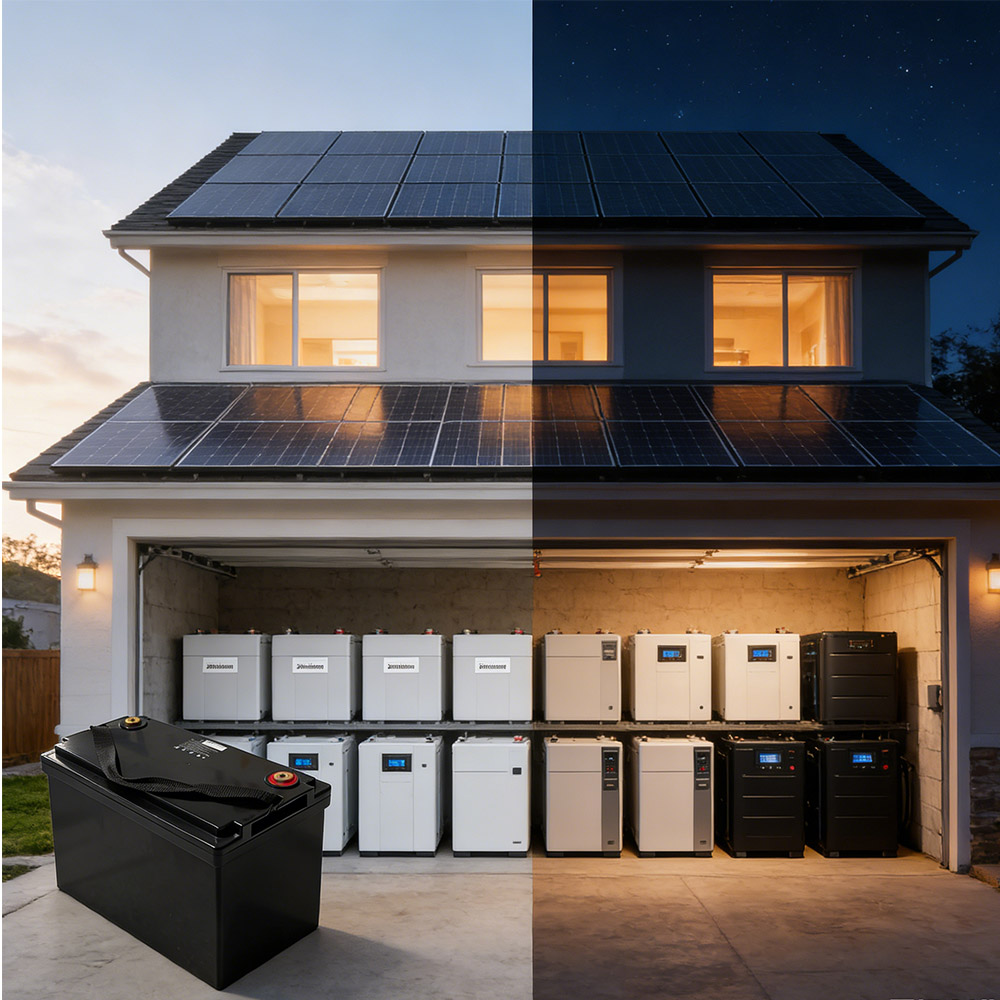
Energy independence used to be something only off-grid cabins and remote farms talked about. Now it’s showing up in suburban homes, small commercial buildings, and even urban apartments with rooftop solar. Rising electricity prices and grid instability have pushed more homeowners to ask a simple question: how do you actually run a home on your own power?
The answer always comes back to the same combination — solar panels and battery storage working together.
Solar power alone doesn’t make a home independent
Installing solar panels is a great first step, but panels by themselves won’t free you from the grid. They only generate electricity when sunlight is available, and most homes use the majority of power in the evening.
During the day, excess solar energy typically goes back to the grid. At night, you buy electricity back. Without storage, you’re still fully dependent on your utility provider.
Battery storage changes that dynamic. Instead of sending extra power away, you keep it. Solar energy generated during the day is stored and then used at night or during outages. That’s when a home starts moving toward real energy independence.

What a basic home energy storage system looks like
A practical home energy setup doesn’t have to be complicated. Most systems are built around a few core components:
Solar panels for generation
Hybrid or off-grid inverter
Battery storage system
Charge controller or built-in management system
Monitoring system
During sunny hours, solar panels power the home first. Extra electricity charges the battery bank. Once the sun goes down, the home draws power from stored energy instead of the grid. If the grid fails, the battery becomes a backup source.
This simple cycle is what allows a home to operate independently for hours — or even days — depending on storage capacity.
Why lithium batteries are replacing traditional lead-acid
Not long ago, most solar storage systems relied on lead-acid batteries. They were bulky, heavy, and required regular maintenance. More importantly, they didn’t last very long under daily cycling.
Lithium iron phosphate (LiFePO4) batteries have quickly become the preferred option for modern solar storage. They offer longer lifespan, stable performance, and far better efficiency. For homeowners building serious energy storage, lithium is now the standard rather than the upgrade.
Compared with lead-acid, LiFePO4 batteries provide:
Much longer cycle life
Stable voltage output under load
Higher usable capacity
Lower maintenance
Improved safety and thermal stability
Lighter weight and easier installation
These advantages make lithium batteries far more practical for daily solar charging and discharging.

Building a scalable storage system at home
One of the most practical ways to build a home battery system is by using modular 12V lithium batteries. Instead of installing one large storage unit, you build capacity step by step.
A commonly used configuration for residential solar storage is the 12V 100Ah LiFePO4 battery. Each unit provides about 1.28kWh of usable energy and can be combined with others to create larger storage banks.
The 12V 100Ah LiFePO4 battery is designed specifically for solar energy storage and off-grid applications. It works as a standalone power source or as part of a larger battery bank for home systems.
This type of battery is widely used in:
Residential solar storage
Off-grid homes
RV and mobile energy systems
Backup power systems
Small commercial solar projects
Because it uses LiFePO4 chemistry, it supports thousands of charge cycles and maintains stable performance over years of use.
How much battery storage does a home need?
Energy independence isn’t all-or-nothing. Some homeowners only want backup power for outages. Others want to run most of their home from solar.
A rough guideline:
Basic backup for essentials: 2–4 batteries
Partial home independence: 5–10 batteries
Full off-grid capability: 10–30+ batteries with large solar array
The advantage of modular 12V lithium batteries is flexibility. You can start with a small system and expand later as energy needs or budget grows. Many homeowners begin with backup storage and gradually scale toward full independence.

Daily benefits of solar battery storage
Once a home begins storing its own energy, the difference becomes noticeable quickly.
Electricity bills drop because stored solar power replaces grid usage at night. During outages, essential devices keep running. Over time, the home becomes less vulnerable to utility price increases and grid instability.
There’s also a practical sense of control. Instead of depending entirely on external power, the home generates and stores its own energy. For many homeowners, that reliability matters just as much as cost savings.
Moving toward true home energy independence
Energy independence doesn’t happen overnight. It’s usually built step by step — starting with solar panels, then adding storage, then expanding capacity over time.
Reliable lithium battery storage is what makes that transition possible. With scalable options like 12V 100Ah LiFePO4 solar batteries, homeowners can build systems that match real usage instead of guessing future demand.
The goal isn’t necessarily to disconnect from the grid completely. For many households, it’s about having control — generating your own power, storing it efficiently, and using it when it matters most.


Leave a Reply