
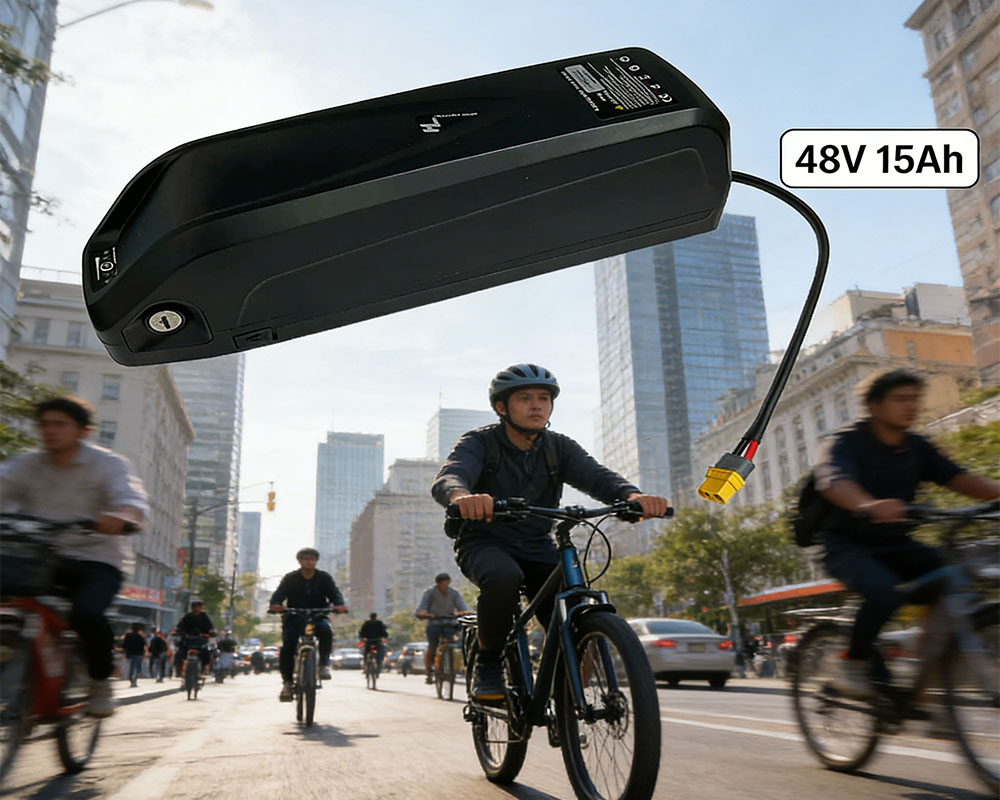
Choosing an electric bike battery, honestly, can be kind of overwhelming at first. There’s a lot of numbers, a lot of jargon, and it’s easy to get lost. But after some time, I realized it’s not that complicated once you break it down. Like, take 48V 15Ah for example — looks like a pretty standard battery, right? But figuring out if it’s the right fit for you, or your customers, is a whole different story.
Battery Capacity: What’s the Real Deal?
Let’s start with the basics: battery capacity. It just means how much energy the battery can store, but it’s not just a simple number. The two things you’re looking at are voltage (V) and amp-hours (Ah). So, a 48V 15Ah battery means it’s 48 volts and 15 amp-hours of capacity. If you break it down:Battery Capacity (Wh)=48V×15Ah=720Wh
720 watt-hours of energy. Simple enough, right? That’s how much juice the battery has to power the bike. But honestly, just having a big battery doesn’t mean it’s going to work for everyone.

Does Bigger Capacity Really Mean More Range?
Here’s where I messed up early on: I thought “bigger battery = more range.” Turns out, it’s not that black and white. I’ve had a lot of customers with the 48V 15Ah battery, and on paper, it looks like they should get around 40 to 60 km of range. Sounds good, right? But when they started mentioning things like hills, acceleration, and heavier loads — the range started dropping fast.
You’ll find that, when you’re riding on flat roads, the battery performs pretty well. But once you get into hills, or if you’re pedaling a little harder than usual, you’ll notice the battery drains a lot quicker. Honestly, I didn’t expect that at first, but after hearing customers complain about losing power on hills, I realized it’s more about the riding conditions. That 48V 15Ah battery is fine for city commuting, but once you add elevation or harder terrain, it’s not going to last as long.
Matching Battery Capacity with Riding Style
Here’s the thing: Not everyone needs the biggest battery out there. It’s about knowing the kind of riding your customers do. I started realizing that when I looked at different riders:
- Urban Commuting: If your customers are mostly commuting in the city, the 48V 15Ah battery is honestly a solid choice. It’ll handle their daily rides no problem, and they won’t have to worry about recharging constantly. You’ll find that for city riding, this battery has enough power for regular commutes — I’ve seen it work for plenty of people just doing the back-and-forth.
- Mountain Riding: Now, if they’re going off-road or up steep hills? That’s a different story. I had a buddy who put the same 48V 15Ah battery in his mountain bike, and after a couple of rides in the hills, he said the battery was running out way too fast. I didn’t really think it’d make such a big difference, but after hearing his feedback, I realized it’s not enough for serious mountain biking. For that, you’d want a battery with more capacity — something that can handle those tough terrains without dying halfway through the ride.
- Long-Distance Travel: For longer trips, you’ll want a battery with more power, too. 48V 15Ah is great for a few hours of riding, but when it comes to full-day or long-distance rides, you might hit the wall. I remember one customer who took their bike on a weekend-long trip with the 48V 15Ah battery, and by day two, they were looking for a charging station. Long rides really put the battery to the test, and this one just wasn’t up for it.
Battery and Motor: They Need to Work Together
Here’s something I really started paying attention to after a while: the battery and motor need to match. A 48V 15Ah battery is great with motors in the 250W to 750W range. That’s the sweet spot for most bikes. It’s powerful enough for most riders, and you won’t be draining the battery too quickly. But when you start working with motors over 1000W, that’s when you’ll notice the battery can’t keep up.
I had a customer who put 750W motor with 48V 15Ah battery, and at first, everything seemed fine. Then, after a few rides, the battery started running out faster, especially on inclines. That’s when I figured out — when you bump up the motor’s power, you really need to think about battery capacity, too.

What Wholesale Buyers Should Consider
Now, if you’re in the wholesale game, you can’t just look at capacity and call it a day. You need to dig deeper:
- Know Your Customer’s Needs: If your customer’s riding mostly in the city, then the 48V 15Ah battery will work fine. But if they’re hitting mountain trails or doing long rides, you’ll need to look for something bigger. Knowing what your customers actually do with their bikes is key to making the right choice.
- Quality Over Size: Honestly, don’t get too caught up in just the size. I’ve had people come in asking for the biggest battery, but I’ve also seen those huge batteries go bad really quickly if the quality isn’t up to par. I’ve had customers complain about cheap batteries dying within months, even though the specs looked great on paper. So, check the quality and reviews before jumping on big numbers.
- Battery and Motor Compatibility: The battery needs to fit the bike’s motor. If you’ve got a high-power motor, you need a battery that can keep up. I’ve had bikes with mismatched motor and battery combos, and trust me, it’s a nightmare. Poor performance, shorter life, and a lot of frustrated customers.
Final Thoughts
At the end of the day, picking the right battery is more than just looking at the specs. Sure, the 48V 15Ah battery works for a lot of people, especially those doing regular city commutes. But once you start getting into tougher rides or longer distances, you’ll probably need a bigger battery.
Here’s what I’ve learned: it’s not all about the numbers. It’s about matching the battery to the way your customers ride. Get that right, and they’ll be happy with their bike — and you’ll be the one getting the repeat business.
Related Products
-

18650 2200Mah 10S3P 36V 6.6Ah Electric Scooter Lithium Battery
-

18650 2600Mah 10S3P 36V 7.8ah Scooter Battery
-

18650 36V 5.2Ah Electric Bicyle Battery
-

1S2P 3.7V 1600mAh 14500 Lithium Battery
-

2000Mah 18650 Battery Cell 6Ah 36V Scooter Battery
-

21700 3.7V 4800mAh Rechargeable Lithium-Ion Battery
-

3.7V 21700 Rechargeable Lithium Battery Cells 5000mah
-

3.7V 5000mah 26650 Battery
-

32140 LiFePO4 Battery Cell 3.2V – 10000mAh / 15000mAh
-

32700 Lifepo4 3.2V 6000mah Lithium Battery
-

48V 15ah 720wh Ebike Battery
-

60V 21Ah 18650 16S7P E Bike Battery
-

Customized 48V-72V Triangle Ebike Lithium Battery Pack | 52V 30Ah
Leave a Reply