
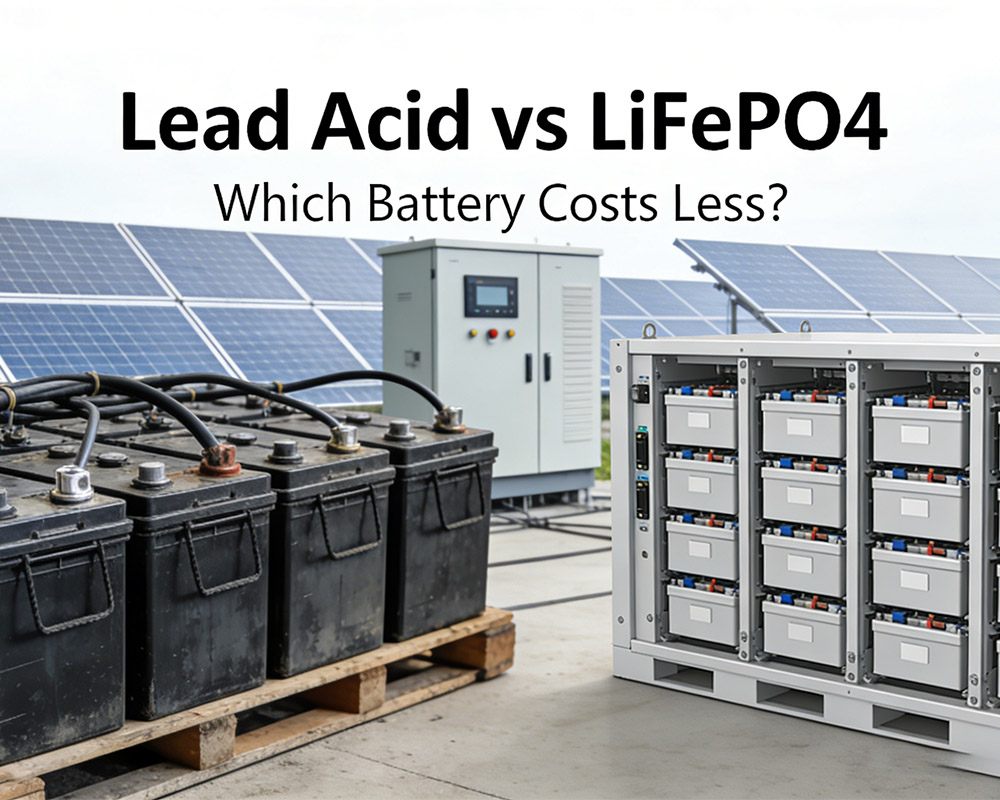
A few years ago, lead-acid batteries were still the default choice for a lot of energy systems.
Solar installers used them. Backup power systems used them. Industrial equipment ran on them. The technology was familiar, widely available, and relatively cheap upfront.
But in the past five or six years, I’ve watched more and more companies quietly switch to 48V LiFePO4 batteries instead.
The interesting part? It wasn’t always because of performance.
Most of the time, it came down to long-term cost.
When businesses actually calculate the numbers over several years, lithium batteries often end up cheaper—even though the purchase price is higher.
Let’s break down why.
The Upfront Price Difference Is Real
There’s no point pretending otherwise.
A 48V LiFePO4 battery usually costs significantly more than a comparable lead-acid battery pack.
If someone is buying purely based on the purchase price, lead-acid almost always wins.
That’s one reason many smaller projects still choose them.
But most commercial buyers eventually look beyond the first invoice. Once systems start cycling daily—like in solar storage or backup power—the economics begin to shift.

Cycle Life Changes the Equation
Lead-acid batteries degrade much faster when they are used regularly.
In many real installations, lead-acid systems may last somewhere between 500 and 1000 cycles before capacity drops significantly.
LiFePO4 batteries operate very differently.
It’s common for a well-designed lithium battery to reach 4000 cycles or more, depending on operating conditions.
That means a system that would require several lead-acid replacements might only need one lithium battery over the same period.
When you spread the cost across those cycles, the numbers start to look very different.
Depth of Discharge Matters More Than Most People Realize
Another difference appears when you look at usable energy.
Lead-acid batteries generally shouldn’t be discharged deeply if you want them to last. Many installers try to keep them above 50% depth of discharge.
Lithium batteries don’t have the same limitation.
A 48V LiFePO4 battery can typically operate at 80–90% depth of discharge without serious life reduction.
That means the usable energy from the battery is much higher, even when the rated capacity looks similar.
For system designers, that can reduce the total number of batteries needed.
Maintenance Is Often Overlooked
One thing people rarely calculate is maintenance.
Lead-acid systems often require:
- periodic inspection
- ventilation considerations
- terminal cleaning
- occasional replacements
Lithium batteries remove most of that effort.
Modern packs include integrated battery management systems that monitor voltage, temperature, and charging behavior automatically.
For remote installations—telecom towers, solar cabinets, industrial equipment—that reduction in maintenance can make a noticeable difference.
Environmental Protection Is Becoming More Important
Another factor that’s become more relevant in recent years is installation environment.
Many batteries today are deployed outdoors. Solar systems, telecom backup cabinets, and remote monitoring stations often sit in exposed locations.
In those situations, rugged battery design becomes critical.
For example, sealed batteries like the
IP67 48V 100Ah Solid State LiFePO4 Battery
are built with waterproof and dustproof protection, which helps them operate reliably in outdoor environments.
Traditional lead-acid batteries were rarely designed with that level of environmental protection.

Weight and Efficiency Also Play a Role
Lead-acid batteries are heavy. That’s not a surprise to anyone who has ever installed one.
Lithium batteries are significantly lighter, which simplifies transportation and installation—especially for larger systems.
Efficiency is also different.
LiFePO4 batteries typically operate at higher charge and discharge efficiency, meaning less energy is lost as heat during operation.
For solar storage systems that cycle daily, this efficiency advantage can accumulate over time.
So Which One Should Businesses Choose?
Lead-acid batteries still have a place in the market. For low-cycle applications or very tight budgets, they can still make sense.
But for systems that operate frequently—solar energy storage, backup power, electric mobility—many businesses find that LiFePO4 batteries offer better long-term value.
The higher upfront price often turns out to be a smaller part of the overall cost once cycle life, usable capacity, maintenance, and efficiency are considered.
That’s why more installers, integrators, and distributors are gradually moving toward lithium-based systems.
Not because they’re newer.
But because, over time, they simply make more economic sense.


Leave a Reply