
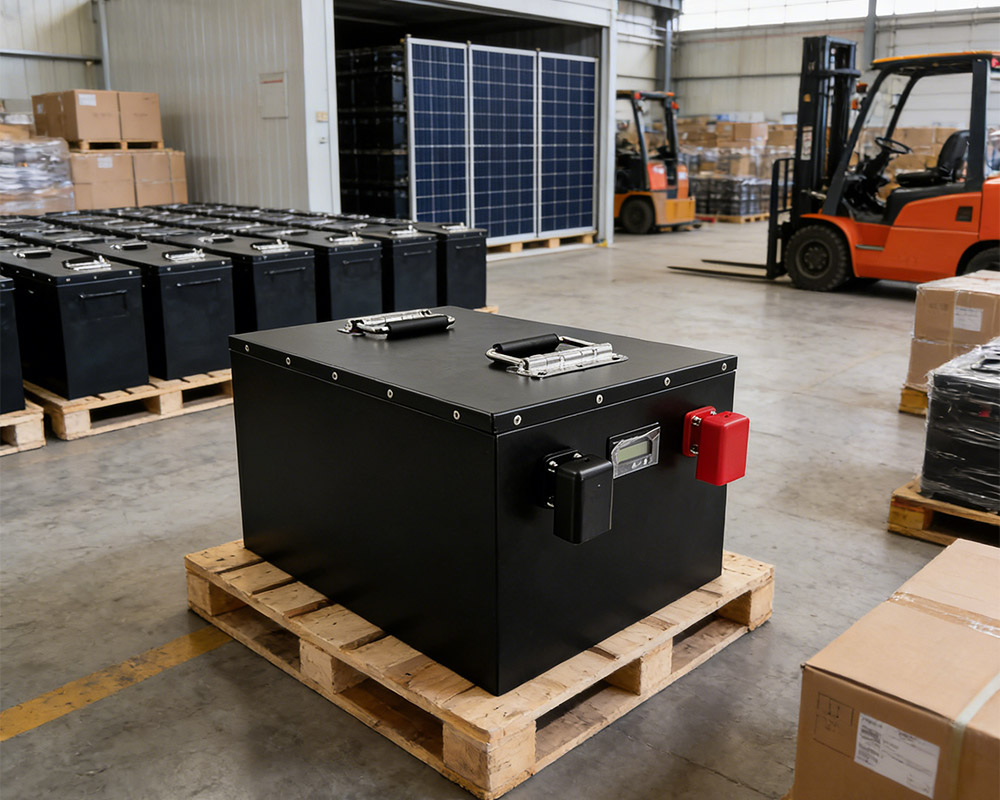
I’ve been in enough battery conversations to know one thing: when a distributor asks about a battery, the first question isn’t always about voltage or chemistry.
It’s usually something like this:
“What’s the MOQ?”
Right after that comes the next two questions: price and lead time.
If you’re sourcing 48V 100Ah LiFePO4 batteries for solar projects, backup systems, or distribution, understanding these three factors can save you a lot of headaches later.
Let’s talk about what really matters from a buyer’s perspective.

Why MOQ Matters More Than You Think
MOQ (Minimum Order Quantity) isn’t just a supplier rule. It often reflects how the battery is manufactured.
For example, many factories build batteries in production batches. Cells are matched, BMS boards are installed, and enclosures are assembled in runs. Producing a handful of units outside that schedule increases cost.
In my experience, typical MOQs for 48V 100Ah LiFePO4 batteries fall into three rough categories:
Sample order
1–5 units
Mostly used for testing compatibility with inverters or system design.
Small distributor order
20–50 units
Often enough for local installers to support several residential projects.
Bulk commercial order
100+ units
This is where pricing usually becomes much more competitive.
For distributors, planning orders around these tiers can make a big difference in margins.
Lead Time Is Often the Hidden Problem
Here’s something that surprises many buyers: battery lead time is rarely just about assembly.
It usually depends on cell availability.
High-quality LiFePO4 cells are produced in large batches, and factories allocate them to different customers. If cell supply tightens, lead times can suddenly extend.
Typical timelines I see:
- Samples: 7–10 days
- Small batch orders: 15–25 days
- Large orders: 25–35 days
But during peak solar seasons, it can stretch further.
A distributor I spoke with once told me they missed an entire installation window because batteries arrived three weeks late. Since then, they always order slightly ahead of demand.

Understanding Real Battery Pricing
Battery pricing can be tricky because not every quote includes the same components.
When comparing suppliers, make sure you’re looking at the same configuration.
A proper 48V 100Ah LiFePO4 battery usually includes:
- Grade A LiFePO4 cells
- Smart BMS protection
- Metal or IP-rated enclosure
- Communication protocol (RS485 / CAN)
- Certifications and safety testing
Sometimes a cheaper quote simply leaves some of these out.
That’s why experienced buyers focus less on the headline price and more on total reliability.
Why IP67 Batteries Are Becoming Popular
In the past, many solar batteries were designed mainly for indoor use.
But installation environments have changed.
I’ve seen batteries placed in:
- outdoor telecom cabinets
- garages with poor ventilation
- dusty warehouses
- coastal areas with humidity
That’s where IP67-rated batteries are gaining traction.
They provide protection against water and dust, which makes them far more tolerant of real-world conditions. For distributors selling across different regions, that added durability can reduce warranty claims.
Planning Orders the Smart Way
One approach I often recommend to distributors is a two-stage order strategy.
First, order a small batch for testing.
Confirm compatibility with the inverter brands your clients use.
Then move to a larger order once you’re confident about performance.
This reduces risk while still securing better pricing for larger quantities.
Final Thoughts
When buying 48V 100Ah LiFePO4 batteries in bulk, focusing only on the price can be misleading.
The real factors that determine a smooth project are:
- realistic MOQ levels
- predictable lead times
- consistent battery quality
- reliable protection features
Distributors who understand these details usually avoid supply chain surprises—and build stronger relationships with their customers.


Leave a Reply