
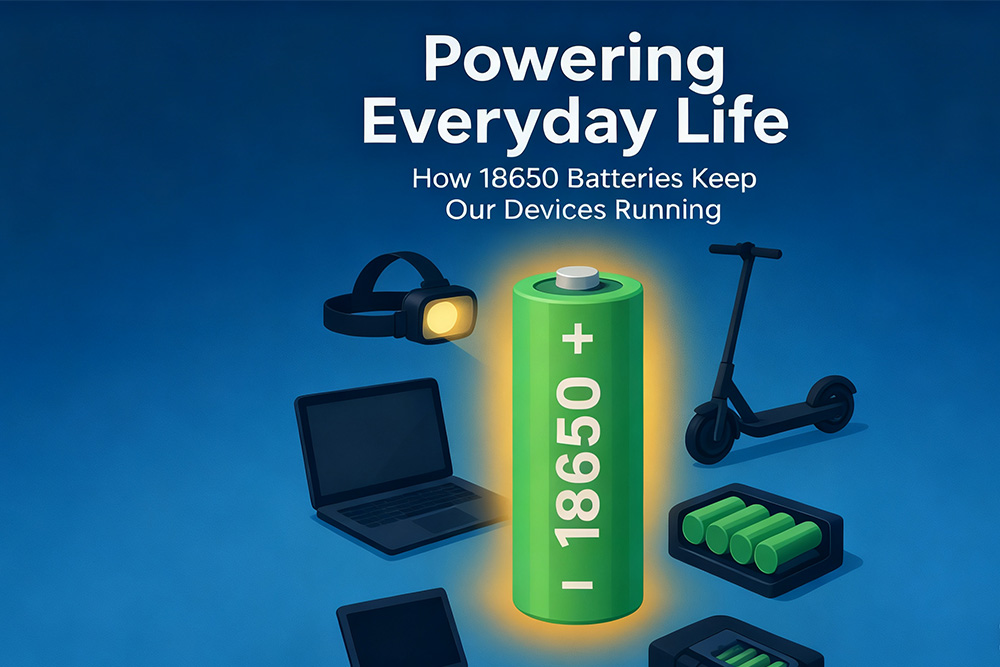
When you pick up your flashlight in the dark, charge your laptop, or hop on an electric scooter, there’s a good chance that a small, cylindrical 18650 battery is quietly doing the heavy lifting inside. These little lithium-ion cells may seem ordinary, but their combination of size, energy density, and reliability has made them indispensable in modern gadgets.

What Makes the 18650 Tick
The 18650 is named after its size: 18mm in diameter and 65mm in length. Its nominal voltage sits around 3.7V, and depending on chemistry and build, its capacity ranges roughly from 1500mAh to 3500mAh.
Imagine hiker relying on a high-output flashlight at night. A cheap, generic cell might last a few hours—or worse, overheat. A high-quality 18650, rated for high discharge currents, keeps the beam steady. Understanding the battery’s chemistry and current rating matters more than raw capacity.

Everyday Devices That Depend on 18650 Batteries
1. Portable Lighting: Flashlights, headlamps, and camping lanterns rely on 18650 cells for long runtimes and bright beams. Outdoor enthusiasts often carry spare cells for safety.
2. Laptops and Power Banks: Many laptop packs use multiple 18650s in series and parallel. DIY power banks leverage these cells for portable energy. Pro tip: use cells of the same brand, capacity, and cycle age to prevent imbalance.
3. E-bikes and Electric Scooters: High-drain 18650 cells deliver both energy and current. Users upgrading packs should check discharge rate (amps), not just capacity.
4. Cordless Tools and Hobby Electronics: Drills, drones, RC cars, and soldering irons benefit from 18650 cells. Experienced hobbyists often pair cells with a BMS (Battery Management System) to prevent overcharge, over-discharge, and thermal issues.
5. Solar Backup and DIY Projects: Home energy enthusiasts often stitch 18650s into modular packs. Best practice: store at 40–60% charge when idle to preserve lifespan.

Tips and Tricks from Real Users
- Cycle Smarter, Not Harder: Avoid full discharges to extend life.
- Storage Matters: Keep cells cool, dry, isolated from metal objects.
- Mix and Match Carefully: Avoid mixing old/new cells or different brands.
- Know Your Chemistry: Choose cells based on current vs capacity needs.
Why 18650s Still Matter
Despite newer formats like 21700 or lithium polymer packs, 18650s remain a mainstay because they balance availability, reliability, and versatility. Whether it’s a flashlight, DIY solar setup, or e-bike, these cylindrical cells quietly power modern life.
Choosing the right cell, caring for it properly, and matching it to your device ensures gadgets thrive, not just run.
Leave a Reply