
Tackling the Temperature Challenge
Improving the temperature adaptability of lithium-ion batteries has long been one of the industry’s toughest challenges. Now, researchers from the China Academy of Sciences have unveiled a major breakthrough: a lithium-ion battery that operates reliably between –70°C and +80°C.
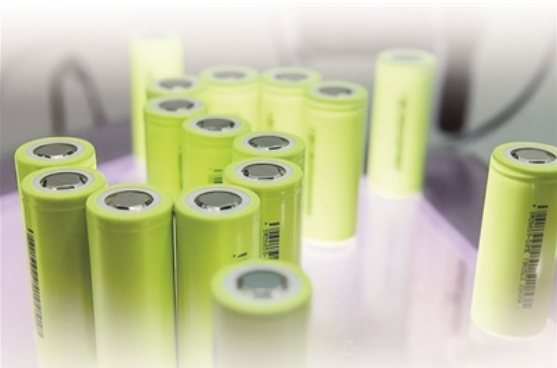
This milestone comes after ten years of research and has led to the mass production of China’s first wide-temperature, low-cost, long-life aluminum-based lithium-ion battery core.
Limitations of Traditional Lithium-Ion Batteries
Conventional lithium-ion batteries face clear temperature constraints:
- Charging range: 0°C to 45°C
- Discharging range: –20°C to +60°C
In colder climates, they often struggle with:
- Capacity loss
- Shortened cycle life
- Difficulty charging
Most low-temperature batteries available today can only tolerate down to about –20°C. By contrast, the new aluminum-based battery delivers superior cold-weather performance, broader adaptability, and reduced cost — all while meeting strict third-party safety and performance testing standards.
The Core Innovation
The breakthrough lies in improvements to the negative electrode material and electrolyte design. Traditional batteries typically use graphite anodes, which are inexpensive and stable but limited in capacity and ion diffusion speed.
The new design replaces graphite with an aluminum-based composite anode, tailored to work with commercial cathode materials and optimized electrolytes. This has led to a family of aluminum-based lithium-ion cells, including:
- Aluminum-based lithium iron phosphate (LFP)
- Aluminum-based lithium manganese oxide
- Aluminum-based lithium cobalt oxide
- Aluminum-based ternary cells
All of these variants share the hallmark ultra-wide temperature range.
Key Advantages
- Low-temperature charging: Can charge normally at –30°C
- Higher energy density: 13%–25% greater than traditional lithium-ion batteries, thanks to aluminum’s high theoretical capacity
- Fast charging: Full charge achievable in 20 minutes, supporting half-hour charging applications
- Lower cost vs. alternatives: 5%–10% more expensive than mainstream lithium-ion cells, but 10%–30% cheaper than other specialized low-temperature batteries
- Improved safety: The aluminum anode reduces the risk of lithium dendrite formation, a common issue in overcharging or cold conditions that can puncture separators and cause short circuits
Challenges Ahead
Despite its promise, the new aluminum-based battery is not without challenges. As capacity increases, aluminum expansion and pulverization can occur, which may reduce long-term stability. Striking the right balance between capacity and cycle life will be a key focus for the next generation of development.
Potential Applications
Thanks to its wide temperature tolerance, the aluminum-based lithium-ion battery has strong potential across many industries:
- Photovoltaic energy storage
- Home energy storage
- Communication base stations
- Rail transportation
- Aerospace applications
- Polar exploration
It is especially suited to extreme cold regions, where traditional lithium-ion batteries often fail. Large-scale production has already begun in multiple application areas, but the technology is still in the early market promotion stage.
Leave a Reply