
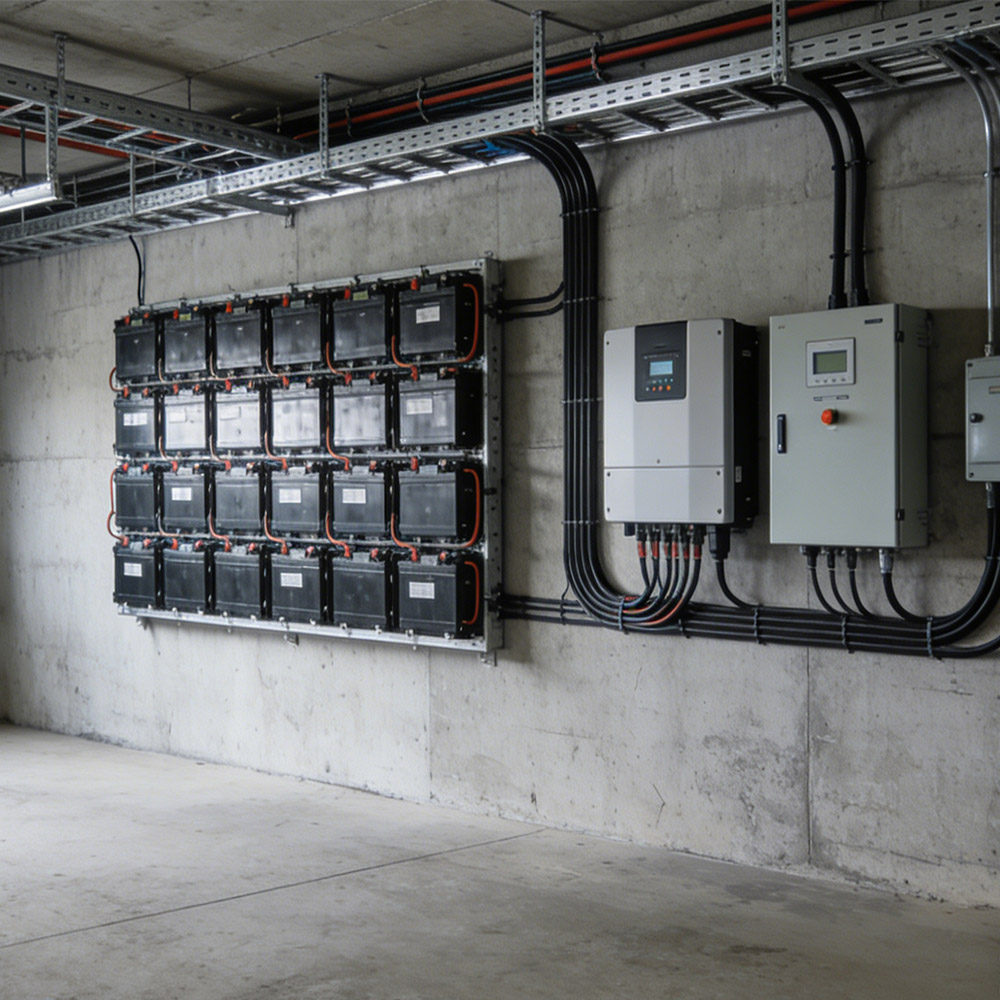
Wall Mounted Battery Storage in Real Project Use
In many projects, wall mounted battery storage is chosen very early in the design stage. Not because it looks better, but because it solves a basic problem: floor space is limited, and batteries don’t belong on the ground. Mounting the battery on the wall keeps equipment areas clear and makes the system easier to manage over time.
In garages, utility rooms, small commercial sites, or control rooms, this setup is simply more practical. Cables are shorter, layouts are cleaner, and routine inspection doesn’t interfere with other equipment.
What Actually Matters Before Choosing a Wall Mounted Battery
The wall decides more than the battery itself. Available area, structure type, and load capacity set clear limits on what can be installed. This is where many projects go wrong—battery size is selected first, mounting conditions checked later.
Reading installation specifications in advance avoids rework on site. Weight, fixing points, and clearance requirements should match the real environment, not an ideal drawing.

Power Output and Daily Use Scenarios
Wall mounted battery storage is often expected to do more than emergency backup. In real systems, it may support routers, monitoring devices, lighting, or control units on a daily basis.
Choosing a battery with multiple output ports reduces the need for extra distribution equipment. Fewer components mean fewer failure points. In some projects, basic monitoring functions are enough—operators don’t need complex dashboards, just clear visibility of energy use.
Battery Capacity Is About Runtime, Not Numbers
Capacity figures look good on spec sheets, but projects run on load calculations. Ah and Wh only matter if they translate into usable runtime.
Small systems don’t need oversized storage. Large backup systems do. The correct capacity sits somewhere in between, based on load priority and how long the system needs to stay online. Oversizing wastes space. Undersizing causes complaints later.
Battery Chemistry and Long-Term Reliability
For wall mounted battery storage, long-term stability is more important than peak performance. That’s why LiFePO4 batteries are commonly used in 12V systems. They handle repeated charge cycles well and maintain stable output over time.
In compact wall-mounted setups, products like the
12V 100Ah LiFePO4 Solar Battery are often selected because they balance size, capacity, and safety without complicating installation.

Form Factor and Installation Reality
A wall mounted battery should not dominate the space. Slim designs work better in real environments, especially where access paths and ventilation must remain clear.
Installation also needs to be predictable. Clear brackets, standard fixing methods, and simple wiring reduce labor time. In project work, simplicity saves more cost than minor performance gains.
Safety, Standards, and Why They Can’t Be Skipped
Battery safety is not optional. Wall mounted battery storage must meet installation standards and safety ratings that address heat, electrical load, and long-term operation.
Systems designed with proper protection and clear installation guidance reduce operational risk. For integrators and project owners, this matters more than marketing claims.

Why Wall Mounted Battery Storage Is Used in Projects
In practice, wall mounted battery storage helps keep systems organized and spaces usable. It simplifies layout planning, improves maintenance access, and delivers stable power without taking over the room.
That’s why, in many commercial and project-based installations, wall mounted solutions are selected not for appearance, but because they work.


Leave a Reply