
Introduction
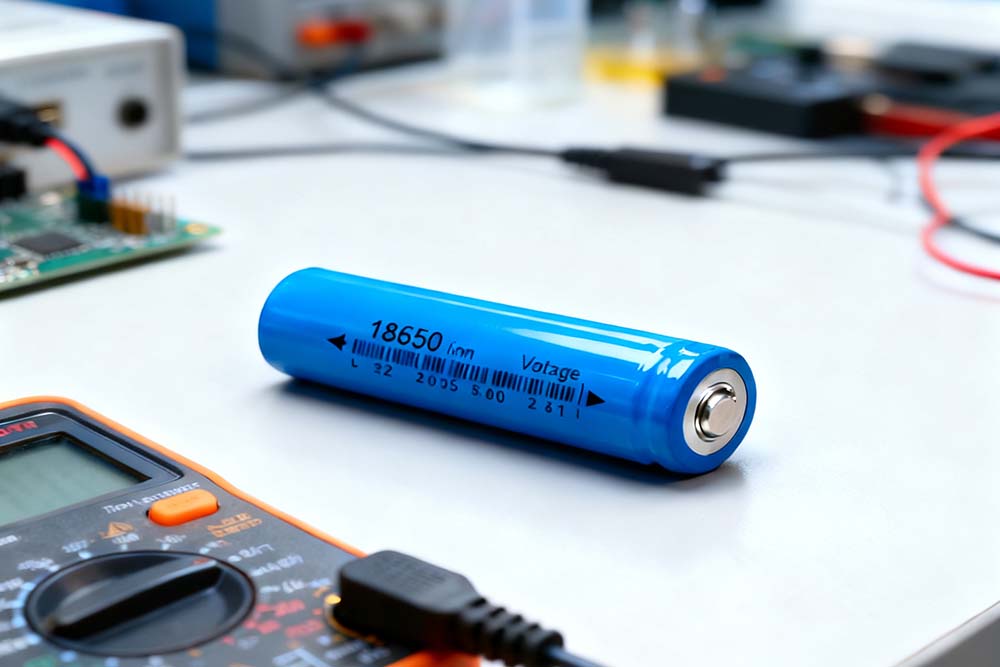
Honestly, 18650 batteries are everywhere—you’ll find them in flashlights, laptops, power banks, and all sorts of DIY electronics. And if you don’t really get their voltage behavior, you might end up killing your battery faster than you expect, or worse, have safety issues. I’ve spent a fair amount of time tinkering with them, and let me tell you… understanding the voltage is half the battle. In this guide, I’ll walk through all the voltage basics, the material differences, some real-world gotchas, and even how I check them in the field.
1. 18650 Battery Voltage Basics
So, first things first: an 18650 is just a cylinder, usually 18 mm across and 65 mm long. Nothing fancy. But the voltage—that’s where the magic (and danger) happens.
- Nominal Voltage: Most of these cells sit at 3.7 V. Some older or niche ones say 3.6 V. Not a huge difference, but it matters if you’re stacking them in series.
- Fully Charged Voltage: 4.2 V. Go above that and you’re flirting with overcharge risk. Swelling, overheating—you name it. I once ignored this on a cheap charger… never again.
- Discharge Cutoff: Datasheets say 2.75 V, but honestly, I usually try not to go below 3.0–3.2 V if I want the battery to last more than a couple dozen cycles.

Here’s roughly how state-of-charge (SOC) relates to voltage:
| SOC | Voltage (V) |
|---|---|
| 100% | 4.2 |
| 50% | 3.7 |
| 0% | 3.0–3.2 |
You’ll notice voltage isn’t static—it wiggles with load, temperature, and age. I always measure at rest to get a realistic SOC reading.
2. Different Materials, Different Voltages
Here’s where things get interesting. Not all 18650s are created equal; chemistry changes how they behave.
LiCoO₂ (Lithium Cobalt Oxide)
- Nominal: 3.7 V
- Full: 4.2 V
- Minimum safe: 2.75 V
This is the classic one. Power tools, electronics—you’ll see it everywhere. I’ve noticed they give good punch but age faster if abused.
LiFePO₄ (Lithium Iron Phosphate)
- Nominal: 3.2 V
- Full: 3.6 V
- Minimum safe: 2.0 V
Safer, longer life, but less energy per cell. I once swapped a LiCoO₂ pack for LiFePO₄ in a DIY UPS project—it lasted way longer, but the output voltage sagged a bit under load.
Rule of thumb: always check the datasheet. Don’t assume every 18650 behaves the same.
3. Factors Affecting 18650 Battery Voltage
Voltage isn’t just a number—it’s influenced by a bunch of stuff:
- Load Conditions: Heavy draw? Voltage drops fast. I’ve fried LED strips thinking a battery was full.
- Temperature: Cold air kills voltage, heat can trick you into thinking the battery is charged.
- Battery Age: Older cells just don’t hold voltage steady. I’ve seen nominal 3.7 V cells read 3.5 V after 500 cycles.
- SOC: No surprises—half empty = lower voltage.
- Manufacturing Differences: Two “identical” cells from different brands? You’ll see minor differences. Sometimes it’s annoying in series packs.
4. Common Questions About 18650 Voltage
Q1: What counts as 0%?
I go with ~3.0 V. Datasheets say 2.75 V is okay, but trust me, pushing that low kills the cell sooner.
Q2: Can I charge above 4.2 V?
Nope. I made that mistake once on a cheap charger… battery puffed, permanent damage. Overcharging is not worth it.
Q3: Voltage accurate for SOC?
Roughly. To be precise, measure at rest or use a BMS. I’ve found multimeters invaluable for double-checking after a long run.
5. Charging Guide for 18650 Batteries
A few things I stick to:
- Use a lithium-ion-specific charger that matches your battery type. Don’t wing it.
- Charge at the recommended current: 0.5C–1C. Faster might work, but life drops.
- Avoid deep discharge (<3 V) and storing fully charged (4.2 V) for ages—shortens life.
- LiFePO₄? Max 3.6 V. I always use a BMS for safety.
Honestly, watching a pack charge while monitoring voltage is kind of satisfying. You notice the curve and how the battery “settles” near full charge.

6. 18650 Voltage Measurement
Here’s how I usually measure voltage:
- Digital multimeter or BMS with a readout.
- Measure at rest—give it a few minutes after use.
- Don’t trust voltage right after charging or under heavy load.
For series packs: check each cell individually. I learned this the hard way—one weak cell can drag down the whole pack and cause overdischarge.
Conclusion
Understanding 18650 battery voltage isn’t rocket science, but it’s critical if you want safety, longevity, and performance.
- Standard 3.7 V cells charge to 4.2 V and shouldn’t drop below 3.0 V.
- Voltage depends on chemistry, temperature, load, and age.
- Monitor voltage, use the right charger, and don’t abuse the cells.
Do that, and your 18650s will last longer and work reliably across all your devices. I’ve seen the difference firsthand—ignore it, and you’ll regret it.
Recommended Products
-

18650 2000mAh 3.7 volt Lithium-ion Battery
-

18650 2600mAh Rechargeable Lithium-Ion Battery 3.7V
-

18650 3.7V 3300mah Rechargeable Lithium ion Battery
-

18650 battery 3.7V 1500mAh Lithium-Ion Battery
-

18650 Battery 3500 mah Rechargeable Battery Cells
-

3.7V Li ion Rechargeable 3000mah 18650 Battery Cell
-

ICR 18650 Battery 2200mah 3.7V
Leave a Reply