
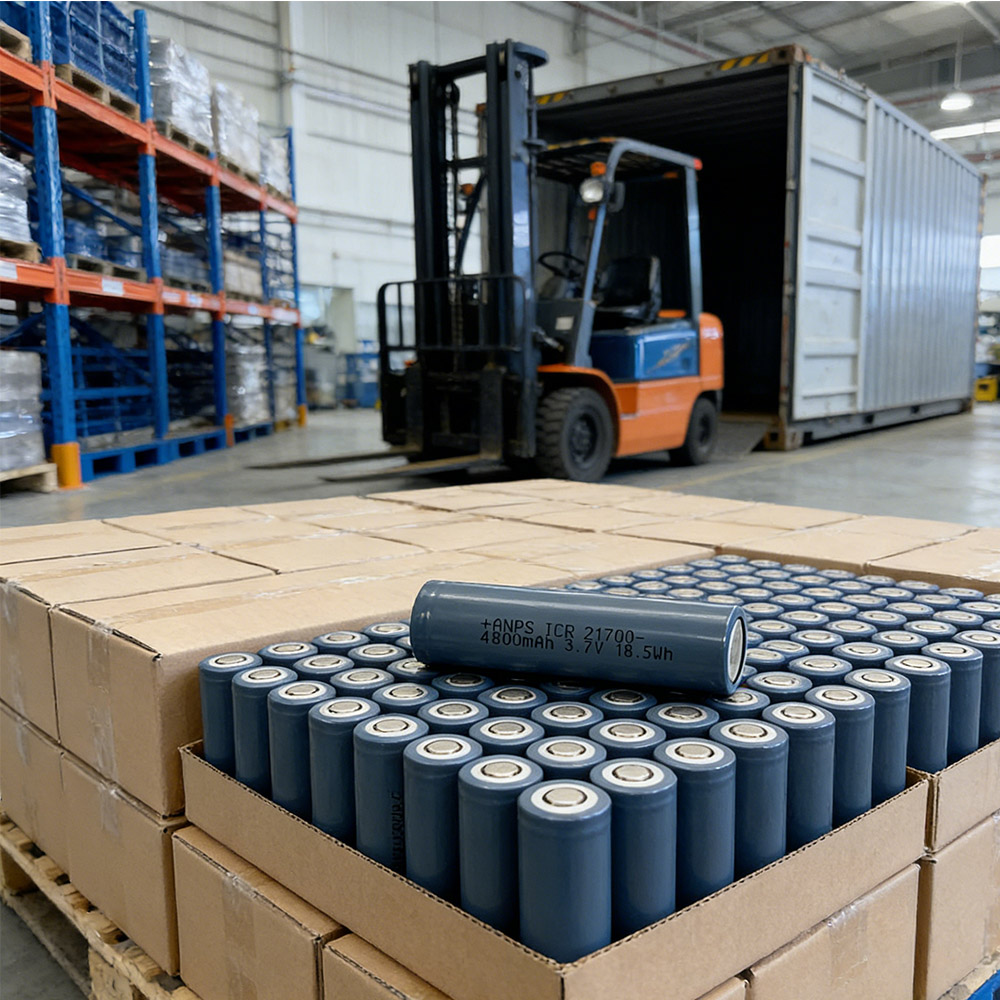
If you’ve ever requested a quote for 21700 batteries, you’ve probably noticed something strange.
One supplier says MOQ is 1,000 pcs.
Another says 5,000.
Prices vary more than expected.
Lead time ranges from 2 weeks to 7 weeks.
At first glance, it feels inconsistent.
In reality, it reveals how each factory actually operates.
After watching enough OEM buyers negotiate bulk orders, one thing becomes clear: MOQ, pricing, and lead time aren’t random numbers. They’re signals.
Let’s break them down.
1. Why MOQ Exists (And What It Really Means)
MOQ isn’t just a sales tactic.
For a real 21700 battery factory, production is scheduled in batches. Materials are purchased in bulk. Lines are calibrated for volume runs. Aging tests take rack space.
If a supplier offers extremely low MOQ — say 200 or 500 cells — one of three things is happening:
- They are reselling stock.
- They are mixing batches.
- They are prioritizing quick turnover over production control.
None of those are automatically bad. But they tell you something.
A manufacturer that sets a clear MOQ for 21700 battery wholesale orders is usually protecting consistency. They want each batch to run through full production and testing cycles without interruption.
From a long-term standpoint, that’s not a restriction. It’s stability.

2. What Actually Drives 21700 Battery Pricing
Many buyers assume price differences are just margin.
They’re not.
For a 21700 lithium-ion battery, pricing is influenced by:
- Cell grade (A vs lower-tier sorting)
- Cathode material sourcing
- Internal resistance control range
- Aging duration before shipment
- Order quantity
- OEM customization requirements
For example, shortening aging time by a few days reduces cost.
Loosening internal resistance tolerance also reduces cost.
But those savings show up later as pack imbalance, early degradation, or warranty issues.
In bulk 21700 battery orders, the cheapest quote often reflects shortened testing cycles or looser sorting standards.
The difference might be a few cents per cell.
The long-term cost could be much higher.
3. Understanding Lead Time in Real Production Terms
When a supplier quotes 3–5 weeks lead time for 21700 4800mAh batteries, that typically includes:
- Raw material preparation
- Cell assembly
- Electrolyte injection and sealing
- Formation process
- Aging period
- Final sorting and testing
- Packaging
Shorter lead times often mean:
- Inventory stock (good if verified)
- Reduced aging cycle
- Production backlog pressure
For OEM buyers planning product launches, predictable lead time matters more than fast lead time.
Delays hurt.
But unstable supply hurts more.
4. Pricing Tiers: Why Volume Changes Everything
21700 battery wholesale pricing is rarely linear.
1,000 pcs and 10,000 pcs don’t just differ in raw material volume — they affect:
- Production scheduling efficiency
- Scrap rate distribution
- Labor cost per unit
- Shipping optimization
Factories optimize around scale.
When evaluating bulk pricing, it’s helpful to ask:
- Is the price based on monthly demand or one-time order?
- Does it include export packaging?
- Is it FOB or EXW?
Clear structure reduces future surprises.
5. How to Negotiate Without Damaging Quality
There’s nothing wrong with negotiating.
But pushing in the wrong areas creates risk.
If you want to reduce cost, better approaches include:
- Increasing order volume
- Committing to rolling forecasts
- Reducing unnecessary customization
- Simplifying packaging
What you should avoid cutting:
- Aging duration
- Internal resistance sorting standards
- Final QC procedures
For 21700 battery bulk supply, process control is the backbone of consistency.
Once compromised, it’s difficult to restore.

6. The Real Question Isn’t “What’s the Price?”
It’s:
Can this supplier deliver the same performance six months from now?
Stable chemistry.
Controlled resistance range.
Repeatable production standards.
MOQ, pricing, and lead time are reflections of those systems.
When sourcing 21700 batteries for OEM or wholesale projects, predictability becomes margin.
Not just cost per piece.
Final Thoughts
21700 battery MOQ, pricing, and lead time aren’t obstacles. They’re indicators.
A structured MOQ suggests batch integrity.
A realistic lead time suggests full production cycles.
Tiered pricing suggests scale capability.
If you’re evaluating bulk 21700 battery suppliers, read the numbers carefully.
They tell you more than the datasheet ever will.
Recommend Products
-

18650 2000mAh 3.7 volt Lithium-ion Battery
-

18650 2200Mah 10S3P 36V 6.6Ah Electric Scooter Lithium Battery
-

18650 2600Mah 10S3P 36V 7.8ah Scooter Battery
-

18650 3.7V 3300mah Rechargeable Lithium ion Battery
-

18650 36V 5.2Ah Electric Bicyle Battery
-

18650 battery 3.7V 1500mAh Lithium-Ion Battery
-

1S2P 3.7V 1600mAh 14500 Lithium Battery
-

2000Mah 18650 Battery Cell 6Ah 36V Scooter Battery
-

21700 3.7V 4800mAh Rechargeable Lithium-Ion Battery
-

3.7V 21700 Rechargeable Lithium Battery Cells 5000mah
-

3.7V 5000mah 26650 Battery
-

3.7V Li ion Rechargeable 3000mah 18650 Battery Cell
-

32140 LiFePO4 Battery Cell 3.2V – 10000mAh / 15000mAh
-

32700 Lifepo4 3.2V 6000mah Lithium Battery
-

48V 15ah 720wh Ebike Battery
-

60V 21Ah 18650 16S7P E Bike Battery
-

Customized 48V-72V Triangle Ebike Lithium Battery Pack | 52V 30Ah
-

ICR 18650 Battery 2200mah 3.7V
Leave a Reply