
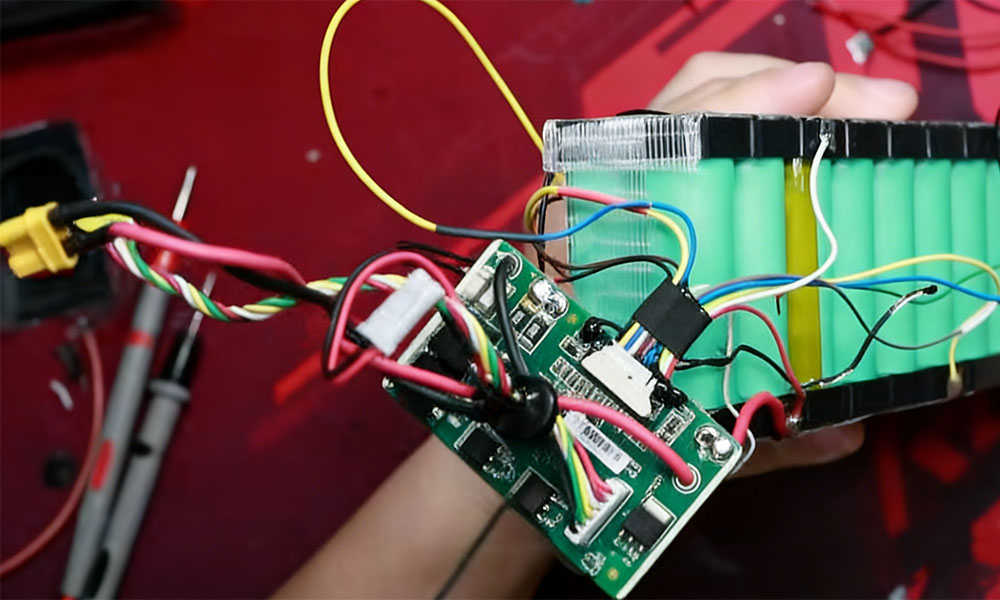
If you’re sourcing 36V scooter batteries for wholesale, you’re probably not looking for the “best-looking spec sheet”.
What you really want is something simpler—and harder:
A battery that performs consistently, ships reliably, and doesn’t turn into an after-sales headache three months later.
Below are the exact questions most importers ask before placing a bulk order, explained using real 36V scooter battery configurations that are already being shipped at scale.
1. Is the capacity real, or just a number on paper?
This is usually the first silent concern.
Most importers already know that two batteries labeled “36V” can behave very differently on the road. What matters isn’t the nominal voltage—it’s how much usable energy the pack actually delivers.
Typical 36V scooter packs are built in a 10S3P configuration, using 18650 cells. The difference comes down to the cell capacity inside:
- 36V 6Ah (2000mAh cells, 10S3P)
Compact, lightweight, and cost-controlled. Suitable for entry-level or short-distance commuter scooters. - 36V 6.6Ah (2200mAh cells, 10S3P)
A balanced option. Slightly longer range without a noticeable jump in size or weight. - 36V 7.8Ah (2600mAh cells, 10S3P)
Better range and torque stability, especially noticeable on hills or heavier riders.
Importers care about this because range complaints are one of the most common reasons for returns, even when the battery technically meets its label.

2. What usually causes problems: cells or BMS?
Here’s something most experienced buyers already know—but still double-check.
In real scooter deployments, most failures don’t come from the cells, they come from the BMS configuration.
That’s why a proper 36V scooter battery must include a stable BMS with:
- Over-charge protection
- Over-discharge protection
- Short-circuit protection
- Over-current and voltage protection
- Cell balancing
All three configurations above integrate a BMS designed specifically for scooter load profiles, not generic power tool use. For importers, this means fewer dead packs, fewer warranty claims, and less technical back-and-forth after delivery.

3. Cycle life: what does it really mean in practice?
Cycle life numbers are easy to print. Interpreting them is harder.
When a supplier states 500, 800, or 1000+ cycles, importers usually want to know:
- At what discharge rate was this tested?
- At what temperature?
- To what remaining capacity—80% or lower?
For example, a 36V 7.8Ah battery pack using 2600mAh battery cells is commonly rated at over 1000 cycles under controlled conditions. In real scooter use, that typically translates into longer service life and slower range degradation, especially for daily commuters.
Importers aren’t chasing perfect numbers—they want predictable degradation, so they can price, warranty, and stock with confidence.
4. How consistent is the pack in mass production?
This is where bulk orders either succeed or fail.
Consistency means:
- Matched cells (capacity and internal resistance)
- Stable pack assembly
- No batch-to-batch surprises
A 10S3P pack is only as strong as its weakest cell. If consistency is poor, the entire pack ages faster—even if no single cell is “bad”.
For distributors, consistency matters more than squeezing out another 0.2Ah. A slightly conservative pack that behaves the same every time is easier to sell and support.
5. Is the physical build suitable for real scooter use?
Scooters don’t live in clean labs. They deal with:
- Vibration
- Occasional water exposure
- Rough roads
- Frequent charge cycles
That’s why importers pay attention to:
- Internal shock absorption
- Insulation and wiring quality
- Overall pack compactness and weight
Lighter packs (like 6Ah and 6.6Ah versions) help with shipping and installation, while higher-capacity packs (7.8Ah) favor performance-oriented models.

6. Can this battery be supplied consistently over time?
For wholesale buyers, the first order is rarely the big one.
What they really evaluate is:
- Can this model be reordered 6 or 12 months later?
- Will the configuration stay the same?
- Can labeling, connectors, or packaging be adjusted if needed?
Stable supply and clear communication often matter more than chasing the lowest unit price.
7. Why content like this matters for importers
When buyers search for “36V scooter battery wholesale” or “36V e-scooter battery pack supplier”, they’re not just comparing specs.
They’re looking for signals:
- Does this supplier understand real-world scooter use?
- Do they talk about problems honestly?
- Do they sound like someone who has shipped these packs before?
Clear explanations, realistic expectations, and transparent configurations help buyers move from searching to inquiring.
Final Thoughts
A 36V scooter battery isn’t just a component—it’s a long-term decision for any importer or distributor.
Whether you’re choosing:
- 6Ah battery pack for price-sensitive markets,
- 6.6Ah battery pack for balanced daily use, or
- 7.8Ah battery pack for performance-focused scooters,
what really matters is how well the battery fits your customers, your support capacity, and your supply plan.
That’s what experienced importers care about—long before the first bulk order is placed.
Related Products
-

18650 2200Mah 10S3P 36V 6.6Ah Electric Scooter Lithium Battery
-

18650 2600Mah 10S3P 36V 7.8ah Scooter Battery
-

18650 36V 5.2Ah Electric Bicyle Battery
-

1S2P 3.7V 1600mAh 14500 Lithium Battery
-

2000Mah 18650 Battery Cell 6Ah 36V Scooter Battery
-

21700 3.7V 4800mAh Rechargeable Lithium-Ion Battery
-

3.7V 21700 Rechargeable Lithium Battery Cells 5000mah
-

3.7V 5000mah 26650 Battery
-

32140 LiFePO4 Battery Cell 3.2V – 10000mAh / 15000mAh
-

32700 Lifepo4 3.2V 6000mah Lithium Battery
-

48V 15ah 720wh Ebike Battery
-

60V 21Ah 18650 16S7P E Bike Battery
-

Customized 48V-72V Triangle Ebike Lithium Battery Pack | 52V 30Ah
Leave a Reply