
When people talk about a 36 volt li ion battery, most discussions stop at voltage, capacity, or price.
But once you move into wholesale procurement, the logic changes completely.
At scale, a battery is no longer just a component.
It becomes a risk factor, a cost structure, and sometimes a hidden bottleneck in your entire product line.
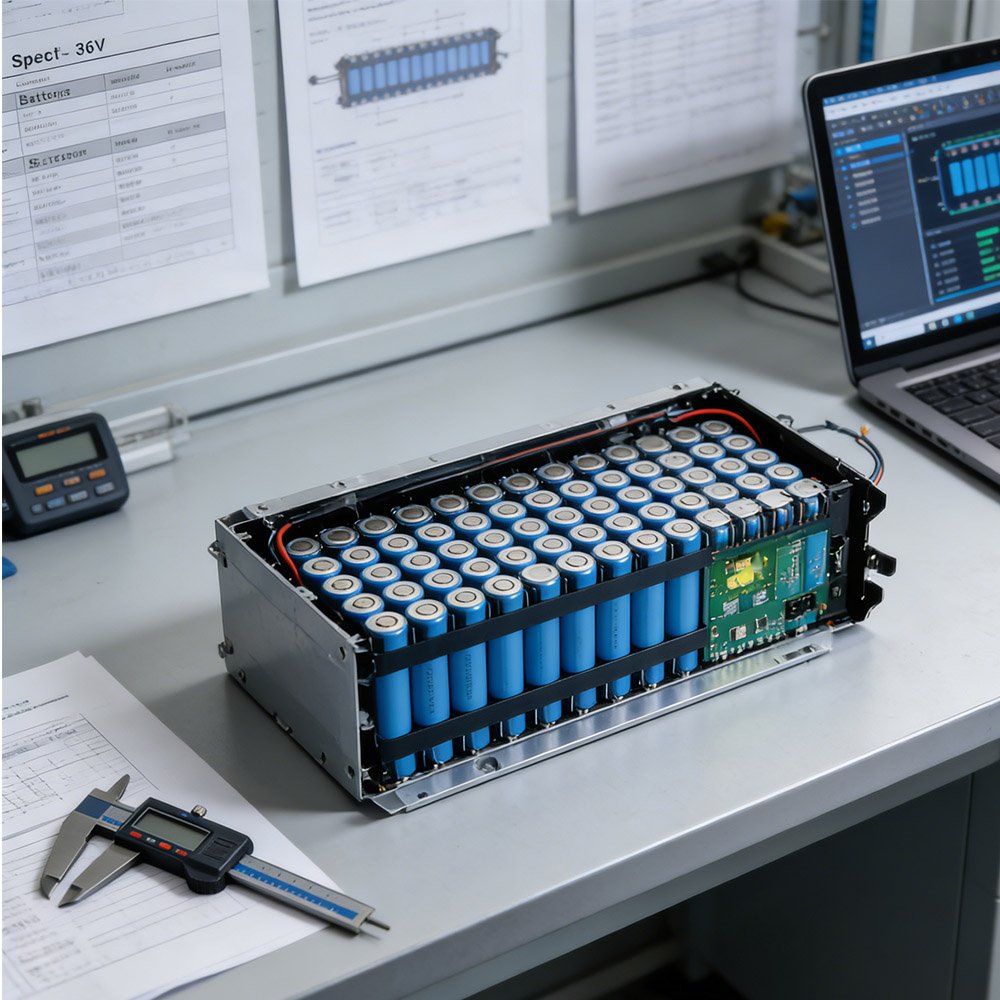
Take a typical example: a 36V battery pack built with a 10S3P configuration using 18650 cells.
On paper, it looks simple—36V, 7.8Ah, around 280Wh energy, and over 1000 cycles.
But in real procurement, the question is not “Is it good?”
It’s “Will it stay consistent when I order 500, 2,000, or 10,000 units?”
That’s why many wholesale buyers start with a proven model like this 36V lithium battery pack—not because it’s perfect, but because the structure, performance, and configuration are already validated in real applications.

What wholesale buyers actually check first
1) Configuration transparency
Procurement teams rarely trust marketing specs.
They want to know the real cell configuration, BMS logic, voltage range, and cycle life.
For example, a 10S3P structure with a voltage range of 25V–42V tells you far more than a simple “36V battery” label.
2) Performance under real load
A battery that performs well in lab tests may behave differently in scooters, e-bikes, or industrial equipment.
In practice, buyers care about stability under vibration, temperature changes, and continuous discharge.
3) Supplier capability, not just product specs
A reliable lithium battery manufacturer matters as much as the battery itself.
If the supplier controls assembly, testing, and BMS integration internally, the risk of batch inconsistency drops significantly.

Why procurement decisions often fail
Most failures happen not because the battery is bad, but because expectations are wrong.
- The sample performs well, but mass production varies.
- The supplier changes cell brands without notice.
- The BMS design is modified to reduce cost.
- Lead times expand once volume increases.
From a procurement perspective, choosing a stable 36V battery platform is often safer than chasing the lowest price.
The real logic of bulk purchasing
In wholesale sourcing, the best 36V li-ion battery is rarely the cheapest one.
It’s the one that remains predictable over time.
For many buyers, starting with a standardized pack like this 36V scooter battery configuration becomes a strategic choice—not because it’s special, but because it reduces uncertainty.
you May Also Like
-

18650 2200Mah 10S3P 36V 6.6Ah Electric Scooter Lithium Battery
-

18650 2600Mah 10S3P 36V 7.8ah Scooter Battery
-

18650 36V 5.2Ah Electric Bicyle Battery
-

1S2P 3.7V 1600mAh 14500 Lithium Battery
-

2000Mah 18650 Battery Cell 6Ah 36V Scooter Battery
-

21700 3.7V 4800mAh Rechargeable Lithium-Ion Battery
-

3.7V 21700 Rechargeable Lithium Battery Cells 5000mah
-

3.7V 5000mah 26650 Battery
-

32140 LiFePO4 Battery Cell 3.2V – 10000mAh / 15000mAh
Leave a Reply