
People often focus on the tool itself when buying a cordless drill. Brand, torque, speed settings — those things usually get all the attention.
But after spending time around contractors, repair shops, and tool distributors, you start noticing a different pattern. The part that actually causes the most complaints isn’t the drill. It’s the battery.
A drill can last years. Batteries usually don’t.
That’s why understanding power tool battery types matters more than many people realize. Whether you’re a contractor, a repair technician, or someone sourcing tools for resale, knowing the difference between battery technologies helps avoid a lot of frustration later.
Let’s walk through the main battery types you’ll see in cordless tools and why some of them disappeared while others became the standard.
Nickel-Cadmium Batteries: Tough but Outdated
NiCd batteries powered most cordless tools for a long time. If you’ve ever used an older drill from the early 2000s, chances are it had a chunky NiCd battery pack attached to the handle.
These batteries had one big advantage: durability. They could survive rough jobsite conditions surprisingly well. Drops, temperature swings, heavy loads — they handled it all better than many early lithium batteries did.
But the downsides were hard to ignore.
They were heavy, for one thing. A drill with a NiCd pack often felt noticeably bulkier than modern tools. After a full day of work, that extra weight mattered more than people expected.
Then there was the infamous memory effect. Many users remember the habit of running the battery completely flat before charging it again. Otherwise, the battery would slowly lose usable capacity.
Add environmental concerns about cadmium, and it’s easy to see why manufacturers eventually moved away from this technology.
NiMH Batteries: A Short-Lived Upgrade
Nickel-metal hydride batteries arrived as a kind of improvement over NiCd. They offered better capacity and reduced the environmental issues associated with cadmium.
For a while, some cordless tool brands experimented with NiMH packs, especially in mid-range tools.
In theory, they were a step forward. In practice, they didn’t fully solve the core problems.
NiMH batteries tended to discharge faster when sitting unused. Anyone who left a battery in the toolbox for a few weeks might come back to find it nearly empty. That’s not ideal for professionals who rely on tools daily.
They also struggled with high current demand, which is exactly what power tools require.
Once lithium-ion technology matured, NiMH quickly lost its relevance in the power tool industry.

Lithium-Ion Batteries: The Turning Point
Lithium-ion batteries changed the cordless tool market almost overnight.
Compared with older battery types, they brought several obvious improvements: higher energy density, lighter weight, and more stable performance.
You could suddenly build a drill that was both more powerful and easier to carry around all day. That combination alone made lithium batteries the clear winner.
Another advantage is charging behavior. Lithium batteries don’t suffer from the same memory effect that NiCd packs had. You can charge them whenever it’s convenient without worrying too much about damaging the battery.
Most modern cordless tools — drills, impact drivers, saws — now rely on lithium-ion battery packs.
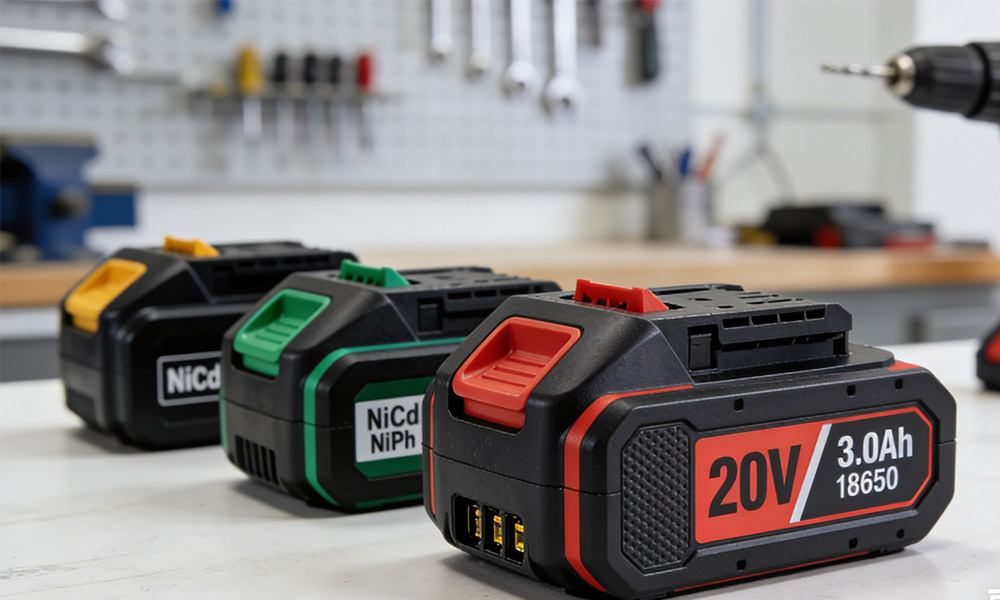
Many of those packs are built using 18650 lithium cells, arranged together to create the required voltage and capacity. A typical example is a 20V cordless drill battery, where multiple cells work together with built-in protection electronics.
Products like the
20V 3.0Ah cordless drill battery follow this design approach. Several high-drain cells are combined with a battery management system so the pack can handle the high current demands of power tools while maintaining safety and consistent output.
Voltage: Why the Numbers Can Be Misleading
Battery voltage is one of those specifications that sounds straightforward but can be slightly confusing in practice.
Take 18V and 20V tools as an example.
Many buyers assume a 20V tool must be significantly more powerful than an 18V one. In reality, they’re often built from the same number of lithium cells.
The difference comes down to how manufacturers label the voltage. Some use the nominal voltage, while others advertise the maximum voltage when the battery is fully charged.
In everyday use, the performance difference between the two is usually minimal.
What matters more is cell quality and battery design.
Capacity: Bigger Isn’t Always Better
Battery capacity is measured in amp-hours (Ah). The number gives a rough idea of how long a battery can run before needing a recharge.
At first glance, it’s tempting to assume the highest capacity battery is always the best option. But that’s not always how things work on a jobsite.
Higher capacity packs are heavier. For certain tools — especially drills used overhead or in tight spaces — that extra weight can become tiring surprisingly fast.
Many professionals end up using mid-range batteries most of the time. In practice, something around 3.0Ah often feels like a good balance between runtime and comfort.
You get enough operating time without making the tool feel overly bulky.

Why 18650 Cells Are Still So Common
You may have heard about newer lithium battery formats like 21700 cells. They’re gradually gaining popularity in some applications.
But the 18650 cell remains extremely common in power tool batteries, and there’s a good reason for that.
The technology has been refined for years. Manufacturing is stable, supply chains are mature, and performance characteristics are well understood.
For battery manufacturers producing large volumes of tool batteries, that reliability matters. It helps keep costs predictable and quality consistent.
Because of this, many replacement drill batteries still rely on 18650 cells as their main building block.
A Quick Note for Tool Distributors
From a distributor’s point of view, batteries are an interesting product category.
They wear out faster than the tools themselves, which means customers eventually need replacements. That creates steady demand over time.
But reliability matters a lot. A battery that fails too early can damage trust in a brand or supplier.
When evaluating power tool batteries, it’s worth paying attention not just to capacity or voltage, but also to things like cell quality, protection circuits, and overall build consistency.
Those factors usually determine how the battery performs after a year or two of real-world use.
Final Thoughts
Power tool batteries may not look complicated from the outside, but the technology behind them has evolved significantly over the years.
Older nickel-based batteries laid the foundation for cordless tools, but lithium-ion technology ultimately unlocked the performance and convenience we see today.
For professionals, distributors, and tool buyers, understanding these differences helps explain why some batteries perform better, last longer, and simply feel more reliable during daily work.
And as cordless tools continue replacing corded equipment across many industries, battery technology will only become more important.
You May Also Like
-

18650 2200Mah 10S3P 36V 6.6Ah Electric Scooter Lithium Battery
-

18650 2600Mah 10S3P 36V 7.8ah Scooter Battery
-

18650 36V 5.2Ah Electric Bicyle Battery
-

1S2P 3.7V 1600mAh 14500 Lithium Battery
-

2000Mah 18650 Battery Cell 6Ah 36V Scooter Battery
-

21700 3.7V 4800mAh Rechargeable Lithium-Ion Battery
-

3.7V 21700 Rechargeable Lithium Battery Cells 5000mah
-

3.7V 5000mah 26650 Battery
-

32140 LiFePO4 Battery Cell 3.2V – 10000mAh / 15000mAh
-

32700 Lifepo4 3.2V 6000mah Lithium Battery
-

48V 15ah 720wh Ebike Battery
-

60V 21Ah 18650 16S7P E Bike Battery
-

Customized 48V-72V Triangle Ebike Lithium Battery Pack | 52V 30Ah
Leave a Reply