
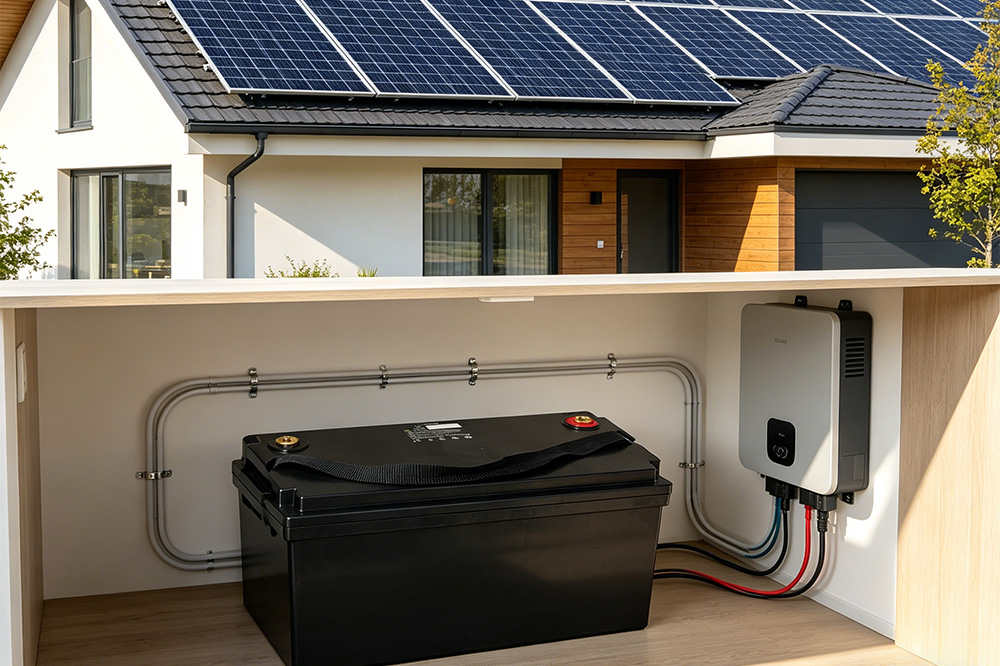
When people talk about small to mid-size solar systems, one configuration shows up again and again — 12V 100Ah LiFePO4 battery.
On paper, it looks simple.
But once you start designing real systems or sourcing in bulk, questions come up fast:
- How many batteries are actually needed?
- Is 100Ah enough for daily use?
- Can it scale later?
This guide focuses on real-world solar setups — not just specs — so you can make decisions that hold up after installation.
Why 12V 100Ah Works So Well for Solar
A single 12V 100Ah LiFePO4 battery typically provides about 1280Wh usable energy.
That makes it a solid fit for:
- small off-grid cabins
- backup power systems
- entry-level home solar setups
Compared to lead-acid batteries, LiFePO4 offers:
- deeper usable capacity (up to 90%+)
- stable voltage output
- significantly longer lifespan
For installers, this means fewer replacements and more predictable system performance.

The Real Question: How Many Batteries Do You Need?
This is where many projects go wrong.
Instead of starting with battery specs, start with daily energy consumption.
Example:
If a system uses:
- 800W load × 5 hours = 4000Wh/day
Then:
- One 12V 100Ah battery (≈1280Wh) → not enough
- You’ll need at least 3–4 batteries for stable operation
And that’s before accounting for cloudy days or inefficiencies.
Series vs Parallel: Designing for Flexibility
One advantage of 12V 100Ah batteries is how easy they are to scale.
Parallel (increase capacity)
- 12V stays the same
- capacity increases (100Ah → 200Ah → 300Ah)
Series (increase voltage)
- 12V → 24V → 48V
- better efficiency for larger systems
For solar installers, this modular design is a big advantage.
It allows systems to grow without replacing the entire battery bank.

What Installers Actually Care About (Not Just Specs)
From real project experience, installers usually focus on:
1. Consistent Output
Voltage stability matters more than peak specs, especially for inverters.
2. Expansion Compatibility
If batteries don’t match well in parallel, problems show up quickly.
3. Reliable BMS Protection
Overcharge, over-discharge, and temperature protection must work consistently — not just in theory.
Choosing the Right Battery for Solar Projects
For wholesale buyers or contractors, it’s safer to choose batteries designed for system integration — not just standalone use.
For example, a typical
12V 100Ah LiFePO4 battery used in solar applications should support:
- stable cell matching for parallel use
- built-in BMS with full protection
- easy scalability (series & parallel)
- consistent batch quality for bulk orders
These factors make installation smoother and reduce long-term issues.
Common Mistake: Undersizing the Battery Bank
A lot of first-time buyers assume:
“100Ah should be enough.”
In reality, most systems need more capacity than expected.
Typical issues include:
- battery draining too fast at night
- inverter shutting down under load
- system instability during cloudy days
That’s why experienced installers often recommend building in extra capacity from the start.

Solar Trends Driving Demand for 100Ah Batteries
There’s a clear shift happening in the market:
- smaller modular solar systems are becoming more popular
- users prefer scalable battery setups
- LiFePO4 is rapidly replacing lead-acid
The 12V 100Ah format sits right in the middle of this trend — flexible, affordable, and easy to deploy.
Conclusion
The 12V 100Ah LiFePO4 battery isn’t just popular — it’s practical.
But the success of a solar system doesn’t depend on the battery alone.
It depends on how well everything is planned:
- correct sizing
- proper configuration
- reliable supply
If you’re sourcing for solar projects, think beyond a single unit.
Focus on building a system that works today — and can grow tomorrow.


Leave a Reply