
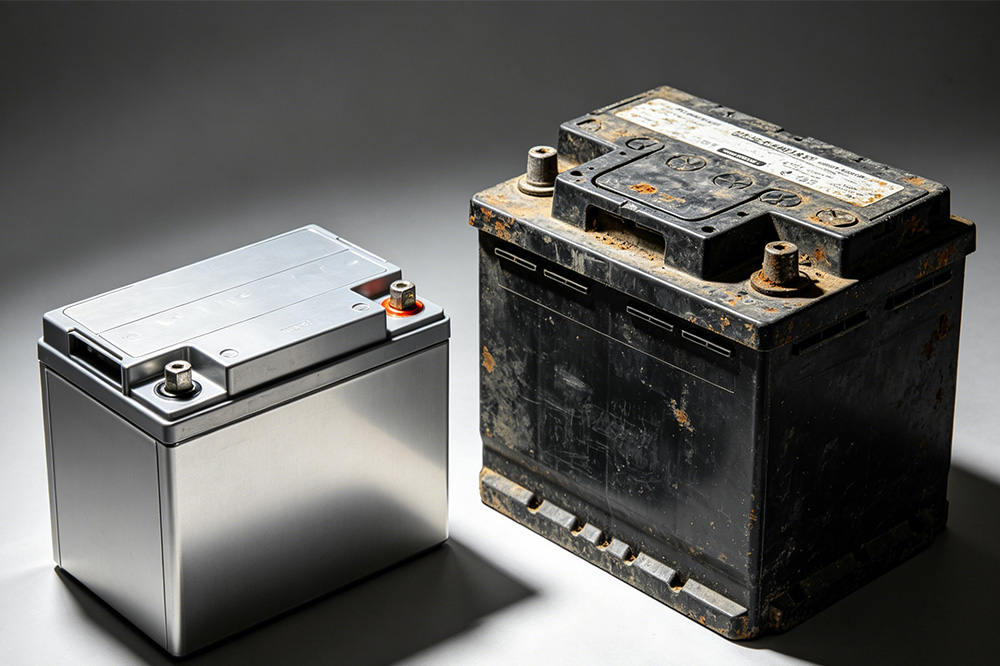
If you’re still comparing lead-acid batteries with 12V 100Ah LiFePO4 batteries, you’re not alone.
A lot of distributors and project buyers hesitate at the same point:
- Lead-acid is cheaper upfront
- LiFePO4 looks expensive
But after a few projects, most buyers stop comparing price — and start comparing total cost and reliability.
Let’s break this down in a practical way.
Upfront Cost vs Real Cost
On paper, lead-acid batteries are clearly cheaper.
But that’s only part of the story.
Typical reality:
- Lead-acid: low initial cost, frequent replacement
- LiFePO4: higher upfront cost, long lifespan
If you’re buying in bulk, the real question is:How much does it cost over time?
Cycle Life: Where the Gap Becomes Obvious
A standard comparison looks like this:
- Lead-acid battery: ~300–500 cycles
- LiFePO4 battery: 4000+ cycles
That’s not a small difference — it’s a completely different replacement cycle.
In real projects, that means:
- lead-acid may need replacing every 1–2 years
- LiFePO4 can last 5–10 years depending on usage
For distributors, fewer replacements = fewer complaints.

Usable Capacity (This Is Often Misunderstood)
A 100Ah lead-acid battery is not really 100Ah in practice.
To avoid damage, most systems only use:
- 50% of lead-acid capacity
So:
- 100Ah lead-acid → ~50Ah usable
- 100Ah LiFePO4 → ~90Ah usable
That’s almost double the usable energy in real scenarios.
Weight and Installation
This matters more than people expect.
Typical comparison:
- Lead-acid: heavy and bulky
- LiFePO4: about 60–70% lighter
In applications like:
- RV systems
- marine setups
- portable solar
Weight reduction directly improves usability and efficiency.

Performance Under Load
Here’s something that shows up quickly in real use:
Lead-acid batteries tend to:
- lose voltage under load
- struggle with high power demand
LiFePO4 batteries:
- maintain stable voltage
- perform better with inverters and motors
This is especially important in solar and off-grid systems where stability matters.
Charging Speed and Efficiency
Lead-acid batteries:
- slower charging
- less efficient
- more energy loss
LiFePO4 batteries:
- faster charging
- higher efficiency
- better for solar energy storage
For solar projects, this directly affects how much energy you actually store each day.
What Bulk Buyers Are Switching For
From what we’re seeing in the market, the shift to lithium isn’t just about performance.
It’s about reducing long-term risk.
Common reasons buyers switch:
- fewer warranty issues
- longer product lifecycle
- better customer satisfaction
- easier system design
Choosing the Right LiFePO4 Battery
If you’re considering switching, don’t just compare “lithium vs lead-acid.”
Compare supplier quality.
A reliable option like a
12V 100Ah LiFePO4 battery designed for wholesale supply typically offers:
- consistent cell quality across batches
- stable BMS protection
- support for solar, RV, and off-grid use
- OEM and bulk supply capability
This is where the real difference is — not just chemistry, but execution.

When Lead-Acid Still Makes Sense
To be fair, lead-acid isn’t completely obsolete.
It can still work for:
- very low-budget projects
- short-term or backup-only use
- non-critical systems
But for anything long-term or performance-sensitive, the limitations show quickly.
Conclusion
If you’re buying batteries for resale or projects, the comparison isn’t just:
lithium vs lead-acid
It’s: short-term savings vs long-term reliability
In most real-world applications, LiFePO4 wins — not because it’s newer, but because it solves problems that lead-acid can’t.


Leave a Reply