
Why a 12V Label Alone Doesn’t Tell You Much
Most buyers searching for batterie li ion 12V start with a simple assumption:
“If the voltage matches, the battery should work.”
In real projects, that assumption rarely holds up.
12V is just the entry point. It says nothing about how stable the output will be under load, how the battery behaves after a few hundred cycles, or whether it will still feel “reliable” once it’s inside an actual device. Wholesale buyers usually realize this only after the first batch goes out and feedback starts coming back—sometimes mixed, sometimes painful.
What separates a smooth supply chain from recurring complaints is never just voltage compatibility. It’s the details behind it.
What a Batterie Li-Ion 12V Really Is
At its core, a 12V lithium-ion battery is not a single component. It’s a system.
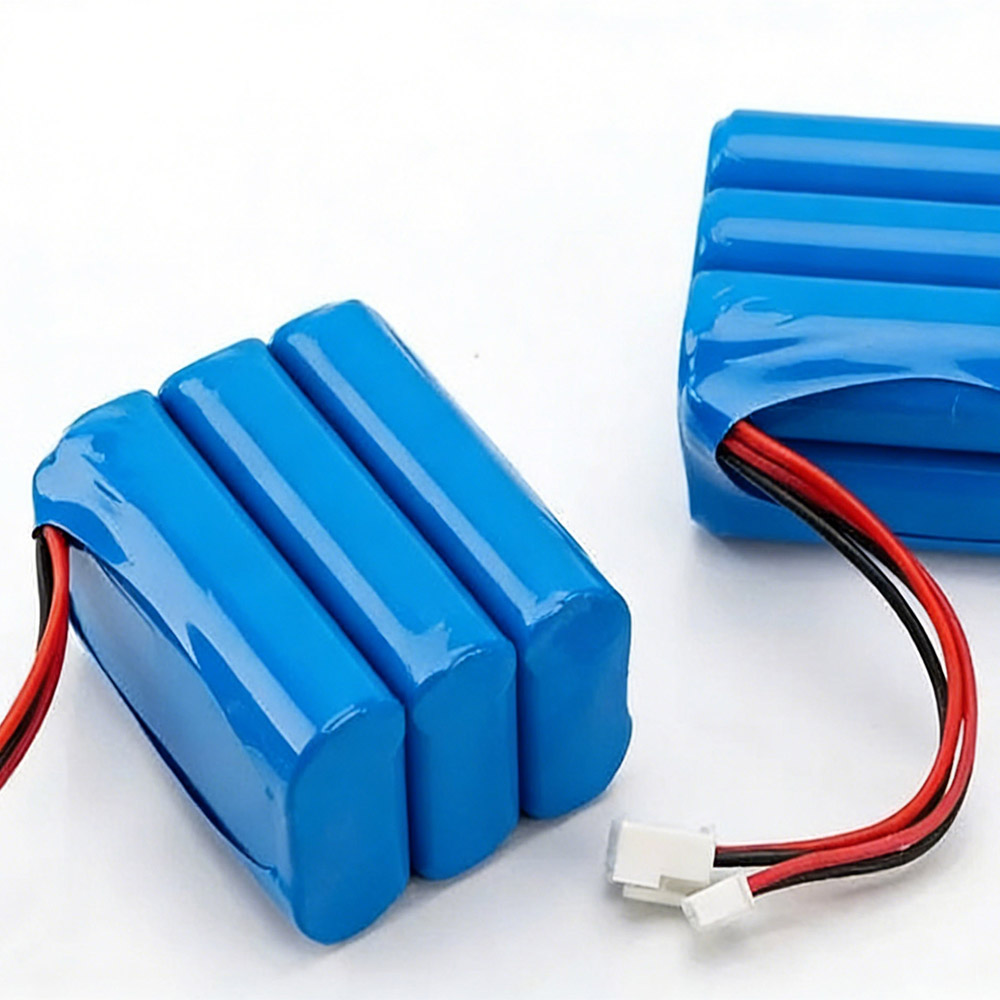
Inside, you’re typically looking at multiple lithium-ion cells—often 18650 cells—combined in a specific series and parallel structure. A common configuration is 3S2P, which creates the 12V-class voltage while balancing capacity and current output.
A good example of this in a real product is the 12V 4400mAh Lithium-Ion 3S2P 18650 Battery Pack—a design you’ll see repeatedly in industrial and professional applications because it tends to deliver steady performance without unnecessary complexity.
This matters because the behavior of the battery depends more on how those cells are combined than on the label printed outside. Two batteries can both be sold as “12V Li-ion” and perform very differently once installed.

The Real Advantages of 12V Li-Ion
One reason 12V lithium-ion batteries continue replacing traditional options is energy density. You get more usable power in a smaller, lighter package. For portable equipment, that alone can change how a product is designed.
Another advantage shows up over time rather than on day one: low self-discharge. Devices stored for weeks or months don’t come back “half-dead,” which is something distributors and end users quietly appreciate.
And then there’s weight. In tools, lighting equipment, or mobile systems, the difference between lithium-ion and older battery types is immediately noticeable. End users feel it, even if they don’t talk about it in technical terms.
But—and this is critical—these advantages only appear when the internal structure and protection logic are done right. Otherwise, those theoretical benefits collapse into real frustrations once the product is in the hands of the end customer.
Common Procurement Mistakes Buyers Keep Repeating
A surprisingly common belief is that higher capacity is always better. On paper, a larger mAh number looks competitive. In reality, oversizing capacity for the wrong application can reduce efficiency and shorten real-world lifespan.
Another issue is voltage stability under load. Lithium-ion responds quickly to current demand. If the BMS is overly conservative, the battery may cut off early during high-load moments, even when capacity remains. From the user’s perspective, it feels like a failure—even if the battery is technically “safe.”
Charging is where many systems quietly break down. Using mismatched chargers is still one of the fastest ways to create problems that get blamed on the battery. In overseas markets especially, batteries are often integrated into systems without anyone owning the full responsibility of compatibility.
These aren’t rare edge cases. They’re routine wholesale headaches.

Why 18650 Cells Still Dominate 12V Battery Packs
Despite newer formats entering the market, 18650 cells remain widely used in batterie li ion 12V packs for one simple reason: predictability.
Their electrical behavior is well understood. Thermal characteristics are stable. Supply chains are mature. For batch production and long-term sourcing, this consistency matters more than novelty.
When combined correctly—such as in a balanced 3S2P structure seen in the 12V 4400mAh Lithium-Ion 3S2P 18650 Battery Pack—18650-based packs tend to deliver steady performance rather than headline numbers. For wholesale buyers, that steadiness often matters more than peak specs.
Battery Pack Design: Where Stability Is Actually Decided
If you’ve ever had a product test fine in-house but struggle after shipment, the issue is often not the cell itself. It’s the system design.
BMS selection plays a major role here. Overcharge, over-discharge, and short-circuit protection are standard concepts, but their trigger thresholds vary widely. Small differences in logic can mean the difference between smooth operation and repeated field complaints.
A well-designed pack doesn’t draw attention to itself. It just works, quietly, across different usage patterns.
When evaluating offers from suppliers, seeing how a pack like the 12V 4400mAh Lithium-Ion 3S2P 18650 Battery Pack is structured gives you more insight than any table of numbers ever will.
How the Same 12V Battery Behaves Differently Across Applications
One reason feedback on 12V lithium-ion batteries can feel inconsistent is that usage patterns vary more than buyers expect.
In cordless power tools, short bursts of high current are normal. If the battery wasn’t designed with enough headroom, users will complain about weak output—even if capacity looks fine.
Outdoor lighting and camping equipment tell a different story. Here, stability over long discharge periods matters more than peak power. A moderate-capacity pack with stable voltage often outperforms a larger but poorly matched option.
DIY power systems are the most unpredictable. Users mix components freely, which magnifies compatibility issues. In these cases, buyers tend to value transparency and technical clarity more than the lowest unit price.
Same battery class. Completely different outcomes.
What Wholesale Buyers Should Actually Focus On
Experienced buyers eventually stop asking whether a batterie li ion 12V is “good” or “bad.”
They start asking whether it’s right for the job.
That shift—from spec-driven thinking to application-driven thinking—is usually what separates smooth repeat orders from constant troubleshooting. Once usage scenarios are clear, decisions around capacity, structure, and protection become far easier.
And that’s usually when sourcing stops being stressful.
Parting Thought
A batterie li ion 12V is a solvable engineering piece—but only when you understand the real-world usage patterns behind it.
For a configuration that shows up again and again because it balances performance, reliability, and sourcing simplicity, the 12V 4400mAh Lithium-Ion 3S2P 18650 Battery Pack is a good reference point for what a practical, wholesale-friendly 12V battery looks like.
You May Also Like
-

12V 4400 mah Lithium ion 3S2P 18650 Battery Pack
-

18650 20V 3.0Ah Cordless Drill battery
-

18650 22.2V 7.8Ah 2600Mah 6S3P Rechargeable Battery Pack
-

18650 3.7V 10Ah Li-Ion Power Battery Pack
-

18650 7S7P 24V 14Ah Lithium ion Electric Scooter Battery Pack
-

18650 Electric Scooter 48V 13000mAh Lithium Battery
-

2600mAh 3S1P 11.1V 18650 Battery Packs
-

36V 5200mAh 10S2P 18650 Battery Pack
-

48v 4400mah 13S2P 18650 Rechargeable Battery Pack
-

7S2P 24V 18650 Lithium Battery Pack
-

Electric Scooter 36V 4400mAH 10S2P 18650 Battery Pack
Leave a Reply