
When people talk about drones, they often focus on cameras, flight controllers, or GPS systems. But in real operations, one component quietly determines how well a drone performs—the battery.
Different drones have very different power demands. A lightweight FPV drone used for filming behaves very differently from a heavy agricultural spraying drone. Because of this, drone LiPo batteries are usually selected based on the specific application scenario, not just the capacity number printed on the label.
For drone manufacturers, system integrators, and distributors, understanding how battery requirements change across industries can make equipment selection much easier.
Why Application Matters When Choosing Drone Batteries
In the UAV industry, battery choice directly affects three critical factors:
- flight time
- payload capacity
- power stability
A drone used for crop spraying might carry a tank of liquid fertilizer, while a mapping drone may need stable voltage for cameras and sensors. These different tasks lead to different battery priorities.
That’s why most professional buyers evaluate drone batteries based on real application requirements rather than generic specifications.
Agricultural Drone Batteries
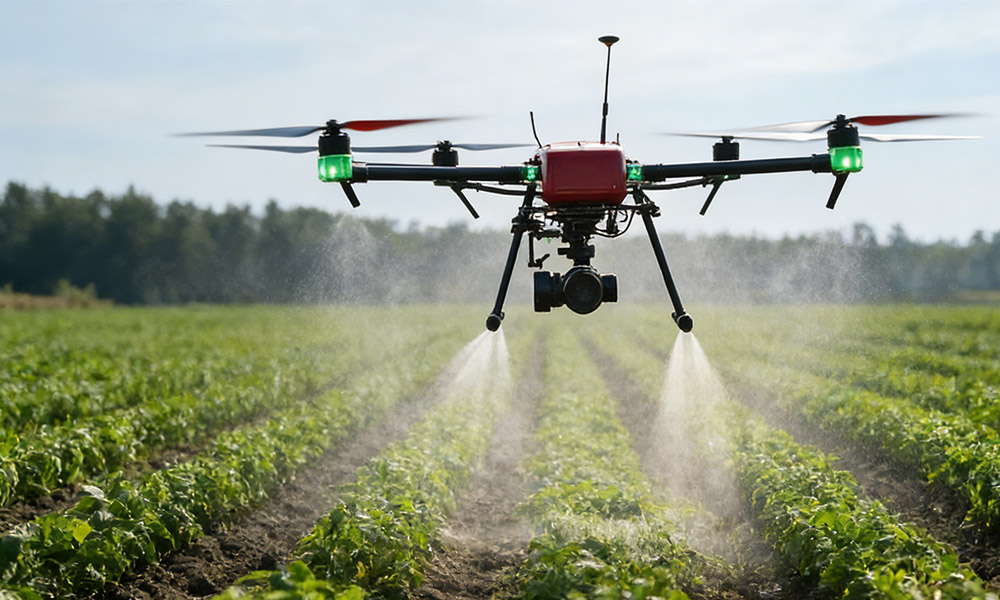
Agricultural drones are among the most demanding UAV platforms. These machines often carry heavy payloads such as pesticide or fertilizer tanks, which significantly increase power consumption.
For this reason, agricultural drones typically require:
- high capacity battery packs
- strong discharge capability
- stable voltage under heavy load
Many modern spraying drones operate with 6S or higher voltage systems, allowing motors to generate enough thrust to lift the payload.
High-capacity batteries also reduce downtime in the field, which is important when covering large areas of farmland.

Mapping and Survey Drone Batteries
Surveying and mapping drones usually have a different priority: flight endurance and power stability.
These drones often carry high-resolution cameras, GPS modules, and data transmission systems. While the payload may not be extremely heavy, the mission usually requires long and stable flights.
In these scenarios, UAV operators prefer batteries with:
- high energy density
- stable output voltage
- longer cycle life
This is one reason why many professional drones are now adopting 21700 lithium-ion battery packs, which offer better energy density than traditional designs.
Industrial Inspection Drone Batteries
Inspection drones are commonly used for monitoring infrastructure such as:
- power transmission lines
- pipelines
- wind turbines
- bridges
These missions often involve flying in remote areas and harsh environments.
Because of that, industrial UAV operators typically look for batteries that provide:
- reliable discharge performance
- durable construction
- longer operational lifespan
A dependable battery system helps reduce maintenance costs and keeps inspection schedules running smoothly.

Long-Range FPV Drone Batteries
FPV drones designed for long-distance flights focus heavily on weight and endurance.
Unlike racing drones that prioritize extreme discharge rates, long-range platforms aim to maximize flight time. Pilots often choose high-capacity battery packs that balance power and weight.
Lithium-ion batteries built with 21700 cells have become popular in this category because they can store more energy without significantly increasing weight.
Example: 22.2V 15000mAh Drone Battery
A good example of a versatile UAV battery for industrial and long-endurance drones is the 22.2V 15000mAh 10C 21700 Li-ion drone battery.
Typical specifications include:
- 6S configuration (22.2V)
- 15000mAh capacity
- 10C discharge rate
- high-density 21700 cells
- XT60 connector and balance plug
This type of battery is widely used in:
- agricultural spraying drones
- industrial inspection UAVs
- aerial mapping platforms
- long-range FPV drones
Because of its high energy density and stable power output, it provides a balance between flight time, power delivery, and durability.

How Wholesale Buyers Choose Drone Batteries
For distributors and drone manufacturers purchasing batteries in bulk, a few practical considerations usually guide the decision.
First is consistency. Industrial projects require battery packs that perform reliably across multiple production batches.
Second is customization. Many UAV systems need specific connectors, voltage configurations, or battery pack shapes.
Finally, certification and logistics matter as well. International buyers often require documentation such as UN38.3 for safe battery transportation.
Choosing the right battery supplier helps ensure stable production and long-term cooperation.
Conclusion
Drone batteries may seem like a simple component, but in reality they are one of the most important elements of any UAV system.
Different applications—from agriculture to infrastructure inspection—require different battery characteristics. By understanding how these requirements vary, drone manufacturers and buyers can select the most suitable drone LiPo or lithium-ion battery solutions for their projects.
As UAV technology continues to evolve, high-capacity and high-efficiency batteries will remain a key factor in extending flight time and improving overall drone performance.
Recommend Products
-

12000mAh High-Rate Low-Temperature Power UAV Lithium Battery for Drones
-

18650 2200Mah 10S3P 36V 6.6Ah Electric Scooter Lithium Battery
-

18650 2600Mah 10S3P 36V 7.8ah Scooter Battery
-

18650 36V 5.2Ah Electric Bicyle Battery
-

1S2P 3.7V 1600mAh 14500 Lithium Battery
-

2000Mah 18650 Battery Cell 6Ah 36V Scooter Battery
-

21700 3.7V 4800mAh Rechargeable Lithium-Ion Battery
-

22.2V 15000mAh 10C High-Rate 21700 Li-ion Drone Battery
-

3.7V 21700 Rechargeable Lithium Battery Cells 5000mah
Leave a Reply