
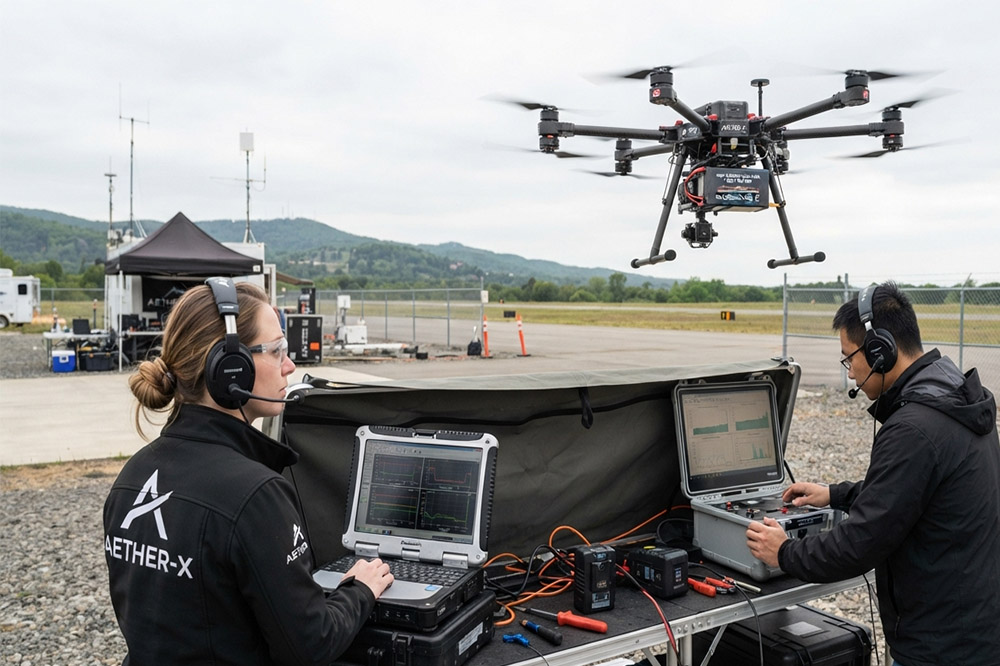
For many drone manufacturers, battery life is one of the hardest problems to solve.
The drone itself may already be optimized.
The motors are efficient.
The flight controller works well.
The aircraft structure is lightweight.
But after testing, the team still asks:
“Can we get another 10 minutes of flight time?”
This question appears frequently in commercial UAV development.
A longer flight time can directly affect the value of a drone product. A mapping company can complete more area in one day. An inspection company can reduce the number of battery swaps. An agricultural operator can cover more fields with fewer interruptions.
However, improving UAV battery life is not simply about installing a bigger battery.
A larger battery can store more energy, but it also increases weight.
The real challenge is finding the right balance between energy, weight, power output, and battery durability.
Start With the Battery Cell Selection

The first place to improve UAV battery life is usually the battery cell itself.
Different lithium battery cells have different characteristics.
Some cells focus on high discharge performance.
Others focus on energy density and longer operating time.
For example:
18650 Lithium-ion Cells
Advantages:
- Mature technology
- Stable supply chain
- Good balance between capacity and weight
Commonly used for:
- Inspection drones
- Mapping UAVs
- Commercial drone platforms
21700 Lithium-ion Cells
Advantages:
- Higher capacity per cell
- Better space utilization
- Suitable for long endurance applications
Often selected for:
- Industrial UAVs
- Long-range drones
- Heavy-duty platforms
LiPo Batteries
Advantages:
- High discharge capability
- Lightweight structure
Commonly used for:
- FPV drones
- Racing drones
- High-performance UAVs
The choice depends on the drone mission.
A drone flying a camera system for 60 minutes has different requirements from a racing drone that needs maximum acceleration.
Reduce Unnecessary Battery Weight
One thing that is easy to overlook:
The battery is not the only thing affecting flight time.
Every additional gram affects the whole aircraft.
A heavier drone requires:
- More motor power
- Higher current consumption
- More energy during flight
This creates a cycle.
More weight requires more energy.
More energy requires a larger battery.
A larger battery adds more weight.
This is why professional UAV engineers usually optimize the complete system rather than only increasing battery capacity.
Small improvements in:
- Battery structure
- Cable design
- Mounting method
- Aircraft materials
can sometimes improve flight time without changing the battery chemistry.
Improve Battery Pack Design Instead of Only Increasing Capacity

A battery pack is more than a group of cells.
The design of the pack affects actual performance.
Important factors include:
- Cell arrangement
- Internal resistance
- Connection quality
- BMS efficiency
- Thermal management
For example, two battery packs may have the same capacity rating.
But the one with better cell matching and lower resistance may provide better real-world flight performance.
During UAV battery development, engineers usually consider:
- Required voltage
- Maximum current
- Available space
- Target flight time
A well-designed battery pack can sometimes achieve better results without simply adding more cells.
Battery Management System (BMS) Helps Maintain Battery Performance
A battery may lose performance over time if it is not managed correctly.
The BMS helps monitor:
- Voltage balance
- Temperature
- Charging status
- Current usage
- Battery health
For commercial UAV fleets, this becomes even more important.
Imagine a company operating 50 inspection drones.
Without battery monitoring, it becomes difficult to know:
- Which battery is aging?
- Which battery has reduced capacity?
- Which battery should be replaced?
A smart BMS can provide useful information and help operators manage battery usage more efficiently.
Proper Charging Habits Can Extend Battery Lifespan
Many battery problems are caused by incorrect charging practices.
A lithium battery does not like extreme conditions.
Common mistakes include:
- Charging a hot battery immediately after flight
- Leaving batteries fully charged for a long time
- Using unsuitable chargers
- Ignoring battery swelling or damage
For commercial drone operators, battery management procedures are important.
A simple charging routine can make a noticeable difference.
For example:
After a long flight, allowing the battery to cool before charging can help reduce stress.
Temperature Has a Big Impact on UAV Battery Performance

Temperature is often underestimated in battery performance.
Cold environments can reduce available capacity.
High temperatures can accelerate battery aging.
Commercial drones may operate in very different environments:
- Desert areas
- Cold regions
- Industrial sites
- High-altitude locations
A battery designed for one environment may not perform the same in another.
For some applications, battery design may require:
- Temperature sensors
- Improved housing
- Thermal insulation
- Better heat dissipation
Software and Flight Optimization Also Matter
Battery life is not only a hardware issue.
Flight control settings can influence energy consumption.
For example:
Aggressive acceleration consumes more power.
Unnecessary hovering wastes energy.
Poor route planning increases flight distance.
For mapping and inspection drones, optimized flight paths can sometimes improve efficiency without changing the battery.
The best results usually come from combining hardware improvements with better operation methods.
Custom Battery Packs for Longer Endurance UAV Projects
Many commercial UAV manufacturers eventually move toward custom battery solutions.
The reason is simple.
Their drone design is unique.
A custom UAV battery pack can be designed according to:
- Voltage requirements
- Capacity targets
- Space limitations
- Discharge needs
- Communication requirements
For example, a long-range inspection drone may require a lightweight 21700 battery pack with a customized BMS.
An agricultural drone may need a high-voltage battery with strong discharge capability.
Different missions require different solutions.
What Should Drone Manufacturers Ask a Battery Supplier?
Before developing a long endurance UAV battery, manufacturers should check:
- What battery cells are available?
- Can the supplier customize voltage and capacity?
- Is BMS development supported?
- Can battery samples be tested?
- Is mass production available?
- Are safety documents provided?
A supplier with UAV battery experience can often help avoid unnecessary redesign.
Final Thoughts
Extending UAV battery life is not achieved by one single change.
It usually comes from several improvements working together:
- Better cell selection
- Optimized battery design
- Proper charging management
- Effective thermal control
- Efficient flight operation
For commercial drone manufacturers, a well-designed battery system can improve flight time, reduce operating costs, and make the final UAV product more competitive.


Leave a Reply