
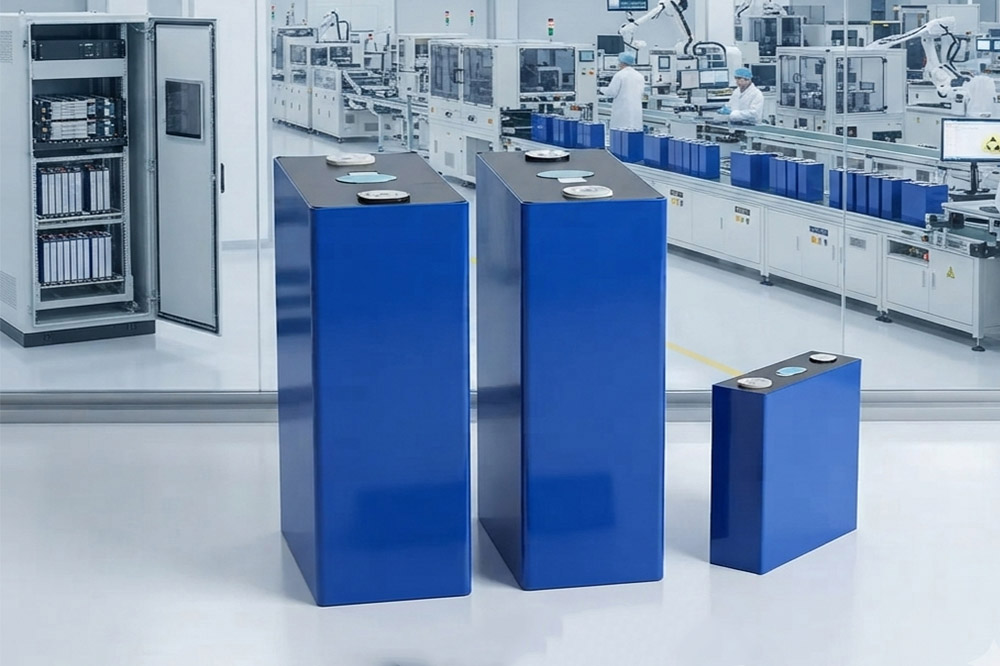
When companies develop energy storage products, choosing battery cells is usually one of the first decisions. But after years of working with battery projects, many manufacturers realize that the cell itself is only part of the solution.
A reliable battery pack needs more than high capacity.
Cell consistency, BMS design, mechanical structure, thermal management, and production stability all affect the final performance.
For applications that require daily charging and discharging, such as solar storage systems, industrial equipment, RV power systems, and backup energy solutions, OEM/ODM 6000 cycle LiFePO4 battery packs have become a popular choice.
Apsenx provides customized LiFePO4 battery solutions based on high-capacity prismatic cells, including the 3.2V 280Ah LiFePO4 battery cell, designed for long-life energy storage applications.
Why 6000 Cycle LiFePO4 Battery Packs Are Becoming More Popular
Battery replacement is not only a technical issue. For system manufacturers, it directly affects maintenance costs and customer experience.
A battery that needs replacement after a few years can increase the total ownership cost of an energy system.
LiFePO4 chemistry is widely selected for long-life applications because of its stable structure and excellent cycle performance.
A properly designed LiFePO4 battery pack can achieve thousands of charge and discharge cycles, making it suitable for projects where reliability matters more than simply achieving the lowest initial cost.
Common applications include:
- Solar energy storage systems
- Commercial and industrial ESS
- RV and marine power systems
- Golf carts and electric vehicles
- Backup power systems
3.2V 280Ah LiFePO4 Battery Cell: A Strong Foundation for Custom Battery Packs
For large-capacity battery projects, prismatic LiFePO4 cells are often preferred because they simplify pack design and improve space utilization.
The Apsenx 3.2V 280Ah LiFePO4 battery cell provides:
- Nominal voltage: 3.2V
- Capacity: 280Ah
- Cycle life: up to 6000 cycles
- Prismatic cell structure
- High capacity design for energy storage applications
One advantage of using large-capacity cells is fewer connections inside the battery pack.
For example:
A 12V battery system can be built with 4 cells in series.
A 24V system usually requires 8 cells.
A 48V system can be configured with 16 cells.
This reduces wiring complexity and makes maintenance easier compared with using many smaller cells.

OEM/ODM LiFePO4 Battery Pack Solutions for Different Applications
Every battery project has different requirements.
A solar company may care more about cycle life and communication functions.
An electric vehicle manufacturer may focus on discharge capability and size limitations.
That is why OEM and ODM services are important.
Custom Voltage Design
Apsenx supports battery pack solutions including:
- 12V LiFePO4 battery packs
- 24V LiFePO4 battery systems
- 48V energy storage battery packs
- Customized voltage configurations
The battery pack design can be adjusted according to:
- inverter requirements
- motor specifications
- application environment
Custom Capacity Configuration
Different customers need different operating times.
A small backup system may require several hundred watt-hours.
A commercial solar storage project may need several kilowatt-hours.
Battery capacity can be customized according to:
- working hours
- installation space
- load requirements
BMS Customization
The BMS is one of the most important parts of a LiFePO4 battery pack.
A good BMS helps protect the battery from:
- overcharging
- over-discharging
- over-current
- abnormal temperature
- cell imbalance
For advanced applications, communication functions can also be integrated:
- CAN communication
- RS485 communication
- Bluetooth monitoring
Why Choose LiFePO4 Battery Packs Instead of Traditional Lead Acid Batteries?
Many energy storage manufacturers are replacing lead acid batteries with LiFePO4 because of several practical reasons.
Longer Service Life
Lead acid batteries often require replacement more frequently.
A 6000-cycle LiFePO4 battery pack can significantly reduce replacement frequency in daily-use applications.
Higher Usable Energy
LiFePO4 batteries support deeper discharge compared with traditional batteries.
This allows users to utilize more stored energy from the same battery capacity.
Lower Maintenance Requirements
For solar storage and backup power projects, reducing maintenance work is important.
A stable lithium battery system can operate for years with less service intervention.
Applications of OEM 6000 Cycle LiFePO4 Battery Packs
Solar Energy Storage
Solar systems require batteries that can handle repeated daily charging cycles.
LiFePO4 battery packs are commonly used for:
- residential solar storage
- off-grid systems
- commercial energy storage
Electric Vehicles and Golf Carts
Large-capacity LiFePO4 cells provide stable power output.
They are suitable for:
- golf carts
- low-speed vehicles
- electric utility vehicles
Industrial Backup Power
Industrial equipment needs reliable backup energy.
Applications include:
- communication backup
- automation equipment
- emergency power systems

How We Manufacture Custom LiFePO4 Battery Packs
A professional OEM battery supplier does more than assemble cells.
The process usually includes:
Step 1: Project Requirement Review
Engineers confirm:
- voltage
- capacity
- discharge current
- size requirements
- application environment
Step 2: Battery Pack Design
The design includes:
- cell arrangement
- BMS selection
- enclosure structure
- connector configuration
Step 3: Prototype Testing
Before mass production, battery samples are tested for:
- charging performance
- discharge performance
- safety protection
- communication functions
Step 4: Mass Production
Before shipment, cells are checked for:
- voltage consistency
- internal resistance matching
- battery performance
Apsenx matches important cell parameters before delivery to improve pack consistency.
Technical Specifications of 3.2V 280Ah LiFePO4 Battery Cell
| Item | Specification |
|---|---|
| Battery Type | LiFePO4 Prismatic Cell |
| Nominal Voltage | 3.2V |
| Capacity | 280Ah |
| Cycle Life | 6000 cycles |
| Application | Solar Storage / EV / Backup Power |
| Structure | Prismatic |
| Operating Temperature | 0-60℃ |
| Weight | Approx. 5kg |
| Custom Pack | Available |

How to Select the Right OEM LiFePO4 Battery Supplier?
Before starting a battery project, buyers usually check several points.
Cell Quality
Low-quality cells may cause:
- capacity inconsistency
- shorter lifespan
- unstable performance
Manufacturing Experience
A supplier should understand:
- battery design
- BMS integration
- production testing
Customization Ability
A good OEM partner should be able to adjust:
- voltage
- capacity
- structure
- communication
FAQ
How long does a 6000 cycle LiFePO4 battery last?
The actual lifetime depends on usage conditions, charging method, temperature, and discharge depth. Under suitable conditions, LiFePO4 batteries can achieve thousands of cycles.
Can you customize a 48V LiFePO4 battery pack?
Yes. OEM battery packs can be designed according to voltage, capacity, size, and application requirements.
Is 3.2V 280Ah LiFePO4 cell suitable for solar storage?
Yes. Large-capacity prismatic LiFePO4 cells are widely used in solar and energy storage systems because of their high capacity and long cycle life.
Do you provide OEM and ODM battery services?
Yes. Battery structure, BMS, capacity, and electrical design can be customized based on project requirements.
Build Your Custom 6000 Cycle LiFePO4 Battery Solution
Finding the right battery supplier is not only about buying cells.
It is about building a battery system that works reliably for years.
With high-capacity LiFePO4 cells, customized BMS solutions, and OEM/ODM manufacturing support, Apsenx helps customers develop battery packs for energy storage, electric vehicles, and industrial applications.
Contact us with your voltage, capacity, and application requirements to discuss your next LiFePO4 battery project.


Leave a Reply