
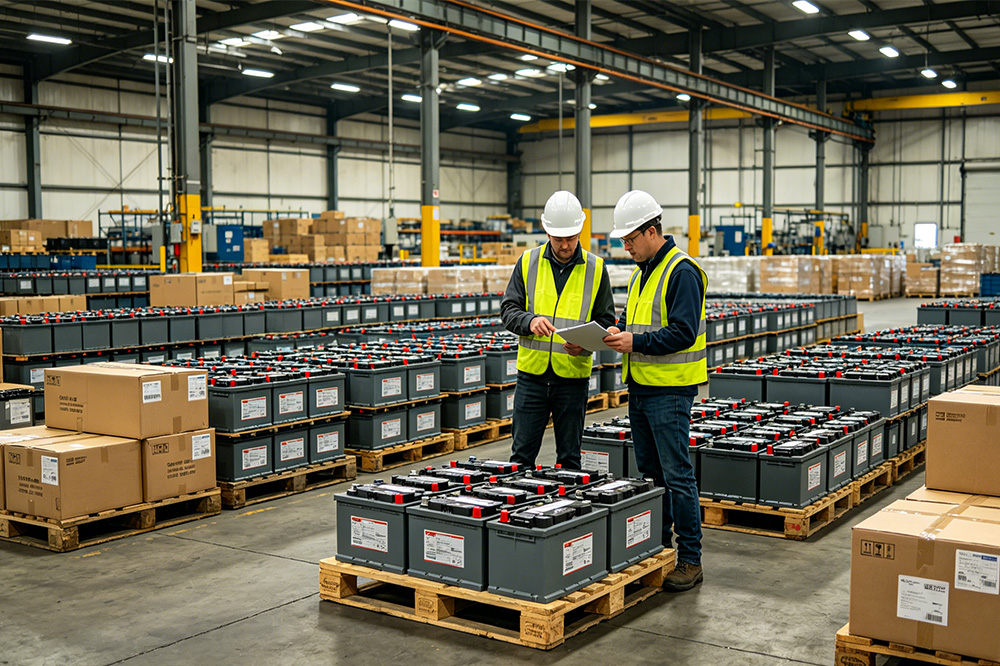
If you’ve ever asked for a quote on 12V 100Ah LiFePO4 batteries, you’ve probably seen this:
- prices all over the place
- MOQ that changes depending on who you ask
- specs that look similar but feel hard to compare
From the outside, it can be confusing.
From the supply side, though, there’s a structure behind it. Once you understand that, it’s much easier to evaluate offers and avoid bad deals.
Why Prices Vary More Than You Expect
Two suppliers can quote very different prices for what looks like the same battery.
Usually, the difference comes from:
- cell quality (this is the biggest factor)
- BMS design and stability
- whether the supplier controls production or just trades
- level of testing before shipment
Lower price isn’t always a problem — but if it’s too low, something is usually being simplified.

MOQ: What’s “Normal” and What’s Flexible
MOQ (minimum order quantity) isn’t fixed across the industry.
Typical situations:
- small distributors: lower MOQ, higher unit price
- direct manufacturers: higher MOQ, better pricing
In many cases, MOQ is flexible if:
- you accept standard configuration
- you don’t require customization
- or you’re testing with a trial order
So instead of asking “what’s your MOQ,” a better question is:
“What MOQ works for my use case and price target?”
Pricing Structure (What You’re Actually Paying For)
When you get a quote, you’re not just paying for “a battery.”
You’re paying for a combination of:
- cells
- BMS
- assembly
- testing
- packaging
- after-sales support
And sometimes:
- certifications
- shipping preparation
- customization work
This is why two similar-looking products can land at very different price points.
OEM / Private Label: How It Usually Works
A lot of buyers want to put their own brand on the battery. That’s normal.
OEM usually includes:
- logo printing
- label customization
- packaging design
- sometimes housing changes
But here’s the part many people don’t expect:
OEM doesn’t always change the inside
If you need deeper customization (like BMS specs or structure), that’s usually treated differently and may require higher volume.
Lead Time and Supply Stability
This is one of those things that doesn’t show up in the initial quote — but matters later.
Typical lead time depends on:
- order size
- production schedule
- component availability
More importantly:
can the supplier keep the same quality across multiple orders?
That’s often more important than getting the first batch.
What Bulk Buyers Should Actually Check
If you’re sourcing regularly, a few things are worth confirming early:
- are cells matched consistently
- is BMS performance stable across batches
- does the supplier support long-term cooperation
- can they handle repeat orders without quality drift
A stable product like this
12V 100Ah LiFePO4 battery
is typically structured for repeat supply, not just one-time sales.

A Common Mistake: Choosing Only Based on Price
It’s understandable — price is easy to compare.
But in bulk projects, the real cost shows up later:
- returns
- replacements
- customer complaints
- system failures
Saving a small amount upfront can cost much more after deployment.
How to Approach Your First Order
If you’re unsure, a practical approach is:
- start with a small batch
- test under real conditions
- evaluate consistency
- scale up gradually
This reduces risk without slowing down your business.
Final Thought
Wholesale battery sourcing isn’t just about getting a quote.
It’s about building a supply chain that works over time.
If the product is consistent, the communication is clear, and the supplier understands your application — things become much easier.
And that’s usually what separates a smooth operation from a frustrating one.


Leave a Reply