
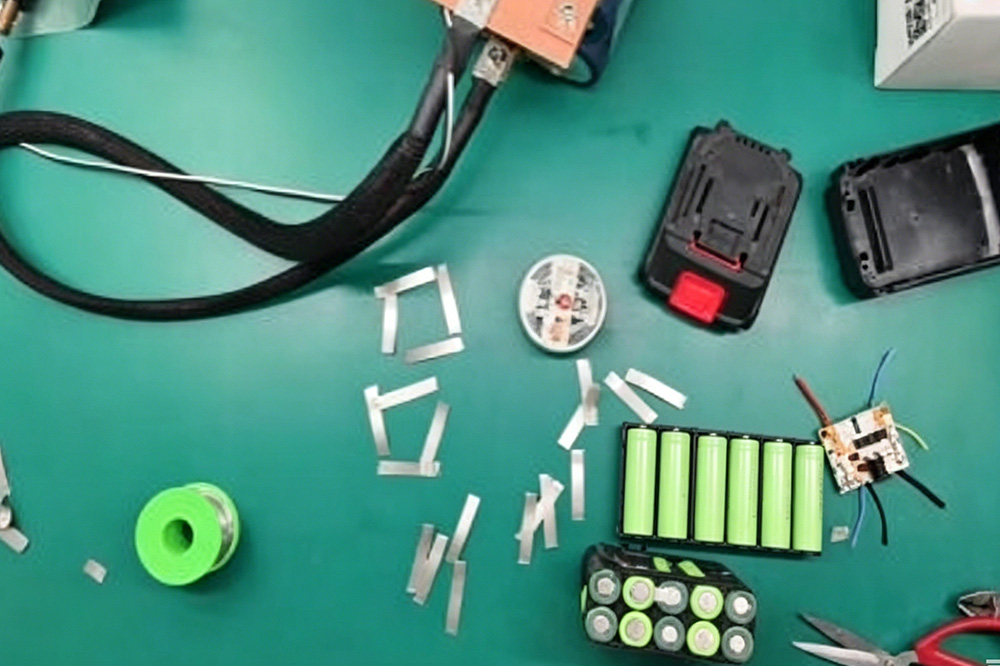
There’s something interesting about 18650 battery packs used in power tools. On paper, many of them look similar — same cylinder cells, similar voltage structure, sometimes even identical capacity ranges. But once you start looking at how they behave inside drills, grinders, or saws, the differences become more obvious than expected.
And strangely, a lot of purchasing decisions still get made too early, before those differences are really understood.
Not just “5S2P or nothing” — structure is only part of the story
A common configuration you’ll see in OEM supply is something like 5S2P or similar series-parallel designs. Structurally, it sounds simple: increase voltage, extend runtime, balance current load.
But in real factory discussions, structure is usually not the first concern.
What engineers often worry about is:
- whether the cells inside the pack behave consistently under load
- how quickly voltage drops when the tool is suddenly stressed
- whether the pack stays balanced after repeated cycles
One production engineer once described it in a very simple way:
“Two packs can have the same 5S2P structure, but feel completely different in a drill.”
That kind of difference doesn’t show up in spec tables easily.
The 15A question… and why it keeps coming up
In many technical discussions (especially among repair groups and builders), there’s always a recurring question:
Is a 15A discharge cell enough for power tools?
The answer is… not clean.
For light tools or intermittent use, 15A cells might be acceptable. But once you move into:
- angle grinders cutting metal
- impact tools with sudden torque bursts
- saws running under continuous load
the behavior changes quickly.
It’s not only about peak current. It’s about how long the cell can hold that output without voltage collapse.
Some cells that look “good enough” in theory start feeling weak after repeated stress cycles. That’s where OEM factories tend to shift toward higher stability-grade cells instead of chasing only nominal ratings.

Drill, grinder, saw — same battery logic, different reality
This is where many buyers underestimate things.
Cordless drill
Feels simple, but actually sensitive. Workers notice torque drop instantly. Even small voltage sag becomes noticeable in repetitive drilling.
Angle grinder
This one is less forgiving. Load changes constantly. Once the battery can’t respond fast enough, cutting feels uneven. Some users describe it as “soft power,” even if capacity is high.
Portable saw
Here the issue is consistency. A slight drop in output can affect cutting smoothness. OEM manufacturers often prioritize stability over maximum runtime.
So even if all three tools use “18650 battery packs,” the internal expectation is not the same.
OEM factories think in batch behavior, not single cells
One thing that doesn’t always appear in public guides is how factories actually evaluate batteries.
Instead of asking “Is this cell good?”, they ask:
- Does this batch behave consistently across 1,000 units?
- Do discharge curves stay aligned after cycling?
- What happens under heat buildup inside compact enclosures?
Some publicly available technical discussions (especially in user communities and repair forums) often highlight this gap: individual cell performance vs real pack performance.
And in practice, the pack behavior matters more.
A cell that looks average on paper but stays stable across thousands of cycles is often preferred over a higher-rated but inconsistent one.

Applications are more mixed than they look
In wholesale supply chains, 18650 packs don’t stay in one neat category.
You’ll see them used in:
- cordless electric drills for construction teams
- angle grinders in metal workshops
- impact wrenches in automotive repair
- portable saws in field installation work
- industrial maintenance tools running in mixed load environments
The usage pattern is usually not controlled. That’s the real challenge.
Sometimes tools sit idle for hours, then suddenly run at full load. That irregular pattern is exactly where weak pack design starts showing problems.
A small detail OEM buyers often notice too late
One thing that quietly affects performance is not the cell itself, but how tightly the pack is designed.
Even with good 18650 cells, issues can appear from:
- uneven internal resistance
- heat concentration in tight casing
- inconsistent welding points
- imbalance after repeated cycles
Some OEM factories run repeated load testing cycles that simulate real tool usage instead of just lab discharge tests. If performance drift appears early, that batch is usually reconsidered.
This part rarely appears in product listings, but it shapes a lot of supplier decisions.

Wholesale supply is not really about “bigger quantity”
For buyers entering this space, it’s easy to assume wholesale = lower price.
But in power tool battery packs, wholesale usually means something else:
- predictable behavior across batches
- stable supply for OEM production lines
- fewer field failures in real usage
- compatibility with different tool platforms
Price still matters, but it’s rarely the first filter in serious OEM conversations.
Closing thought
When looking at 18650 battery packs for drills, grinders, and saws, it’s easy to focus on structure, capacity, or discharge numbers.
But in real factory environments, those are only starting points.
What actually decides whether a pack works well in the field is something less visible — how it behaves when things get unstable, repetitive, and slightly unpredictable.
That’s usually where OEM buyers spend most of their attention, even if they don’t always say it directly.


Leave a Reply