
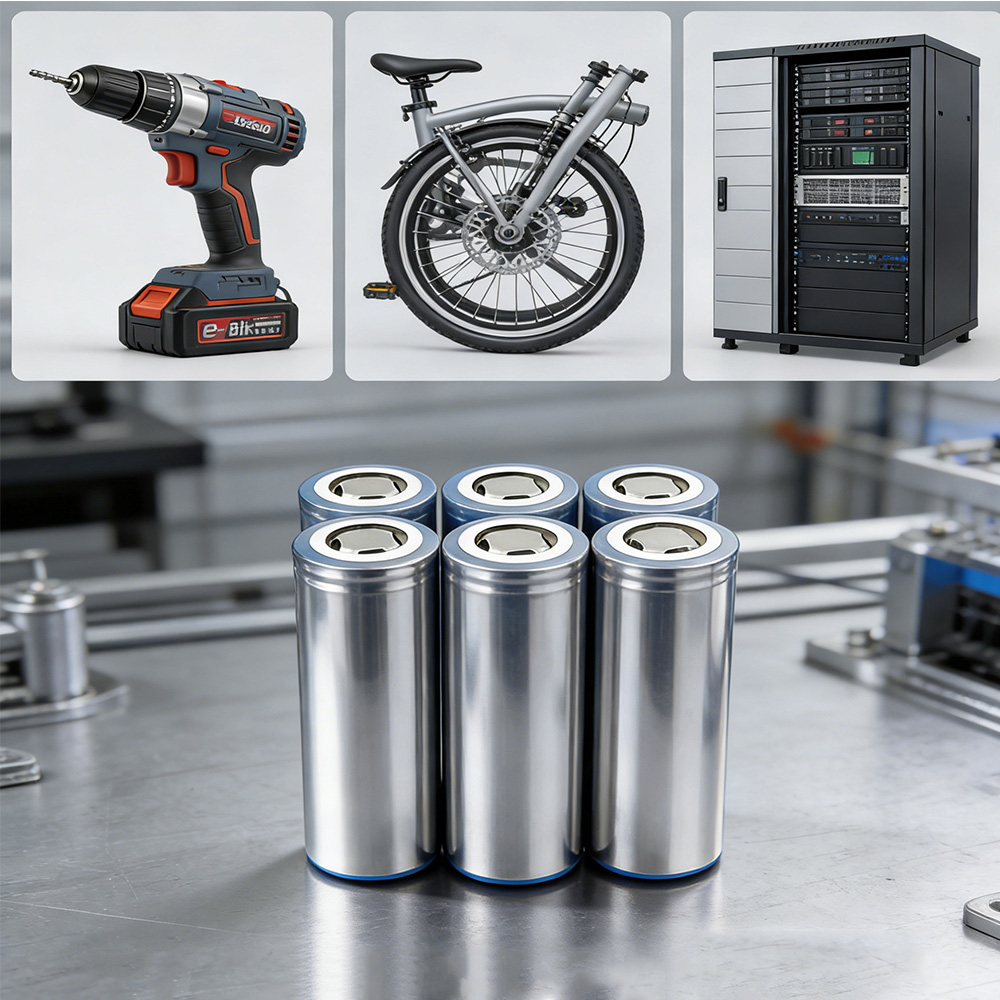
If you’re sourcing 18650 rechargeable batteries at scale — whether for power tools, e-bikes, or energy storage systems — you quickly realize this isn’t a simple “find lowest price and ship” exercise. The 18650 format is everywhere, but what really matters is matching the cell spec to the real world electrical and mechanical demands.
A good starting place to see what’s out there is the 18650 lithium battery product category. That page lays out a range of capacity and spec options — and you’ll notice they’re not one-size-fits-all. Understanding how to pick and plan bulk supply takes a bit more context.
Here’s a grounded look at how to approach 18650 bulk sourcing for these three broad application types.

Power Tools — High Load, High Demand
Power tools draw high currents in bursts and often see rough handling.
Drills, grinders, saws — they want a battery that can deliver steady power to the motor without sagging voltage or overheating.
When buyers look at options from the 18650 lithium battery category, they tend to prioritize:
- high discharge stability (ability to deliver amps without voltage collapse)
- lower internal resistance
- tighter batch consistency
For power tools, capacity (mAh) is nice, but discharge behavior outweighs raw mAh. You can have a high-mAh cell that’s mediocre under load. So, it’s worth asking suppliers for:
- discharge curve data
- real load test results
- internal resistance distribution across a batch
That’s why bulk buyers often ask for A-grade cells, or even matched sets, so the tool behaves predictably cycle after cycle.
E-Bikes — Continuous Medium Load, Long Range
E-bikes are a bit of a different animal. The load isn’t as spiky as a power tool, but you want sustained current over a longer period. Range is everything.
When building e-bike packs from 18650 cells, buyers care about:
- capacity per cell (which directly affects range)
- cycle life (how many charge/discharge cycles before capacity drops)
- temperature behavior during sustained discharge
This is where you start to pay closer attention to the variety within the 18650 rechargeable lithium battery lineup. Some cells emphasize energy density (higher mAh), others emphasize discharge tolerance. You have to look at both, not just capacity.
For example, a 3000–3300 mAh cell that maintains stable voltage at moderate current is worth paying a bit more for in an e-bike context, because it means fewer stops and happier riders.
Energy Storage — Balance, Safety, and Life
For stationary energy storage — whether it’s home backup power, solar buffer storage, or industrial systems — the priorities shift again:
- cycle stability over hundreds to thousands of cycles
- consistent capacity retention
- low variance between cells in a pack
Energy storage packs often use hundreds or thousands of 18650 cells in series and parallel. That means cell consistency matters a lot. A few weak cells can drag down the performance of the whole pack.
Most bulk buyers in this space don’t just pick randomly from available stock; they choose from the 18650 lithium battery product category based on:
- batch test results
- matched internal resistance
- documented cycle life data
And because these systems are expected to last years, buyers are less sensitive to slightly higher unit pricing and more sensitive to quality and predictability.
Bulk Supply Realities — MOQ, Lead Time, and Cost
Across all three application types, three practical supply factors come up again and again:
1. Minimum Order Quantity (MOQ)
When you’re talking bulk — thousands, tens of thousands — MOQ starts to influence unit price a lot. Standard SKUs (like common 2600 mAh to 3300 mAh 18650 cells you see in the 18650 lithium battery category) usually have lower MOQ, because they run through production lines more frequently.

Custom specs or matched packs often require higher MOQ.
2. Lead Time
Batteries aren’t always sitting in a warehouse. If your demand spikes, you want a supplier who can turn product quickly. That’s easier when you stick to established cells in a supplier’s catalog.
3. Price vs Quality Tradeoffs
You can push for the lowest unit price, but that usually means:
- looser performance tolerances
- wider variance between cells
- potentially higher warranty and field failure rates
For power tools, e-bikes, or energy storage, most serious buyers accept that good quality cells cost a bit more, and they plan accordingly.
How Buyers Actually Evaluate 18650 Supply
When I talk to procurement teams at OEMs, this is the checklist they use:
- Does the supplier have real test data on capacity and discharge?
- Can we see internal resistance distribution for the batch?
- Is there a documented cycle life specification?
- What’s the MOQ and how flexible is it?
- Are certifications like UN38.3 and CE provided?
- How consistent are the cells from batch to batch?
All of these make more difference in day-to-day reliability than the printed mAh number on the spec sheet.
Final Thought
“18650” is a standard size, but it doesn’t mean all cells behave the same in power tools, e-bikes, or energy storage systems.
Good bulk supply decisions come from matching the right 18650 cell spec to the actual load and usage scenario, and working with suppliers who can back up performance with real test data and consistent batches.
If you’re starting your sourcing journey or optimizing an existing supply chain, browsing offerings in the 18650 lithium battery category is a solid first step. It helps you see what specs are available, what’s moving in the market, and where your application’s requirements sit relative to real product options.
Recommend Products
-

12V 4400 mah Lithium ion 3S2P 18650 Battery Pack
-

18650 2000mAh 3.7 volt Lithium-ion Battery
-

18650 20V 3.0Ah Cordless Drill battery
-

18650 22.2V 7.8Ah 2600Mah 6S3P Rechargeable Battery Pack
-

18650 3.7V 10Ah Li-Ion Power Battery Pack
-

18650 3.7V 3300mah Rechargeable Lithium ion Battery
-

18650 7S7P 24V 14Ah Lithium ion Electric Scooter Battery Pack
-

18650 battery 3.7V 1500mAh Lithium-Ion Battery
-

18650 Electric Scooter 48V 13000mAh Lithium Battery
-

2600mAh 3S1P 11.1V 18650 Battery Packs
-

3.7V Li ion Rechargeable 3000mah 18650 Battery Cell
-

36V 5200mAh 10S2P 18650 Battery Pack
-

48v 4400mah 13S2P 18650 Rechargeable Battery Pack
-

7S2P 24V 18650 Lithium Battery Pack
-

Electric Scooter 36V 4400mAH 10S2P 18650 Battery Pack
-

ICR 18650 Battery 2200mah 3.7V
Leave a Reply