
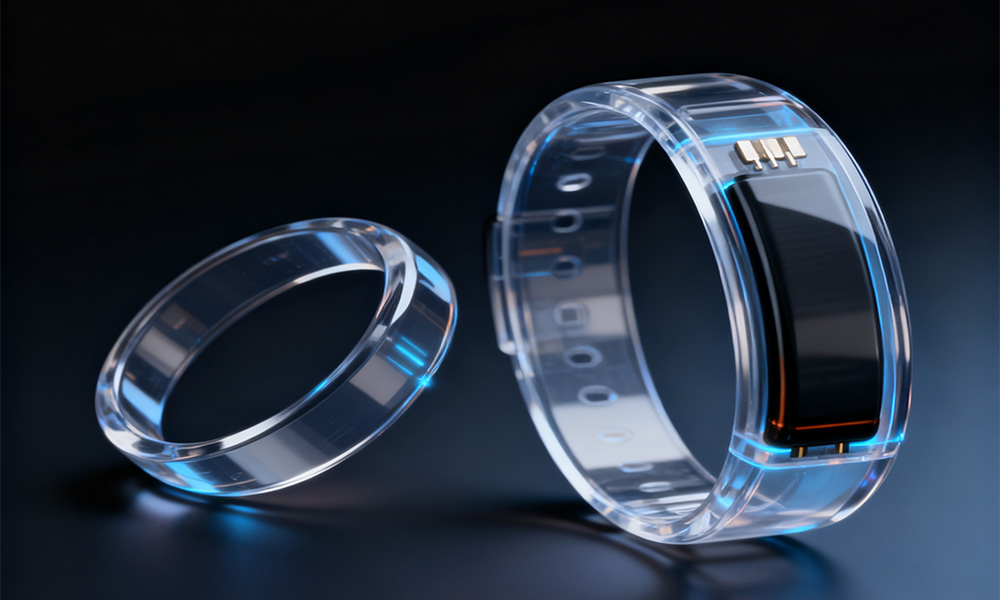
As wearable electronics get smaller and more ergonomic, traditional square or cylindrical batteries often just don’t fit. That’s where curved batteries come in. Their arc-shaped design allows engineers to make the most of limited space, hiding the battery inside rings, bracelets, or wrist-worn smart devices. Here’s a FAQ guide for anyone looking to source these batteries.
1. What is a Curved Battery?
In simple terms, it’s a lithium polymer (LiPo) battery designed with a specific curvature from the start. Unlike flexible batteries that bend like a rubber band, curved batteries are manufactured in a fixed arc shape. This allows them to fit snugly inside rings, wristbands, or curved device enclosures without wasting space.
2. What devices are they used in?
Curved batteries are primarily aimed at the wearable market:
- Smart rings
- Fitness trackers and smartwatches
- Miniature wearable sensors
- Medical-grade wearable devices
If your product is small enough to fit on a finger, standard batteries are either too thick or simply won’t fit. Curved batteries solve that problem perfectly.
3. What are typical specifications?
Wholesale buyers usually care about voltage, capacity, and dimensions. Typical specs include:
- Voltage: usually 3.7V, which is standard for LiPo cells.
- Capacity: ranges from 8mAh to 30mAh, with smart rings often needing around 10–20mAh.
- Dimensions: width, thickness, and curvature can be extremely small, e.g., 1.5mm thick models that fit inside smart rings.
- Cycle life: usually 300–500 charge/discharge cycles.
- Operating temperature: discharge -20°C to 60°C, charge 0°C to 45°C.
Though the numbers seem modest, they’re enough to power heart rate monitoring, Bluetooth, and other core features in miniature wearable devices.
4. Can they be customized?
Absolutely, and in most cases, customization is necessary.
Different rings and wristbands have different curves, so battery manufacturers typically design the battery to match your enclosure. Customization options include:
- Curvature (e.g., π/6, π/3, half-ring shapes)
- Dimensions (thickness, length, width)
- Capacity (based on device power requirements and desired battery life)
- Connector or soldering options
If you finalize your case design before talking to the battery supplier, you might end up with a battery that doesn’t fit—a costly mistake.
5. Which manufacturers offer these batteries?
Currently, several manufacturers specialize in curved LiPo batteries:
- Professional LiPo manufacturers capable of making ring and arc-shaped batteries.
- Wearable device suppliers who often co-develop batteries with smart ring and wristband manufacturers.
For example, ANPS and GMB offer specific models with very thin profiles (1.5mm) and capacities ranging from 8–25mAh, designed for smart rings.
6. What should wholesale buyers watch out for?
If you’re sourcing in bulk, keep these points in mind:
- MOQ (Minimum Order Quantity): Custom curved batteries often require orders of several thousand pieces.
- Consistency: Small-capacity batteries must maintain consistent voltage and capacity across batches.
- Certifications: CE, UL, UN38.3—especially important for export.
- Lead time: Custom batteries usually take 4–6 weeks to produce.
7. Who should consider these batteries?
- Wearable device manufacturers: Startups making smart rings or fitness bands.
- Medical device developers: Miniature devices that need small, lightweight batteries.
- Electronics design companies: OEM/ODM projects requiring specialized battery shapes.
If your device draws high current (like drones or power tools), curved batteries are not suitable. But for lightweight, small, body-conforming wearables, they’re almost indispensable.
Summary
Curved batteries may be small in capacity, but in the wearable sector, they’re invaluable. They’re not “general-purpose batteries” but highly customized solutions. Wholesale buyers should consider not only voltage and capacity but also enclosure curvature, manufacturer customization ability, and batch reliability.
Bottom line: If you’re making smart rings, wristbands, or body-conforming wearables, curved LiPo batteries are a must-have component.

Leave a Reply