
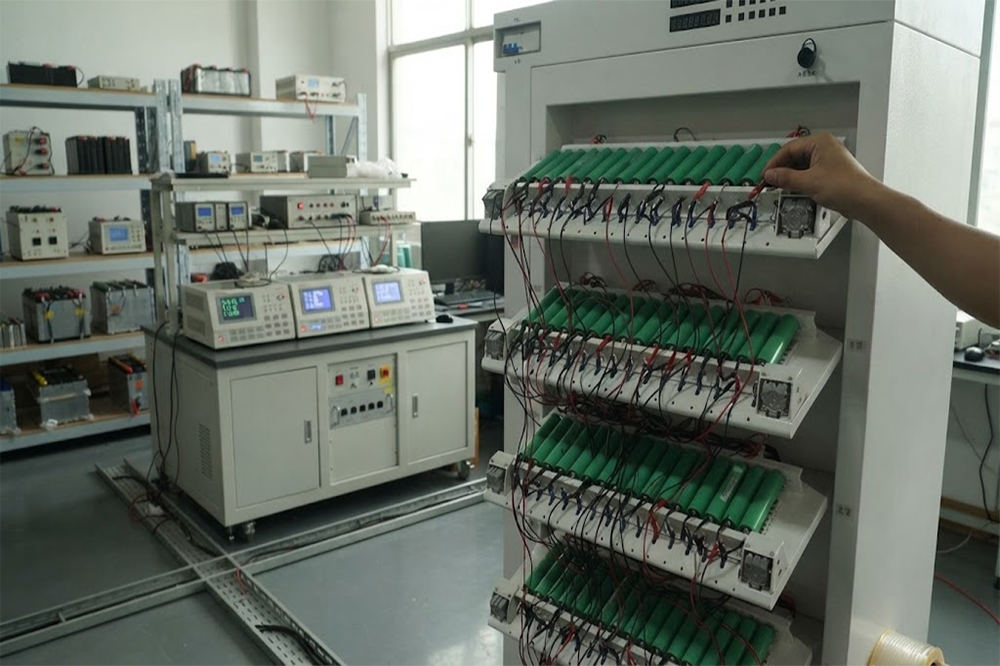
18650 battery does not have one fixed lifespan. Actual service life depends on charging frequency, depth of discharge, temperature, discharge current, storage conditions and cell quality. For OEM battery packs, these factors should be considered during cell selection and pack design.
How Long Do 18650 Batteries Last?
This sounds like a simple question.
It isn’t.
If someone asks, “How many years will this 18650 battery last?”, the honest answer is usually it depends on how the battery is used.
An 18650 lithium-ion cell sitting inside a device that is charged once a month is living a very different life from one inside a power tool that is charged and discharged every day.
Even two identical cells can age differently.
One may spend most of its life at moderate temperatures and partial discharge.
Another may regularly run hot, reach high current loads and stay fully charged for long periods.
Same cell format.
Very different results.
For OEM battery projects, I would therefore avoid choosing a cell based only on a headline such as “500 cycles” or “1000 cycles.”
The more useful question is:
How will the battery actually be used?
That tells you much more about expected service life.
What Does “Cycle Life” Actually Mean?
You will often see a specification such as:
500 cycles
or:
1000 cycles
But what does that number mean?
A battery cycle generally refers to using an amount of charge equivalent to the battery’s full capacity.
It does not necessarily mean:
100% → 0% → 100%
in one single use.
For example, using 50% of a battery today and another 50% tomorrow can roughly add up to one full equivalent cycle.
The exact definition used by manufacturers can vary.
More importantly, the cycle-life number is normally measured under specific laboratory conditions.
That might include controlled:
- Charging current
- Discharge current
- Temperature
- Charge voltage
- Discharge cutoff voltage
- Depth of discharge
So a specification saying “1000 cycles” should not be interpreted as:
“This battery will always last 1000 cycles in every product.”
Real-world performance can be different.

How Many Cycles Can an 18650 Battery Handle?
There isn’t one universal number.
Different 18650 cells are designed for different purposes.
Some prioritize:
High capacity
Some prioritize:
High discharge current
Others focus more on:
Long cycle life
A particular cell might be rated for hundreds of cycles, while another may be designed and tested for significantly more under specified conditions.
The important thing is to compare the actual manufacturer’s datasheet.
For an OEM project, ask:
At what temperature?
At what charge rate?
At what discharge rate?
To what remaining capacity?
These details matter.
For example, “80% capacity after 500 cycles” gives you more useful information than simply seeing “500 cycles” printed in a specification sheet.
Does Charging to 100% Reduce Battery Life?
Frequent charging to the maximum voltage can contribute to faster lithium-ion aging.
This doesn’t mean you should never charge an 18650 battery fully.
Many products are designed to do exactly that.
The issue is how often the cell stays at a high state of charge and under what conditions.
For example, a battery used in a portable device might be charged to full and then immediately used.
Another battery might remain at full charge for days while sitting inside a hot piece of equipment.
Those are not equivalent conditions.
For some applications where maximum runtime is not required every day, limiting the usable charge range can sometimes help extend battery life.
The exact charging strategy should follow the cell manufacturer’s specifications and the product’s requirements.
What Happens When an 18650 Battery Gets Hot?
Temperature is one of the factors I would pay particular attention to during battery-pack design.
Lithium-ion cells do not like excessive heat.
High operating temperatures can accelerate aging and may also affect safety and performance.
Consider a battery pack installed inside a sealed industrial enclosure.
The cells generate some heat during operation.
The electronics generate heat.
The surrounding environment may already be warm.
If there is little ventilation, the internal battery temperature can become much higher than the room temperature.
This is easy to miss during a short prototype test.
The prototype works perfectly on the workbench.
After several hours of continuous operation inside the final enclosure, the conditions may be very different.
For industrial battery packs, thermal design should therefore be considered early rather than treated as an afterthought.
Cold Temperatures Affect Performance Too
Low temperatures can also change battery behavior.
You may notice:
- Lower available capacity
- Higher internal resistance
- More voltage drop under load
- Reduced charging performance
A battery used outdoors in winter may therefore behave differently from one tested indoors at 25°C.
This matters for:
- Outdoor equipment
- Security systems
- Robotics
- GPS devices
- Portable industrial instruments
- E-mobility products
If your product operates in a wide temperature range, tell the battery manufacturer.
A cell that performs well in normal indoor conditions may not be the best choice for a product exposed to extreme environments.

Does High Current Shorten 18650 Battery Life?
It can.
High discharge current places more stress on the cell and can increase heat generation.
This is particularly important in applications such as:
- Power tools
- Electric motors
- Robotics
- High-power portable equipment
Imagine a battery pack powering a motor.
The average current may look reasonable on paper.
But every time the motor starts, accelerates or encounters resistance, the current can jump.
Those repeated high-current events can create additional thermal and electrical stress.
This is why a cell should be selected based on the actual load profile, not simply the nominal capacity.
Our [high-drain vs high-capacity 18650 battery guide] explains this trade-off in more detail.
Depth of Discharge Matters
Depth of discharge, or DOD, describes how much of the battery’s available capacity is used.
A simple example:
If a battery goes from nearly full to nearly empty, that’s a deep discharge.
If it goes from 80% to 40%, that’s a much shallower discharge.
Repeated deep cycling can generally put more stress on a lithium-ion cell than shallow cycling.
This does not mean a battery should only be used for 20% of its capacity.
That would defeat the purpose of having a battery.
Instead, the product designer needs to find a reasonable balance between:
Runtime
and
Expected battery life
For a product used occasionally, maximizing runtime may be more important.
For equipment expected to operate every day for several years, extending cycle life may be worth sacrificing some available capacity.
How Charging Current Affects Battery Life
Charging current also matters.
A cell may support a particular charging rate according to its datasheet.
But charging faster can create additional heat and stress.
For example, a battery designed around a conservative charging rate may have different long-term behavior from one repeatedly charged at a much higher rate.
This is why the charger and battery should be treated as one system.
A good cell paired with an unsuitable charging profile can still produce disappointing results.
For an OEM battery pack, the charger specification should therefore be considered during the battery design stage.
Storage Can Age an 18650 Battery
What happens when the battery isn’t being used?
It can still age.
Lithium-ion cells experience calendar aging even when they are sitting on a shelf.
Storage conditions can influence the rate.
In general, prolonged storage at high temperature and high state of charge is less favorable than storing the battery under more controlled conditions.
This matters for distributors and wholesalers too.
Imagine ordering thousands of cells and storing them for a long period before they are used in production.
The storage environment becomes part of the battery quality story.
A good manufacturing specification doesn’t compensate for poor storage conditions.
How Can You Tell an 18650 Battery Is Aging?
Capacity loss is one obvious sign.
A battery that originally provided several hours of runtime may eventually provide significantly less.
You may also notice:
- Increased voltage sag
- More heating
- Shorter operating time
- Longer charging behavior
- Reduced peak performance
In a multi-cell battery pack, cell imbalance can also become more noticeable as the cells age.
One group may reach its voltage limit earlier than another.
That’s where a properly designed BMS becomes important.
Why Cell Matching Matters for Long-Term Battery Life
Imagine a 10S battery pack containing cells with noticeably different capacities.
At the beginning, the pack may appear to work normally.
After repeated cycles, however, the weaker group may reach the upper or lower voltage limit before the other groups.
The BMS has to react to that imbalance.
A well-designed pack starts with consistent cells.
For commercial battery production, manufacturers may check characteristics such as:
- Capacity
- Internal resistance
- Voltage
- Self-discharge behavior
before assembling cells into a pack.
This is one reason that randomly mixing cells from different sources is not a good approach for an OEM battery.

Does the BMS Extend 18650 Battery Life?
A BMS can help protect the battery from operating outside defined limits.
Depending on the design, it may monitor or protect against:
- Overcharge
- Over-discharge
- Overcurrent
- Short circuit
- Excessive temperature
- Cell imbalance
But a BMS does not magically make a poor cell last longer.
Think of it as part of the control and protection system.
The cell itself still matters.
So does the charger.
So does the mechanical and thermal design.
So does the way the customer uses the final product.
A Realistic Example
Imagine an industrial handheld device using a custom:
3S2P 18650 battery pack
The product is used eight hours a day.
The battery is charged every evening.
The equipment occasionally experiences high current when its motor starts.
It is also used in a warehouse where summer temperatures can become quite high.
A basic battery specification might simply say:
“3000mAh 18650.”
That’s nowhere near enough information.
The manufacturer needs to consider:
- Cell discharge capability
- Pack capacity
- Charging current
- Peak current
- Temperature
- BMS protection
- Expected cycle count
- Enclosure ventilation
A cell chosen only because it has the highest mAh rating could actually create problems.
A slightly lower-capacity cell with better current and thermal characteristics might make more sense.
How Long Will 18650 Battery Last in Years?
This is where things get difficult to predict.
Suppose a product uses approximately one full equivalent cycle per day.
A theoretical:
500-cycle
battery would reach 500 equivalent cycles in roughly:
500 days
That’s about 1.4 years.
But real usage isn’t that clean.
Maybe the customer only uses 50% of the battery each day.
Maybe the battery is charged twice a week.
Maybe the product operates in a cool environment.
Maybe it runs hot.
Maybe the battery spends a lot of time at full charge.
All of these factors change the result.
So cycle count and calendar life should not be treated as the same thing.
How to Make 18650 Battery Last Longer
There isn’t one magic trick.
A few practical habits can help:
Avoid Excessive Heat
Keep the battery within the manufacturer’s recommended temperature range.
Use the Correct Charger
Charging voltage and current should match the battery specification.
Avoid Unnecessary Deep Discharge
If the application allows it, shallower cycling can reduce stress.
Avoid Long-Term High-State Storage
Especially at elevated temperatures.
Use Appropriate Current
Don’t select a low-drain cell for a high-current application simply because it has a higher capacity.
Use a Suitable BMS
The BMS should match the cell chemistry and battery configuration.
These sound basic.
In practice, they are often the difference between a battery that performs well for years and one that starts losing capacity much earlier than expected.
How Should OEM Buyers Specify Cycle Life?
If you’re purchasing 18650 cells in bulk, don’t simply write:
“Need 1000-cycle battery.”
That’s vague.
A better specification might say something like:
“Target minimum 800 cycles with ≥80% remaining capacity under defined charge/discharge conditions.”
Then specify the actual conditions.
For example:
- Charging method
- Charge current
- Discharge current
- Cutoff voltage
- Temperature
- Rest time
The supplier can then determine whether a particular cell can meet the requirement.
This also makes supplier comparison much easier.
18650 Battery Life Depends on the Whole System
Cell quality is important, but it is not the entire story.
The final battery life depends on the interaction between:
Cell
BMS
Charger
Load
Temperature
Pack design
User behavior
A high-quality 18650 cell inside a poorly designed pack can still have problems.
Likewise, a carefully designed battery pack can make much better use of a suitable cell.
If you’re selecting cells for a new product, our [guide to choosing the right 18650 battery] covers capacity, current, dimensions and other specifications that should be checked before fixing the battery design.
And if you are still working out the basic battery configuration, see our [18650 battery series and parallel guide] for examples such as 4S2P and 10S2P.
What This Means for Wholesale Buyers
For wholesalers, battery lifespan is not only a technical issue.
It can become a customer-service issue.
If a batch of batteries loses capacity unusually quickly, the customer may not immediately blame the operating conditions.
They may blame the battery supplier.
That is why sourcing consistent cells and maintaining clear specifications is important.
For large orders, it is worth discussing:
- Cell model
- Production batch
- Capacity tolerance
- Testing method
- Storage conditions
- Packaging
- Warranty expectations
The cheapest cell isn’t necessarily the cheapest option if the failure rate creates returns and replacement costs.
Choosing 18650 for Long Service Life
If long battery life is important, don’t start by asking:
“Which 18650 has the most cycles?”
Start with:
How often will it be charged?
How much current will it deliver?
What temperature will it experience?
How deeply will it be discharged?
How long will it remain at high charge?
What capacity is actually required?
Then select the cell.
That approach may lead to a high-capacity cell in one project and a high-drain or long-cycle-life cell in another.
There isn’t a universal answer.
For OEM battery development, the useful target is a battery that performs consistently under the actual conditions of the finished product.
If you are sourcing 18650 lithium-ion cells or developing a custom pack, you can review the Apsenx 18650 lithium battery product category and provide your voltage, capacity, current, dimensions and expected usage conditions for an initial evaluation.
If you are still comparing the basic characteristics of 18650 cells, start with our [complete 18650 lithium battery guide]. It provides a broader look at cell specifications, applications, voltage, capacity and battery-pack design before getting into long-term battery performance.
Frequently Asked Questions
How many years does an 18650 battery last?
There is no fixed lifespan. It depends on charging frequency, temperature, discharge depth, current, storage and cell quality. A lightly used battery can last much longer than one heavily cycled every day.
How many cycles can an 18650 battery handle?
The number varies by cell model and test conditions. Some cells may be rated for hundreds of cycles, while others are designed for longer cycle life. Always check the manufacturer’s test conditions.
Does high current reduce 18650 battery life?
Repeated high-current discharge can increase heat and stress, potentially accelerating aging. A high-drain cell should be selected when the application regularly requires substantial current.
Does storing an 18650 battery fully charged damage it?
Long-term storage at a high state of charge, especially at elevated temperature, can accelerate aging. Follow the cell manufacturer’s recommended storage conditions.
Can a BMS make an 18650 battery last longer?
A properly designed BMS can protect the battery from conditions such as overcharge, over-discharge, overcurrent and excessive temperature. However, it cannot compensate for an unsuitable or poor-quality cell.
-

12V 4400 mah Lithium ion 3S2P 18650 Battery Pack
-

18650 2000mAh 3.7 volt Lithium-ion Battery
-

18650 20V 3.0Ah Cordless Drill battery
-

18650 22.2V 7.8Ah 2600Mah 6S3P Rechargeable Battery Pack
-

18650 2600mAh Rechargeable Lithium-Ion Battery 3.7V
-

18650 3.7V 10Ah Li-Ion Power Battery Pack
-

18650 3.7V 3300mah Rechargeable Lithium ion Battery
-

18650 7S7P 24V 14Ah Lithium ion Electric Scooter Battery Pack
-

18650 battery 3.7V 1500mAh Lithium-Ion Battery
-

18650 Battery 3500 mah Rechargeable Battery Cells
-

18650 Electric Scooter 48V 13000mAh Lithium Battery
-

2600mAh 3S1P 11.1V 18650 Battery Packs
-

3.7V Li ion Rechargeable 3000mah 18650 Battery Cell
-

36V 5200mAh 10S2P 18650 Battery Pack
-

48v 4400mah 13S2P 18650 Rechargeable Battery Pack
-

7S2P 24V 18650 Lithium Battery Pack
-

Electric Scooter 36V 4400mAH 10S2P 18650 Battery Pack
-

ICR 18650 Battery 2200mah 3.7V
Leave a Reply