
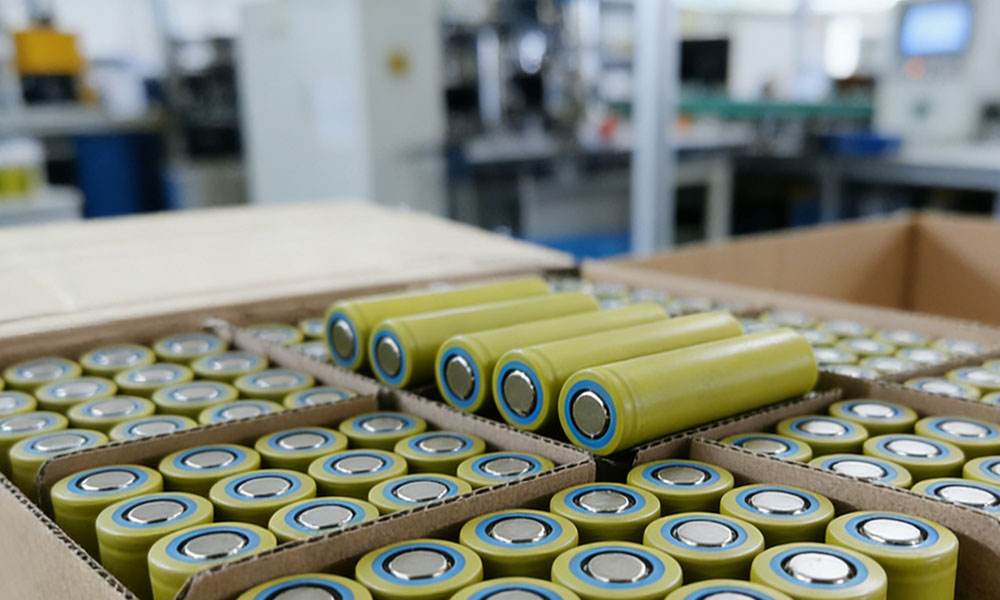
Most 18650 Cells Don’t Fail at the Beginning
Most 18650 cells don’t fail on day one, and that’s what makes them risky. They pass incoming inspection, perform well in sample testing, and look stable during the first few weeks of use. Because nothing feels urgent, projects move forward quickly. Unfortunately, that early smoothness often hides problems that only appear after decisions are already locked in.
The Real Issue Is Rarely Capacity
In bulk projects, failure is almost never about missing a capacity number. Reaching 2500mAh or 3000mAh on a test bench is relatively easy for most suppliers. The real issue starts when hundreds or thousands of cells are used together and consistency becomes more important than any single measurement. Small differences in internal resistance, aging speed, or thermal response begin to matter, even though each cell technically meets the specification.
Problems Often Appear After Pack Integration
Many buyers expect a bad cell to show problems on its own, but that’s not how it usually happens. Cells that look fine individually can become problematic once they are welded, grouped, and forced to operate together inside a pack. Over time, some cells heat up faster, others discharge deeper, and balancing systems are pushed harder than expected. When performance drifts, the issue is often blamed on the BMS, even though the limitation was introduced much earlier during cell selection.

Sample Testing Doesn’t Reveal Supply Risk
Passing lab tests only proves that a sample behaves well under controlled conditions. It does not guarantee that the same behavior can be repeated consistently across multiple batches. In real supply chains, cells with the same model number may come from different production lines, different material sources, or different manufacturing windows. None of these changes are obvious on a datasheet, but they can quietly alter long-term performance.
Failures Often Show Up Near the Warranty Boundary
Many 18650-related problems appear after the system has already been in use for several months. Early operation feels stable, with normal temperatures and acceptable voltage behavior. Later on, voltage drops faster than expected, usable capacity decreases, and packs begin to age unevenly. At that point, it becomes difficult to determine whether the issue is normal degradation or a deeper cell consistency problem, and replacing the cell usually means redesign or additional cost.
Scaling Changes the Risk Profile
18650 cells work well in many early-stage and mid-volume projects because of their flexibility. However, as production volume increases, tolerance for variation decreases. Long-term supply stability becomes critical, and small deviations that were once acceptable start affecting yield and field performance. The cell itself has not changed, but the project’s requirements have, and what once worked smoothly may no longer be suitable.

“Same Spec” Does Not Mean “Same Outcome”
Two 18650 cells can share the same voltage, capacity, size, and labeling while behaving very differently over time. Specifications do not reveal how stable a manufacturing process is, how strictly batches are controlled, or how issues are handled after delivery. These factors rarely appear in product descriptions, yet they often determine whether a project remains stable or slowly accumulates hidden costs.
A Question Worth Asking Before You Commit
Before locking an 18650 cell into a project, it is worth asking how difficult it would be to change if the cell becomes the weak point six months later. If the answer involves redesign, recertification, or major sunk costs, then the decision deserves more attention than a simple comparison of parameters.
Why 18650 Failures Are Hard to Detect Early
In practice, 18650 battery cells rarely fail in obvious or dramatic ways. They tend to fail slowly, quietly, and after key decisions are already in place. That is why selecting a cell is not just about matching specifications, but about understanding how much uncertainty a project can realistically absorb over time.
Related Products
-

12V 4400 mah Lithium ion 3S2P 18650 Battery Pack
-

18650 2000mAh 3.7 volt Lithium-ion Battery
-

18650 20V 3.0Ah Cordless Drill battery
-

18650 22.2V 7.8Ah 2600Mah 6S3P Rechargeable Battery Pack
-

18650 2600mAh Rechargeable Lithium-Ion Battery 3.7V
-

18650 3.7V 10Ah Li-Ion Power Battery Pack
-

18650 3.7V 3300mah Rechargeable Lithium ion Battery
-

18650 7S7P 24V 14Ah Lithium ion Electric Scooter Battery Pack
-

18650 battery 3.7V 1500mAh Lithium-Ion Battery
-

18650 Battery 3500 mah Rechargeable Battery Cells
-

18650 Electric Scooter 48V 13000mAh Lithium Battery
-

2600mAh 3S1P 11.1V 18650 Battery Packs
-

3.7V Li ion Rechargeable 3000mah 18650 Battery Cell
-

36V 5200mAh 10S2P 18650 Battery Pack
-

48v 4400mah 13S2P 18650 Rechargeable Battery Pack
-

7S2P 24V 18650 Lithium Battery Pack
-

Electric Scooter 36V 4400mAH 10S2P 18650 Battery Pack
-

ICR 18650 Battery 2200mah 3.7V
Leave a Reply