
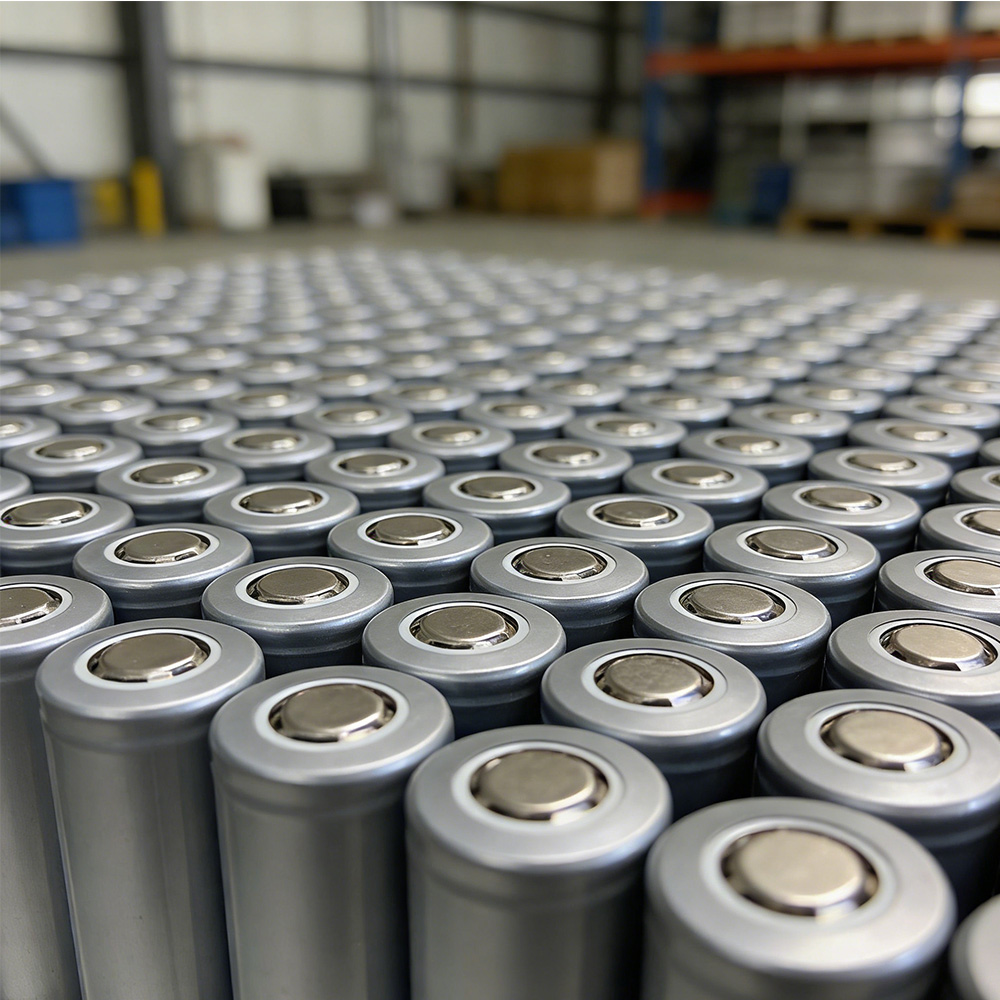
When buyers talk about 18650 rechargeable battery bulk price, it’s tempting to think the number on the price list is everything — just pick the cheapest and go.
In reality, the unit price of 18650 battery cells is shaped by a mix of technical, supply chain, and application-driven factors. Understanding these drivers means you can negotiate smarter, avoid quality traps, and match the right cell to your product use case.
Below, we walk through the core reasons why two seemingly similar 18650 cells can have very different wholesale prices — and how to think about them from a buyer’s perspective.
First: What You’re Looking at When You See “18650 Rechargeable Battery”
Before we dive into pricing, let’s anchor what 18650 actually refers to.
The 18650 form factor is a standard cylindrical lithium-ion cell — about 18 mm in diameter and roughly 65 mm long. Within that envelope, you can find variations in:
- capacity (mAh)
- chemistry and discharge profile
- manufacturing grade and consistency
- whether there’s built-in protection circuitry or not
On the site you can see the full range of available cells under the 18650 lithium battery category — from lower-capacity units to higher-energy versions.
Those differences are exactly what influence bulk unit pricing.

1) Capacity: The “mAh” Number You See Isn’t Just a Label
Capacity — like 2200 mAh vs 3000 mAh vs 3300 mAh — is one of the most visible spec differences.
Higher capacity cells inherently contain more active material inside. That generally means:
- slightly more raw material cost
- more complex electrode design
- tighter quality control needed to ensure stability
For example, in the same product category you’ll see a range from economy-oriented cells up to higher-output cells. Those larger capacity cells are usually priced higher on a per-unit basis because it costs more to build them and to ensure they meet their rated capacity consistently.
On the 18650 product page, you’ll notice how different models are grouped by capacity, and that’s no accident — capacity is often a first filter in vendor pricing.
Implication for buyers:
If your device only needs moderate run-time, choosing a mid-capacity cell can save you money without over-engineering the solution. Conversely, bidding out a high-capacity option without demand will just inflate cost.

2) Chemistry and Discharge Performance
Not all 18650 cells behave the same under load.
Some are optimized for high energy density (longer runtime at low to moderate current), while others are designed for high discharge stability (higher safe current delivery).
Battery chemistries and how the anode/cathode are formulated affect:
- how stable the voltage is under load
- how much current the cell can safely supply
- lifecycle durability
Cells that promise better discharge performance are typically more expensive because the materials and manufacturing controls are more demanding.
From a bulk price perspective:
- higher discharge tolerance → higher cost
- tighter manufacturing tolerances → higher cost
If your application is low power consumer electronics, you can often save by choosing cells tuned for capacity rather than high current. But if your load profile includes motors or continuous high draw, cutting cost here means compromising performance.
3) Quality Grade and Batch Consistency
This is where the real pricing differences show up in B2B orders.
Battery vendors will often label cells by quality grade:
- A-grade (tight specifications, minimal variance)
- B-grade or downgraded (wider tolerance, lower price)
- Protected vs unprotected (higher safety)
A-grade cells cost more because vendors sort and test them more rigorously. In bulk, this control means fewer units fail early or perform below spec — which translates to lower downstream replacement and warranty costs.
Quality grade differences affecting price include:
- capacity tolerance range
- internal resistance variation
- cycle life expectations
- installed protection circuitry
A cheap cell with no grade assurance can look good on paper, but in large assemblies or OEM products it can become a hidden cost.
4) Supplier Capacity, MOQ, and Production Scale
Bulk pricing isn’t just about chemistry — it’s also about supply chain economics.
Suppliers with larger production runs can offer better unit pricing because their fixed costs are spread out. Minimum Order Quantity (MOQ) also affects price:
- higher MOQ → usually lower unit price
- smaller runs → higher unit price
Also consider logistics and inventory handling. Some suppliers include testing reports, certification costs, and packaging quality in their unit pricing — all of which matter to bulk buyers but often get overlooked.
5) Certifications and Tests
Depending on your market, certifications like UN38.3 (for air transport), CE, IEC standards, or specific test reports can be required.
Supplying certified cells involves extra testing and documentation work — and that adds to the cost.
Product batches that come with detailed test reports and shipping certificates tend to cost more but significantly reduce compliance and safety risk.
6) Packaging and Protection
Bulk pricing also reflects how the cells are delivered:
- Plain bulk packaging for manufacturing feeds
- Tray packaging for testing and sorting
- Individual plastic caps or protection films
- Anti-static materials
Every extra layer of protection in packing adds to the unit cost. For assembly lines or battery pack makers that need safe handling, these costs are justified; for some applications, buyers might opt for more basic packaging to keep cost down.

Practical Buyer Takeaways
Here’s a quick way to think about cost drivers:
| Factor | Impact on Unit Price | Buyer Focus |
|---|---|---|
| Capacity | Medium–High | Match to required runtime |
| Discharge performance | High | Match to load profile |
| Quality grade | High | A-grade vs B-grade decisions |
| Supplier scale & MOQ | Variable | Negotiation leverage |
| Certifications | Medium | Compliance needs |
| Packaging & logistics | Low–Medium | Handling needs |
Final Thoughts
If you’re sourcing 18650 rechargeable batteries in bulk, unit price is just the starting point, not the whole story.
The cost you pay up front reflects:
- what you get in performance
- how much variation to expect
- how much risk you’re taking with warranty and compliance
Looking at the full picture — capacity, chemistry, grade, and real application needs — helps you optimize both cost and performance, instead of chasing the cheapest unit and discovering problems later.
For a full look at available configurations and how they compare in capacity and spec, check out the 18650 lithium battery product category — that range shows how products position at different price & performance points.
Recommend Products
-

12V 4400 mah Lithium ion 3S2P 18650 Battery Pack
-

18650 2000mAh 3.7 volt Lithium-ion Battery
-

18650 20V 3.0Ah Cordless Drill battery
-

18650 22.2V 7.8Ah 2600Mah 6S3P Rechargeable Battery Pack
-

18650 2600mAh Rechargeable Lithium-Ion Battery 3.7V
-

18650 3.7V 10Ah Li-Ion Power Battery Pack
-

18650 3.7V 3300mah Rechargeable Lithium ion Battery
-

18650 7S7P 24V 14Ah Lithium ion Electric Scooter Battery Pack
-

18650 battery 3.7V 1500mAh Lithium-Ion Battery
-

18650 Battery 3500 mah Rechargeable Battery Cells
-

18650 Electric Scooter 48V 13000mAh Lithium Battery
-

2600mAh 3S1P 11.1V 18650 Battery Packs
-

3.7V Li ion Rechargeable 3000mah 18650 Battery Cell
-

36V 5200mAh 10S2P 18650 Battery Pack
-

48v 4400mah 13S2P 18650 Rechargeable Battery Pack
-

7S2P 24V 18650 Lithium Battery Pack
-

Electric Scooter 36V 4400mAH 10S2P 18650 Battery Pack
-

ICR 18650 Battery 2200mah 3.7V
Leave a Reply