
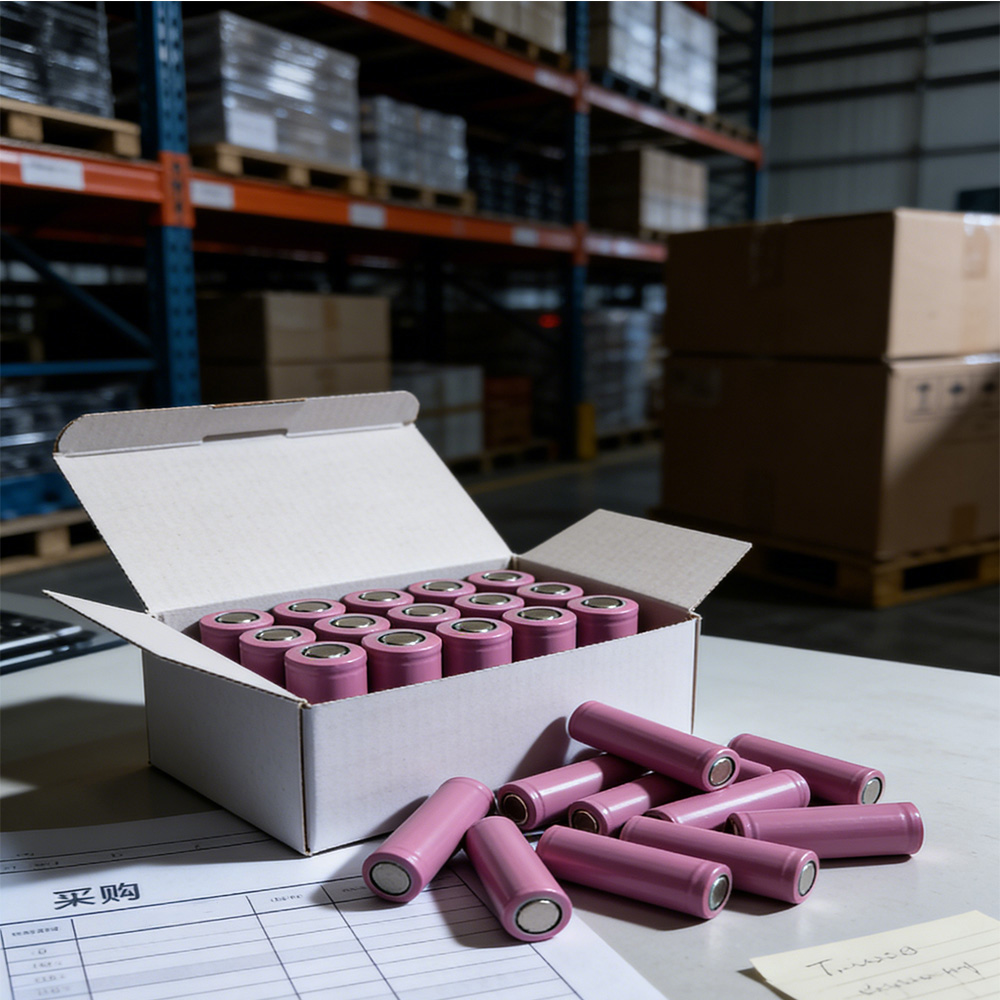
Buying 18650 rechargeable batteries in bulk sounds straightforward — but in practice it’s easy to make decisions that cost you money, reduce reliability, or create headaches down the line. Whether you’re stocking inventory for distribution or sourcing for OEM production, avoiding these common mistakes can save both time and cash.
Before we dive in, a reminder: when you’re browsing suppliers and trying to compare options, a good place to start is the 18650 lithium battery product category — it gives a real sense of the different capacity and spec options available and how they are positioned.
Here are the biggest mistakes wholesalers commonly make.

1. Focusing Only on Price
If your purchasing decision starts with “find the cheapest per‑unit price,” you’re already on shaky ground.
Battery cells — especially 18650 rechargeable units — vary widely in:
- discharge performance
- cycle life
- internal resistance
- manufacturing consistency
Two cells with the same price tag and the same mAh number can behave very differently in real use. In many cases, a slightly higher price for better quality cells pays off in fewer returns and fewer field failures.
If you’re evaluating options from the 18650 lithium battery product category, don’t let price alone sway you. Look at the spec details and test data that support those numbers.
2. Ignoring Discharge Characteristics
A lot of buyers get seduced by high capacity figures (3000mAh, 3300mAh, etc.) and forget that capacity is just one piece of the performance puzzle.

What matters equally — if not more — is how the cell behaves when a real load is applied:
- Does the voltage sag under medium to high current?
- Does internal resistance remain low across cycles?
- How stable is the output in real use?
Ignoring discharge behavior is especially dangerous if you’re buying 18650s for high‑load applications like power tools or e‑bikes. Always ask suppliers for real discharge curves and load test data before confirming large orders.
3. Skipping Batch Test Data
This one comes up again and again:
Bulk buyers sometimes assume a spec sheet is enough. It’s not.
A true bulk purchase means you should be asking:
- What is the batch distribution for capacity and internal resistance?
- Can I see real test logs from recent production runs?
- Do these cells meet the rated cycle life under controlled conditions?
When you’re looking through the 18650 lithium battery product category, check whether the supplier provides actual data or just generic numbers. It’s common for suppliers to post sample curves; what matters is whether they can back up performance claims with batch‑level results.
4. Underestimating Quality Grade Variation
Not all 18650 cells are created equal.

There are A‑grade and lower grade (sometimes called B‑grade or downgraded) cells. The difference shows up in:
- variance between units
- stability under stress
- cycle retention over time
A‑grade cells cost more, but they tend to perform closer to their rated specs and fail less often. If you buy lower‑grade cells without understanding their trade‑offs, you might save on the first purchase — but pay later in warranty claims, returns, or product unreliability.
5. Forgetting About Safety Certification
For bulk purchasers, especially those distributing to end customers or integrating cells into larger systems, safety matters.
Look for certifications and compliance documentation such as:
- UN38.3 (for transport)
- CE / RoHS where applicable
Failing to verify certifications could land you with inventory that’s not legally shippable or resellable in certain markets.
The 18650 lithium battery product category from reputable suppliers should include links to certification info — don’t skip this step.

6. Assuming All Suppliers Are Equal
Online marketplaces have made battery products easy to buy, but they’ve also made it easy to buy from suppliers who don’t actually test every batch, or who relabel cells without proper traceability.
Real wholesalers verify supplier credibility, ask for:
- production traceability
- sampling and testing procedures
- warranty terms
If a supplier can’t clearly explain their quality control process, tread carefully.
7. Misjudging MOQ and Supply Continuity
Minimum Order Quantity (MOQ) can be a real hurdle for smaller distributors, but it also ties into supply reliability.
If you focus only on MOQ and ignore:
- delivery lead times
- forecast flexibility
- batch consistency over time
…you might end up with inventory that sits too long, goes out of spec, or becomes difficult to integrate into your product line.
Bulk buyers usually plan multiple orders in quarterly cycles rather than trying to squeeze everything into one low MOQ purchase.
8. Not Planning for Inventory Turnover
Battery inventory isn’t like screws or packaging. Cells age, even in storage — especially if they’re not kept at the recommended conditions.
Buying too many units without a turnover plan can mean:
- reduced capacity over time
- increased internal resistance
- shorter useful shelf life
Think about:
- your sales velocity
- storage conditions
- first‑in first‑out practices
Part of good sourcing is planning inventory so you sell and ship fresh stock.
9. Overlooking Application Matching
Different end applications place different demands on 18650 cells.
For example:
- power tools often need high discharge performance
- e‑bikes care about balanced capacity and cycle life
- energy storage systems prioritize long cycle stability and safety
If you browse the 18650 lithium battery product category and choose cells purely on mAh or price, you risk mismatching the cell spec to the real load profile.
Good buyers tailor their selection to the actual application requirements.
Final Thought
Buying 18650 rechargeable batteries in bulk isn’t plug‑and‑play. It’s a process that rewards attention to real performance details, supplier credibility, batch data, and how the cells will be used downstream.
Avoid these common mistakes, and you’ll end up with inventory that performs reliably, reduces after‑sales support headaches, and strengthens your relationship with your customers — whether they’re power tool brands, e‑bike makers, or energy storage integrators.
When you’re assessing options, it always helps to look at well‑organized catalogs like the 18650 lithium battery product category to understand how different spec lines are positioned and supported.
Recommend Products
-

12V 4400 mah Lithium ion 3S2P 18650 Battery Pack
-

18650 2000mAh 3.7 volt Lithium-ion Battery
-

18650 20V 3.0Ah Cordless Drill battery
-

18650 22.2V 7.8Ah 2600Mah 6S3P Rechargeable Battery Pack
-

18650 2600mAh Rechargeable Lithium-Ion Battery 3.7V
-

18650 3.7V 10Ah Li-Ion Power Battery Pack
-

18650 3.7V 3300mah Rechargeable Lithium ion Battery
-

18650 7S7P 24V 14Ah Lithium ion Electric Scooter Battery Pack
-

18650 battery 3.7V 1500mAh Lithium-Ion Battery
-

18650 Battery 3500 mah Rechargeable Battery Cells
-

18650 Electric Scooter 48V 13000mAh Lithium Battery
-

2600mAh 3S1P 11.1V 18650 Battery Packs
-

3.7V Li ion Rechargeable 3000mah 18650 Battery Cell
-

36V 5200mAh 10S2P 18650 Battery Pack
-

48v 4400mah 13S2P 18650 Rechargeable Battery Pack
-

7S2P 24V 18650 Lithium Battery Pack
-

Electric Scooter 36V 4400mAH 10S2P 18650 Battery Pack
-

ICR 18650 Battery 2200mah 3.7V
Leave a Reply