
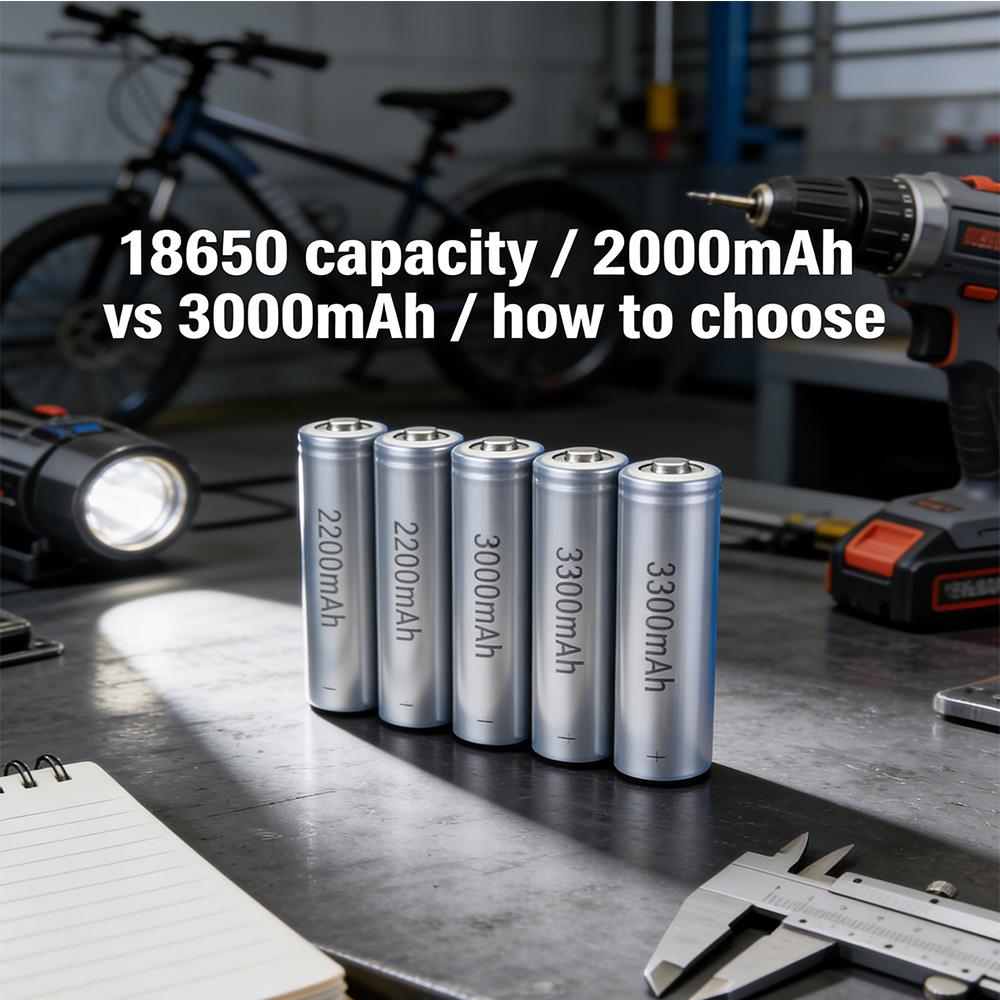
So, you’re thinking about 18650 rechargeable batteries, huh? Maybe you’re diving into it for a project, or maybe you’re just trying to figure out what capacity actually means. I get it. All those numbers—2000mAh, 3000mAh, 3300mAh—can make your head spin. Like, what’s the deal with all these different capacities? Does it even matter? Yeah, it totally does.
So you’ve probably seen stuff like the ICR 18650 2200mAh, or the 3.7V Li-ion 3000mAh 18650 Battery Cell. And I bet you’re wondering, “Which one should I actually pick?” Good question. It’s not as straightforward as just choosing the biggest number, right?
Honestly, there’s a lot of factors here. Let’s dive into it.

Capacity, What’s That Even Mean?
Okay, so here’s the deal. Capacity is basically how much charge the battery can hold. You’ll see it in milliampere-hours (mAh). The higher the mAh, the more power it can store. Simple, right? But there’s more to it than that.
- A 2000mAh battery? Yeah, that holds 2,000 milliamps of juice for about an hour.
- A 3000mAh? That’s 3,000 milliamps, which means it lasts longer—obviously. Maybe 1.5 hours if you’re lucky.
I mean, you get it, right? Higher mAh = longer runtime. Makes sense, yeah?
2000mAh to 2500mAh — Small Stuff, But Still Useful
Alright, if we’re talking about the 2000mAh–2500mAh range, that’s usually for things that don’t need to run forever. Think small electronics, like:
- Flashlights (the ones you use once in a while)
- Light-duty tools (nothing here)
Take the ICR 18650 2200mAh for example. It’s not the beast of all batteries, but it’s perfect for basic stuff. You know, the kind of equipment that just needs a little power. Nothing fancy. It does the job and that’s that. It’s cheaper too, which is a win if you don’t need runtime.

2500mAh to 3000mAh — The Sweet Spot
Now, once you hit the 2500mAh–3000mAh range, you’re getting into the sweet spot. Like, this is where most of your mid-range tools and e-bikes hang out. Why? Well, because you get:
- Longer runtime (no brainer)
- Better power without going full beast mode (no one wants to lug around a heavy battery, right?)
The 3.7V Li-ion 3000mAh 18650 Battery Cell is a great example. You can throw that into stuff like an e-bike or medium-duty power tool. It’ll give you more than enough power without weighing you down. A solid choice, really.
3000mAh to 3500mAh
Okay, now we’re talking 3000mAh to 3500mAh. These batteries are the heavy hitters. They’re for stuff that needs serious power—we’re talking:
- E-bikes that go the distance (long rides, people, long rides)
- High-power tools that demand a lot of energy
- Energy storage systems that need consistent power
The 18650 3.7V 3300mAh Rechargeable Lithium-ion Battery is one of those batteries you’ll want for the really demanding applications. It’ll last longer, run harder, and, well, just work better. Yeah, it costs a bit more, but it’ll save you time in the long run.

What About the Price?
Let’s not sugarcoat it—the bigger the capacity, the more expensive the battery is. But you gotta think about what you need. The 3300mAh battery, for example, might cost a little more than the 2200mAh, but for heavy-duty stuff, it’s worth it. More power = longer runtimes, less hassle. Think about it:
- Power tools can’t afford to run out of juice mid-job
- E-bikes need that long range (no one wants to get stuck halfway down the road)
- Energy storage systems require batteries that just keep going
Yeah, higher capacity = higher cost. But sometimes, you just need that extra power. Plain and simple.
So, Which One Should You Pick?
Here’s the thing—pick what makes sense for your needs. Let’s break it down:
- For small devices (flashlights, simple tools) — Stick with 2000mAh to 2500mAh. Easy.
- For mid-range tools and e-bikes — Go with 2500mAh to 3000mAh. That’s your sweet spot.
- For heavy-duty stuff (high-power tools, long-range e-bikes, energy storage) — Grab the 3000mAh to 3500mAh range. Bigger, better, faster.

Check Out the 18650 Lithium Battery Category
Look, if you’re buying in bulk, always check out the 18650 lithium battery product category. It’s an easy way to compare different capacities and find what works best:
- ICR 18650 2200mAh for light-duty stuff
- 3.7V Li-ion 3000mAh for e-bikes or mid-range tools
- 18650 3300mAh for high-drain applications
Every capacity has a sweet spot. It’s just about matching the right battery to the right device.
Last Thoughts
Alright, so now you know the deal with 2000mAh to 3500mAh capacities. When you’re buying 18650 rechargeable batteries, it’s all about finding that balance between price and performance. You don’t need the biggest, most expensive battery unless you’re powering something that really needs it.
And, you know, always ask for the specs and test data from your supplier. It’s worth it. You’ll be happy you did, trust me.
Recommend Products
-

12V 4400 mah Lithium ion 3S2P 18650 Battery Pack
-

18650 2000mAh 3.7 volt Lithium-ion Battery
-

18650 20V 3.0Ah Cordless Drill battery
-

18650 22.2V 7.8Ah 2600Mah 6S3P Rechargeable Battery Pack
-

18650 2600mAh Rechargeable Lithium-Ion Battery 3.7V
-

18650 3.7V 10Ah Li-Ion Power Battery Pack
-

18650 3.7V 3300mah Rechargeable Lithium ion Battery
-

18650 7S7P 24V 14Ah Lithium ion Electric Scooter Battery Pack
-

18650 battery 3.7V 1500mAh Lithium-Ion Battery
-

18650 Battery 3500 mah Rechargeable Battery Cells
-

18650 Electric Scooter 48V 13000mAh Lithium Battery
-

2600mAh 3S1P 11.1V 18650 Battery Packs
-

3.7V Li ion Rechargeable 3000mah 18650 Battery Cell
-

36V 5200mAh 10S2P 18650 Battery Pack
-

48v 4400mah 13S2P 18650 Rechargeable Battery Pack
-

7S2P 24V 18650 Lithium Battery Pack
-

Electric Scooter 36V 4400mAH 10S2P 18650 Battery Pack
-

ICR 18650 Battery 2200mah 3.7V
Leave a Reply