
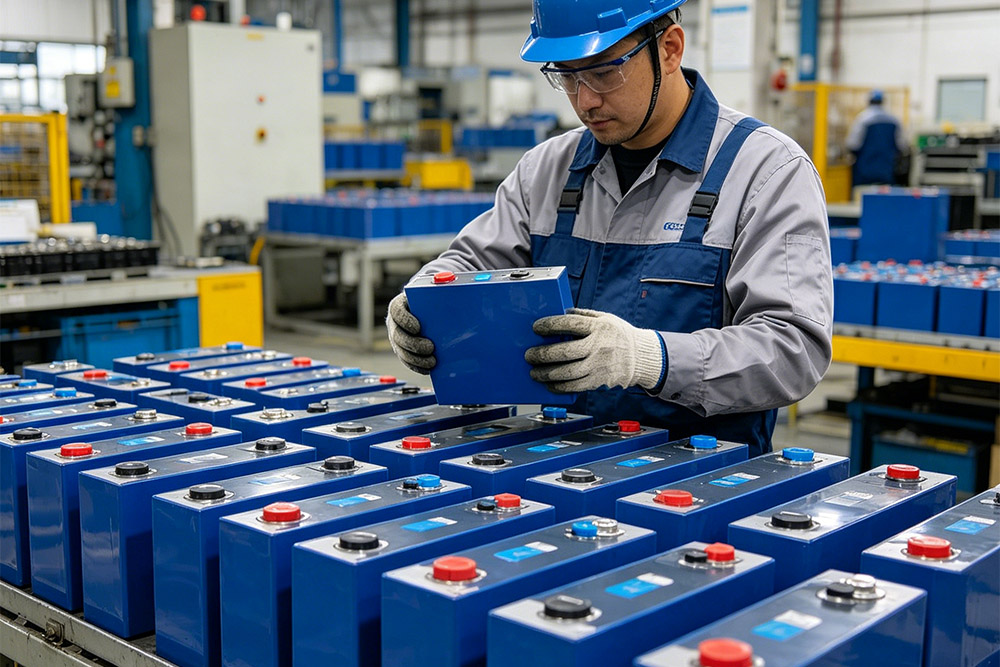
If you’ve been comparing suppliers for 280Ah LiFePO4 batteries, you’ve probably seen this everywhere:
“Grade A cells”
Almost every supplier says it.
But in reality, not everyone is talking about the same thing.
This is where a lot of buyers get burned — especially on first orders.
What “Grade A” actually means
In simple terms, real Grade A cells should have:
- Full capacity (close to 280Ah)
- Very small difference between cells
- Stable internal resistance
- No structural or cosmetic issues
These are the cells originally intended for energy storage systems or EV use.
What the market sometimes calls “Grade A”
Here’s the part most people don’t tell you.
Some suppliers label cells as “Grade A” even when they are:
- From mixed production batches
- Slightly below rated capacity
- Re-sorted or downgraded stock
They still work. But once you build a pack, inconsistencies start showing up:
- imbalance
- faster degradation
- reduced usable capacity

The easiest ways to check cell quality
You don’t need a full lab setup, but you do need to ask the right questions.
1. Capacity test data
A reliable supplier should be able to provide:
- Individual cell capacity results
- Test conditions (current, temperature)
If they only give “average capacity”, that’s not enough.
2. Internal resistance (IR)
Cells in the same batch should have very close IR values.
Big differences here usually mean:
- mixed batches
- inconsistent performance later
3. Production date / batch consistency
This one is often overlooked.
Ideally:
- All cells come from the same production lot
- Manufacturing dates are close
Mixing batches is one of the main causes of pack imbalance.
4. QR codes and traceability
Most major manufacturers include QR codes.
You should be able to verify:
- production info
- model details
If codes are missing or inconsistent, ask why.
Common mistake in bulk orders
A situation that comes up quite often:
- First order: good quality
- Repeat order: different batch, different performance
This usually happens when:
- supplier changes source
- no clear spec agreement
- no batch requirement in contract
Consistency matters more than the first shipment.
Should you only buy from big brands?
Not necessarily.
Big brands tend to have better consistency, but:
- price is higher
- availability can be limited
Many buyers work with OEM suppliers successfully —
but only after confirming:
- sorting process
- testing standards
- batch control
What to clarify before placing an order
Before you commit to a bulk purchase, it’s worth confirming:
- Are cells from the same production batch?
- Is capacity sorting included?
- Will you receive test reports?
- What is the allowed deviation?
If these points aren’t clear, you’re taking a risk.

Typical specs for 280Ah cells
Most energy storage projects are built around cells with:
- 3.2V nominal voltage
- 280Ah capacity
- Prismatic design
- Stable cycle performance
If you need a reference point, this type of configuration is widely used:3.2v 280ah lifepo4 battery cell
Final thoughts
The biggest issue in sourcing LiFePO4 cells isn’t price — it’s consistency.
Two suppliers can offer the same “280Ah Grade A cell” on paper,
but the long-term performance can be completely different.
If you’re building battery systems for resale or projects,
it’s worth taking a bit more time to verify:
- batch quality
- test data
- supplier process
That’s usually what separates a smooth project from a problematic one.
Related Products
-

18650 2200Mah 10S3P 36V 6.6Ah Electric Scooter Lithium Battery
-

18650 2600Mah 10S3P 36V 7.8ah Scooter Battery
-

18650 36V 5.2Ah Electric Bicyle Battery
-

1S2P 3.7V 1600mAh 14500 Lithium Battery
-

2000Mah 18650 Battery Cell 6Ah 36V Scooter Battery
-

21700 3.7V 4800mAh Rechargeable Lithium-Ion Battery
-

3.7V 21700 Rechargeable Lithium Battery Cells 5000mah
-

3.7V 5000mah 26650 Battery
-

32140 LiFePO4 Battery Cell 3.2V – 10000mAh / 15000mAh
-

32700 Lifepo4 3.2V 6000mah Lithium Battery
-

48V 15ah 720wh Ebike Battery
-

60V 21Ah 18650 16S7P E Bike Battery
-

Customized 48V-72V Triangle Ebike Lithium Battery Pack | 52V 30Ah
Leave a Reply